


Suga, a 13-year-old orangutan, gave birth this week to her first infant at the Jerusalem Biblical Zoo, the zoo said. The father, Ito, 19, had been kept separate from the females.
Benjamin Pinesud, the zoo’s head keeper, said staff prepared a large padded tub for Suga, where she curled up quietly before the birth.
Suga the orangutan and her infant at the Jerusalem Biblical Zoo
(Video: Shir Schaffer)


“A first birth is always worrying, both because of the birth itself and because you need to see that she is caring for the baby,” he said. “Suga cared for the infant from the very first moment. She nursed and held it, and the staff gradually relaxed. We are all very excited on a personal level. We gave her quiet and spoiled her with fruit.”
During the first two days, the males, Ito and 16-year-old Kasato, were separated from the females, Suga and her 10-year-old companion, Sinta.
“They made sounds we had never heard them make before. These were territorial calls,” Pinesud said. “They are very curious. They come, stand and look to see what is happening near them. Sinta is really like a concerned aunt. She sleeps next to them and every few hours checks on Suga.”
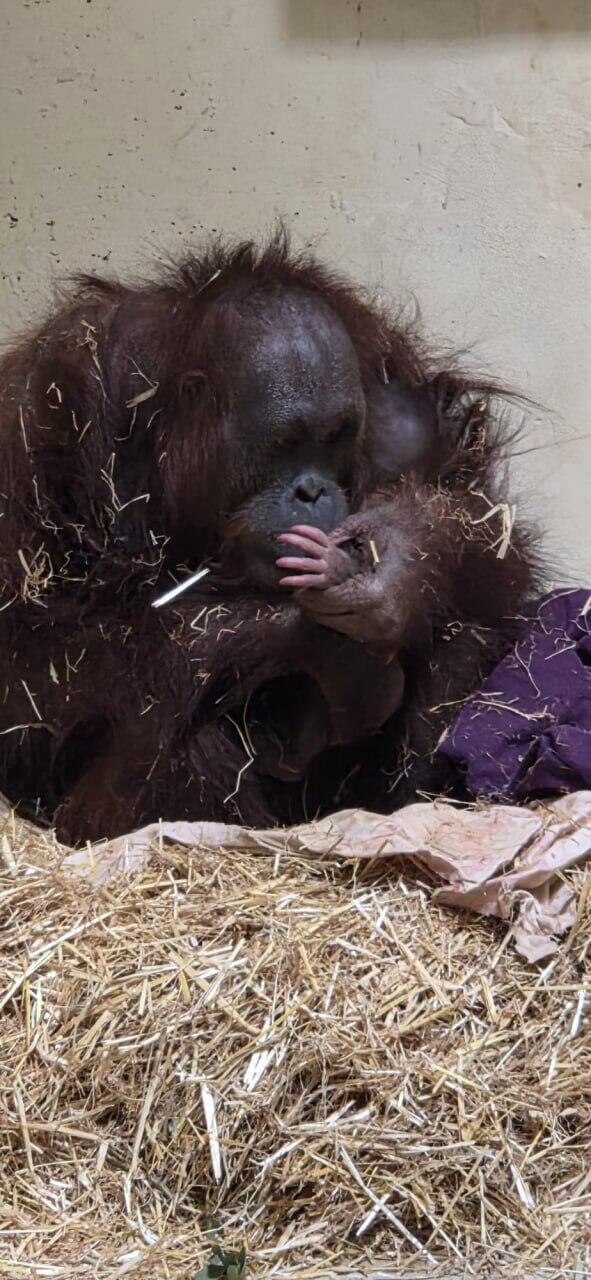
Orangutans are a great ape species classified as endangered because of deforestation in Borneo and Sumatra. They are considered highly intelligent, able to use tools and solve problems. In zoos, the average age for a first pregnancy is 10 to 12 years, and gestation lasts about eight and a half months.
Zoo veterinarian Dr. Nili Avni Magen said staff still do not know whether the newborn is male or female.
“It takes time because the baby is still on her,” she said. “We do not want to disturb them, so we are only observing her from a distance. Sinta, the other female, was with her throughout the birth, and that is very important for the learning process. We were happy she could be with her and experience the birth by observing, very similar to nature.”
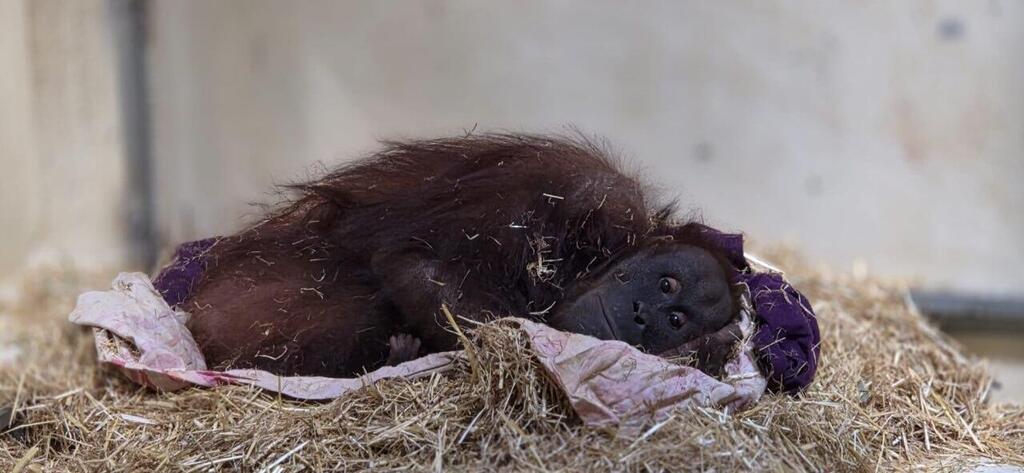
Suga's infant
(Photo: Dr. Nili Avni Magen)
Avni Magen said the breeding group is managed cooperatively through the European Association of Zoos and Aquaria, which matches animals based on genetics and age in an effort to maintain a stable, healthy population.
In the past year, she said, only one Bornean orangutan infant was born in zoos belonging to the organization.
“This is another small step toward improving the survival of this wonderful species, which is endangered,” she said.