

A new gender-segregated beach catering to the Haredi Orthodox community is being planned in Tel Aviv, under a proposal advanced by Interior Ministry Director-General Israel Uzan, a senior official affiliated with the ultra-Orthodox Shas party.
The plan would close the gender-segregated Sheraton Beach, located just south of Metzitzim Beach, and reopen it to the general public, creating a continuous stretch of open coastline extending south to Jaffa. In its place, a new segregated beach would be established north of Cliff Beach.
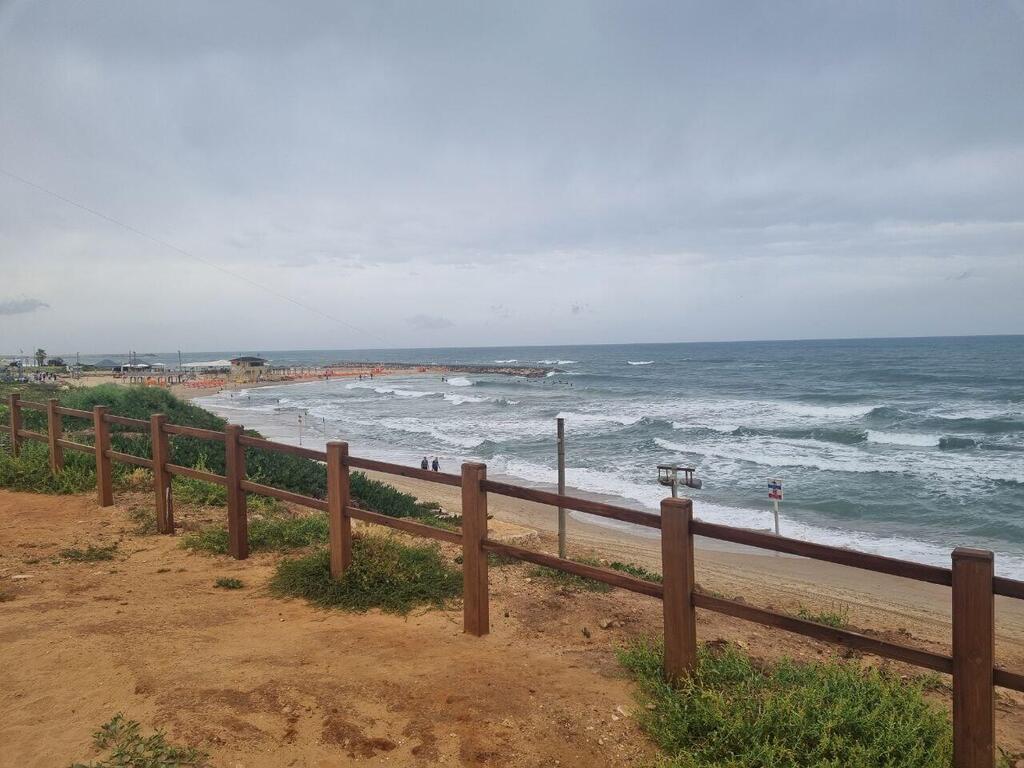
The proposed site would also replace Herzliya’s current segregated beach, situated roughly 600 meters south of the city’s marina. Consolidating both segregated beaches into a single location would enable the creation of a designated area twice the current size—potentially even larger—according to officials.
Unlike the existing arrangement at Sheraton Beach, which designates separate days for men and women, Uzan’s proposal would allow both to access the beach on the same day, separated physically by a barrier. The coastal stretch between Cliff Beach and Herzliya’s segregated beach spans over one kilometer, but the exact dimensions of the new beach have yet to be finalized. The plan remains in its early stages.
A review by ynet's sister publication Calcalist shows that both Herzliya and Tel Aviv municipalities support the initiative, saying it meets the needs of both religious and secular residents. Earlier this month, Uzan conducted a joint site visit with senior officials from both municipalities to review the proposed beach relocation plan.
Beaches are a highly sought-after public resource with limited supply. There are only 105 declared beaches along the Mediterranean coast, totaling just 12.5 kilometers, while 11% of them are already gender-segregated for Haredi use. In a period marked by public disputes over the military draft exemption bill for yeshiva students, municipalities and the Interior Ministry may struggle to justify further shrinking shared public space for an enclosed Haredi area.
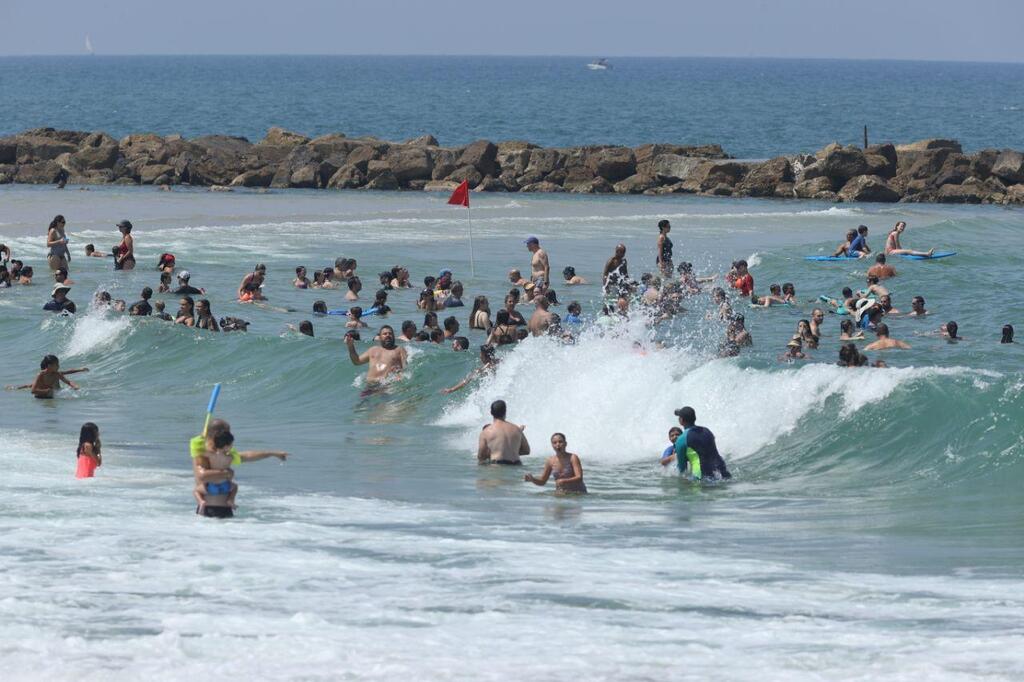
Sheraton Beach
(Photo: Moti Kimchi)
Uzan’s plan solves a problem for Haredim who felt crowded at Sheraton Beach and were unable to visit with the entire family. He won support from the municipalities, which viewed the chance to create a continuous coastline without a gender-segregation barrier.
But the plan offers no solution for the roughly 200,000 new residents expected to move into the area over the next decade and use its beaches. Three major projects are currently advancing between the Reading power station and the Herzliya marina: the Sde Dov redevelopment, already under construction; Tel Aviv 3700; and northwest Herzliya. Together, they will add at least 40,000 housing units.
In addition, about one kilometer east of Cliff Beach, a major project is planned to enable the construction of roughly 20,000 apartments. That means that in the coming years, about 60,000 new units are expected to be built along the coastal stretch between Herzliya and Tel Aviv, bringing hundreds of thousands of new residents.
Despite this population growth, only one new beach is planned, designated for Haredi use. New residents who are not Haredi will have to make do with Tel Aviv’s 13 designated beaches, which are already crowded on weekends and holidays.
The Herzliya municipality supports the plan. "Moving the existing beach to the Cliff Beach area will allow a full and broad beach. About three weeks ago, a tour was held with the Interior Ministry director general and representatives from the Tel Aviv and Herzliya municipalities, and joint work to promote the issue was agreed."
The Tel Aviv municipality said, “We support opening a segregated beach from Cliff Beach northward, instead of the segregated beach at Metzitzim Beach, in a way that allows integration with Herzliya’s segregated beach. This step is expected to benefit religious beachgoers by allowing swimming throughout the weekdays, as well as secular beachgoers.
"The size of the beach is being examined to meet municipal standards and regulatory guidelines. The matter will be advanced gradually and in full coordination with all relevant bodies, including the Herzliya municipality."