

Nature and Parks Authority staff released a female Egyptian vulture (Neophron percnopterus) back into the wild over the weekend after her leg was amputated and replaced with a prosthetic, an exceptional and unprecedented case in wildlife rehabilitation in Israel.
The vulture was found in June after being trapped in the Golan Heights and underwent a lengthy rehabilitation process in cooperation with Nature and Parks Authority teams and the Wildlife Hospital at the Ramat Gan Safari.
The vulture's release into the wild with the prosthetic leg
(Video: Shlomi Yitzhak, Nature and Parks Authority)


After medical examinations, veterinarians determined the injured leg could not be saved. The team faced a difficult decision, as a one-legged vulture would not survive in the wild, and euthanasia was the standard option. At that point, an unconventional idea took shape: an attempt to rehabilitate the bird using a custom-designed prosthetic.
In the months that followed, the Wildlife Hospital team worked alongside external orthopedic specialists and prosthetics designers to develop a tailored medical solution. The process included implanting an internal prosthesis into the bone, followed by fitting a unique and innovative external prosthetic.
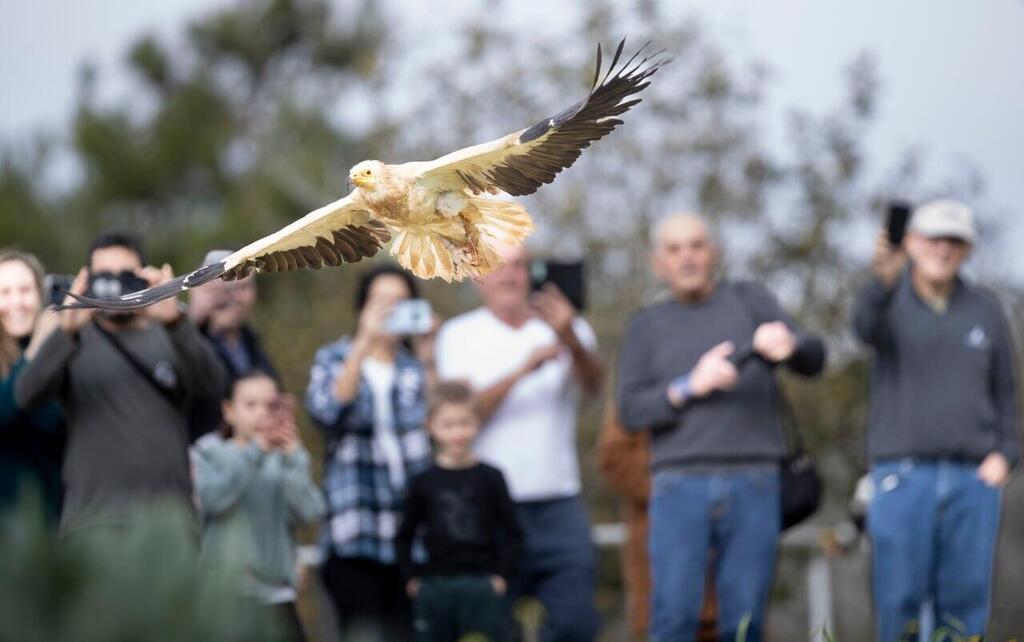
Dr. Ohad Hatzofe, avian ecologist with the Nature and Parks Authority, said the vulture is functioning well overall and with the prosthetic. A GPS transmitter was fitted to her back to allow for tracking and monitoring.
“Today I feel sorrow over the unnecessary suffering and anger at the condition of the vulture population, harmed by poisonings and other random injuries, but also happiness at her release and hope that she will survive in the wild,” Hatzofe said.
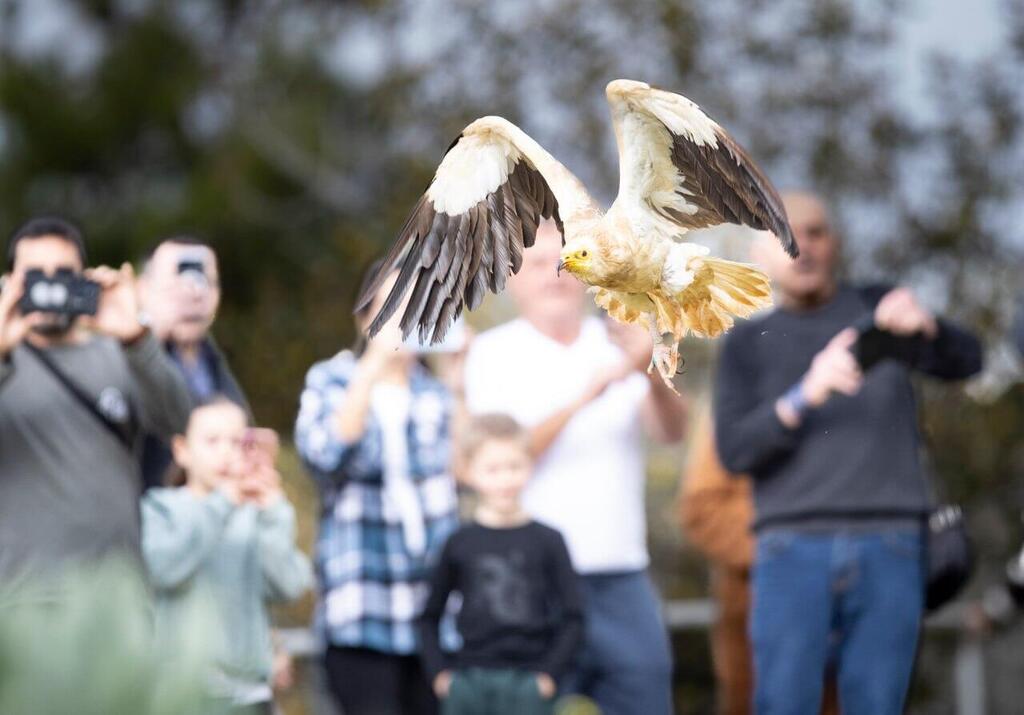
The vulture's release into the wild with the prosthetic leg
(Photo: Gil Nechushtan)
He noted that the global Egyptian vulture population is declining at an alarming rate, but in Israel, the species has been stabilized and its numbers improved through conservation and protection efforts under the "Save the birds" project, with support from the Open Spaces Protection Fund.
The Egyptian vulture population in Israel currently numbers about 65 breeding pairs. The released bird is a female that hatched in 2019 and was tagged and monitored in her nest in the Golan Heights as part of a joint study by the Nature and Parks Authority and Ben-Gurion University researchers. During the most recent breeding season, she nested in one of the Golan streams.
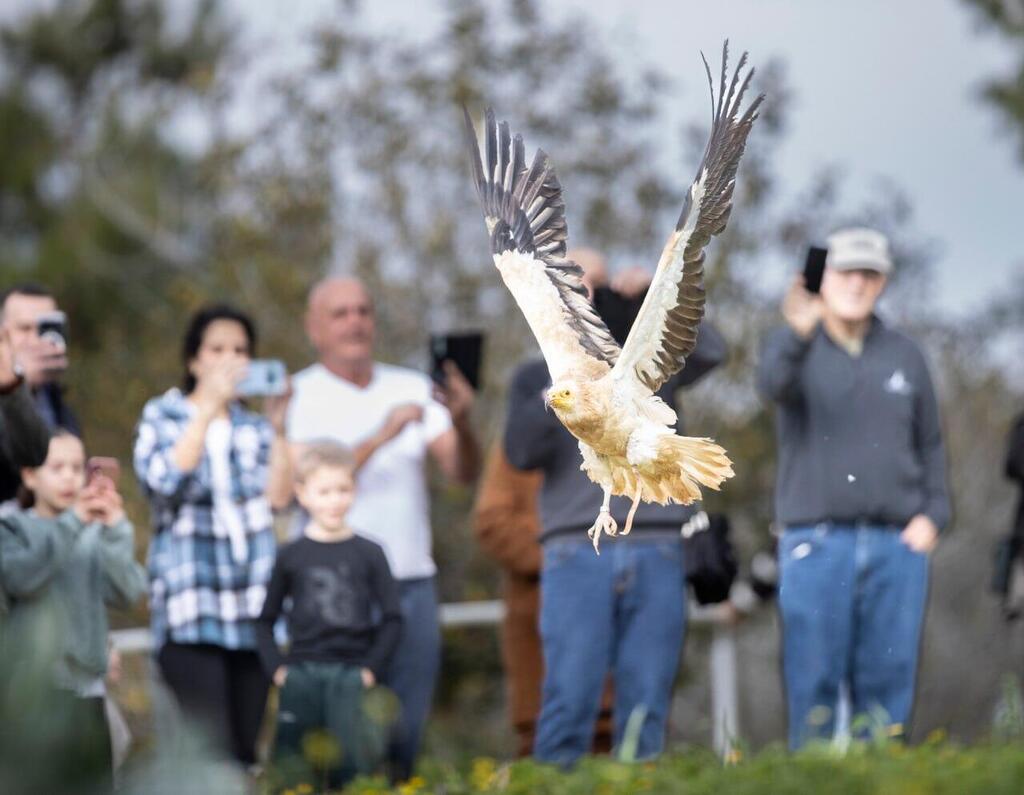
(Photo: Gil Nechushtan)
After she was injured, efforts were made to locate the nest and rescue the remaining eggs, but the eggs, which were transferred to an incubator at the Hai-Bar Carmel reserve, did not develop, apparently due to the time that passed without incubation.
Dr. Tomer Nissimyan, Nature and Parks Authority's chief veterinarian, said returning the vulture to the wild despite her injury marks another breakthrough in nature conservation. “We will monitor her return to the wild and learn from this case, as we do from others,” he said.
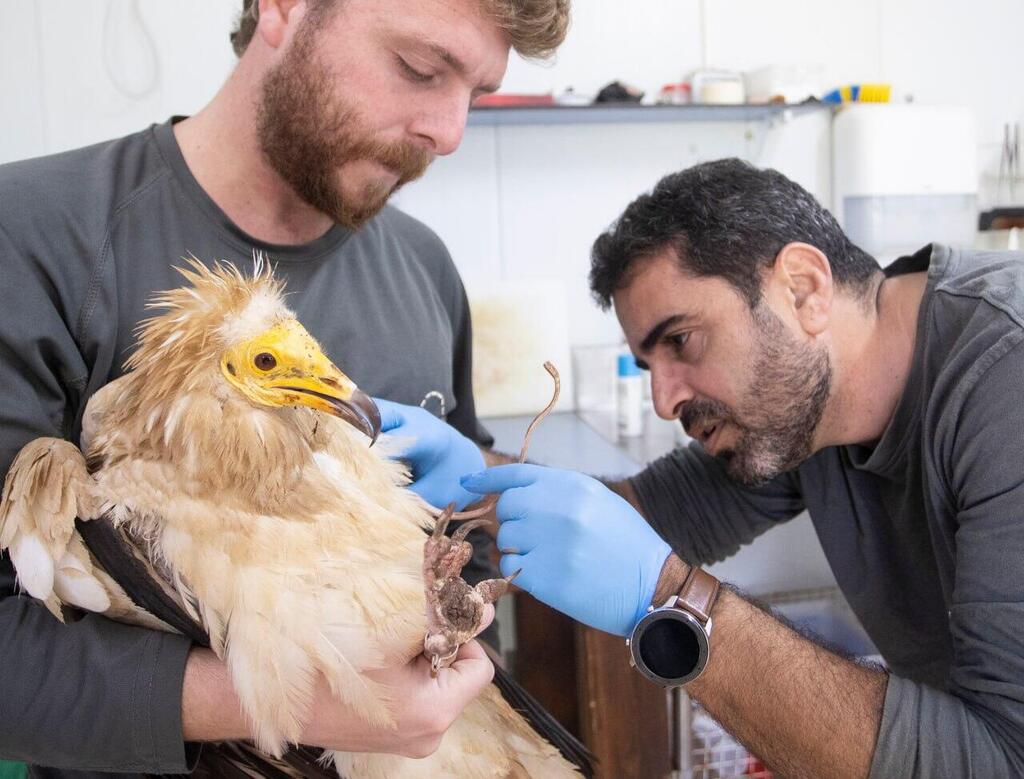
The treatment at the Wildlife Hospital
(Photo: Gil Nechushtan)
At the Wildlife Hospital, staff emphasized the broader significance of the effort. Dr. Ruti Shviro, a veterinarian at the hospital, said the case begins with a familiar tragedy of wildlife harmed by human activity but ends with great hope. “After a long period in captivity filled with challenges and uncertainty, the emotional moment arrives when she returns to the wild. For all of us, this is an exciting day", she said.
The treatment also involved collaboration with the human health system. Dr. David Laniado, an orthopedic specialist at Hadassah Ein Kerem Medical Center, said technology from human medicine was adapted for wildlife in this case, involving complex planning of both internal and external prosthetics as part of multidisciplinary work.
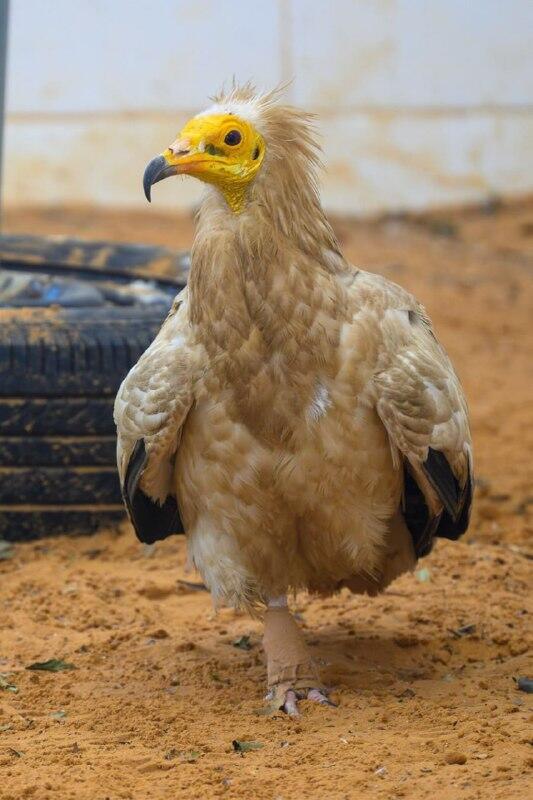
The wounded vulture before the surgery
(Photo: Ilan Rosen)
Dr. Matan Or, a veterinary orthopedic specialist and amateur birdwatcher, concluded that, to the best of his knowledge, this is the first case of an Egyptian vulture receiving a leg prosthesis and returning to the wild, a milestone that could open the door to similar treatments in the future.