

Even as war raged in the north and Hezbollah terrorists fired rockets at Israeli communities, a unique mechanism emerged to tackle what experts call the “adoption barrier” that prevents farmers from embracing advanced agricultural technologies.
The initiative is a new program by MIGAL – the Galilee Research Institute for applied scientific research – and the GrowingIL agricultural innovation community. The program introduces cutting-edge technology to farmers in full partnership with them, with the goal of securing Israel’s food future. Although Israel is considered a global agri-tech powerhouse, a significant gap remains between laboratory developments and the slow pace of technology adoption in the field.
Agripass’ weeding robot
(Video: Amit Vered)


The new program, known as RegenUp, was born of a joint initiative by MIGAL, the Eastern Galilee Cluster, GrowingIL, the Agriculture Ministry and additional partners. Its goal is to bridge that gap. The initiative is now expanding and becoming a national model for agricultural recovery and growth.
“The platform was established in 2024, just months after the outbreak of the war, to address the challenges facing northern farmers,” said Ori Ben-Herzl, CEO of MIGAL, the economic company and applied research and development arm of Tel-Hai University in Kiryat Shmona and the Galilee. “Now that quiet has returned to the region, the program is expanding out of an understanding that smart agriculture is the key to food security, farm profitability and national independence in the face of climate change. We are pleased to see the successes in the field and proud to say we have resolved one of the most significant barriers in agriculture and food production through creative, groundbreaking thinking and by building true partnerships with organizations guided by the same compass.”
The program’s uniqueness lies in its comprehensive professional framework, which adapts technology to farmers’ real needs, including funding pilot projects. From the outset, the model connects the farmer, the entrepreneur behind the technology and the researcher or agricultural adviser.
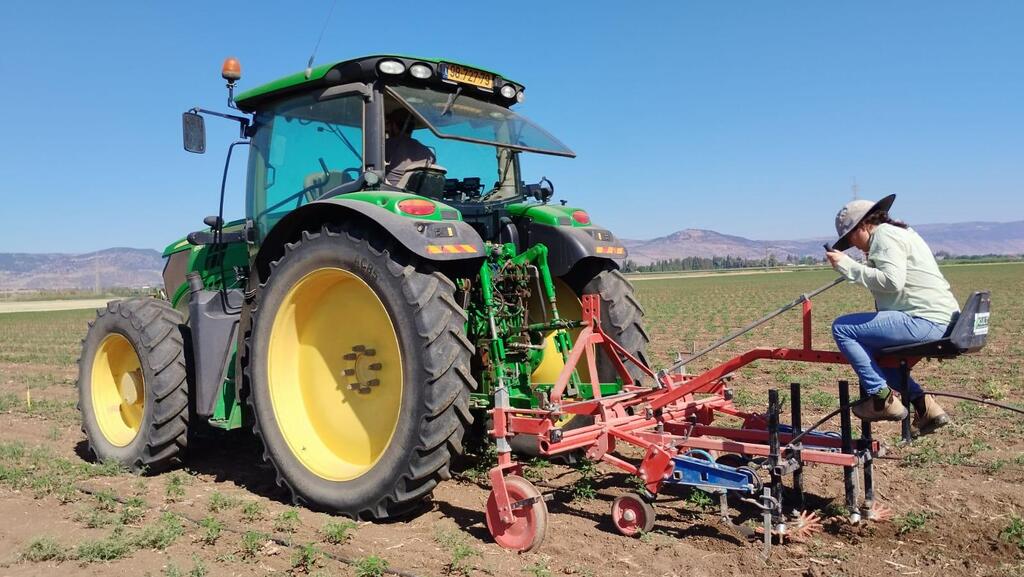
Farmers present their challenges, and through joint dialogue with researchers and entrepreneurs, advanced technological solutions are tailored to ensure they deliver economic and environmental value in the field, not only in the laboratory.
The process is led by a combined team from MIGAL and GrowingIL, together with researchers from MIGAL and Northern R&D and advisers from the Agriculture Ministry’s Extension Service. The team takes full responsibility, alongside the farmer, for identifying the problem, selecting the appropriate technological or organizational solution and implementing it on the farm. Only after the farmer sees that the development works under defined pilot conditions can the initiative move to full implementation. This approach — embedding knowledge and innovation rather than merely transferring knowledge — represents an additional step forward in the regional responsibility of applied research and development.
Through the program, farmers are offered technologies at the forefront of global agri-tech. In tomato fields operated by Gadot Field Crops in northern Israel, for example, a smart robot integrated with artificial intelligence replaces manual labor and chemical spraying. The system identifies specific weeds and treats them precisely, protecting soil health and consumers. In an apple orchard in the Golan Heights community of Sha’al, satellite monitoring and artificial intelligence are used to create “heat maps” of soil deficiencies.
The maps are fed directly into smart tractors that fertilize with maximum precision, significantly reducing resource use. The orchard is also using a breakthrough solution to renew apple orchards through biochar, which improves soil fertility and prevents root diseases without pesticides. Another example is the use of smart drones that map fields and guide tractors exactly where to spray, leading to substantial savings in materials and improved farm profitability.
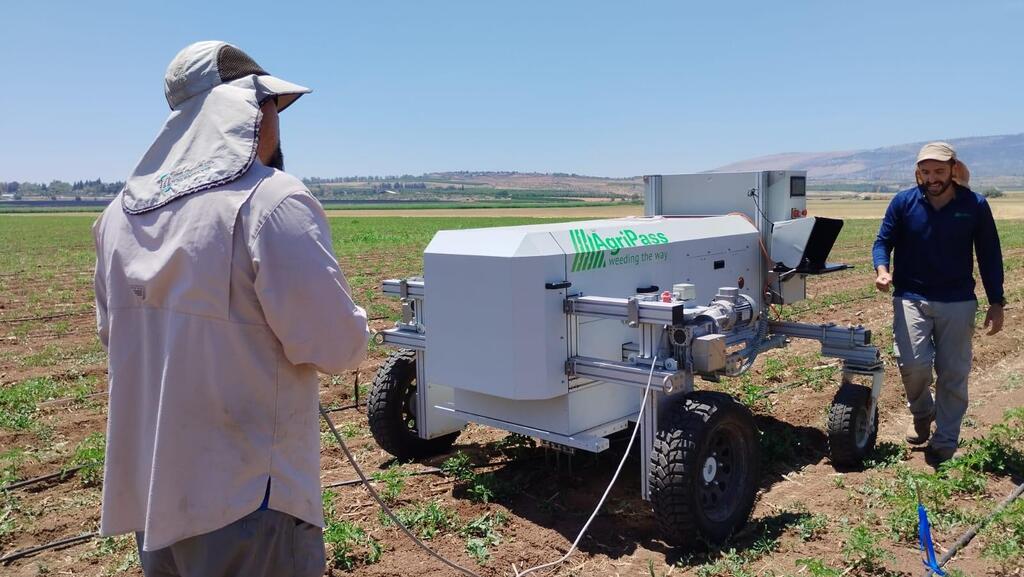
Agripass’ weeding robot
(Photo: Amit Vered)
The success of the Israeli model in addressing the technological “adoption barrier” is drawing international interest. A MIGAL delegation led by Ben-Herzl and Arik Ben-Meir recently returned from St. Louis, Missouri, considered a global capital of agri-tech. The delegation was invited to present the Galilee-developed model to major American farming organizations and innovation units within the ecosystem.
“There is significant difficulty among farmers in Israel and around the world in implementing new technologies, and we ask what will help them make the change,” said Ben-Meir, head of regional development at MIGAL and leader of the program. “What will motivate them to adopt new technologies? Our understanding is that if the farmer is connected as a central, active and meaningful partner in the process — from raising challenges, to setting metrics, collecting data and drawing conclusions — there is an excellent chance of matching the most precise technology to his needs in a way he can implement and benefit from.”
Ben-Meir added: “We began during the war with seven farmers, each paired with researchers and agri-tech ventures. In light of the success, we are now expanding the initiative and adding 20 more farmers. In this way, we are turning the Galilee into a significant laboratory for advancing technological and environmental agriculture, with the most advanced agri-tech solutions available today. The Galilee has effectively become an important pilot laboratory for agriculture on a global scale. Here we implement and refine technologies in full cooperation with farmers. Our goal is not only to improve yields today and better cope with climate change, but also to ensure that the soil remains fertile and healthy for future generations. That is the meaning of regenerative agriculture.”
Partners in the initiative include MIGAL, Northern R&D, the Agriculture Ministry, the Israel Innovation Institute, JDC-Tevet 360, the Eastern Galilee Cluster, GrowingIL and the Mevo’ot Hermon Regional Council.