


The Israel Meteorological Service has issued a warning for an extreme and prolonged heat wave expected to impact the country. According to updated models, beginning Thursday—and especially over the weekend and into early next week—Israel will experience a significant heat event lasting approximately one week. The peak is expected Friday through Sunday.
Temperatures are forecast to rise about 15°C to 16°C above seasonal averages for early August, reaching nearly 40°C in the central highlands and Jerusalem, and approaching 50°C in the Jordan Valley and around the Dead Sea.
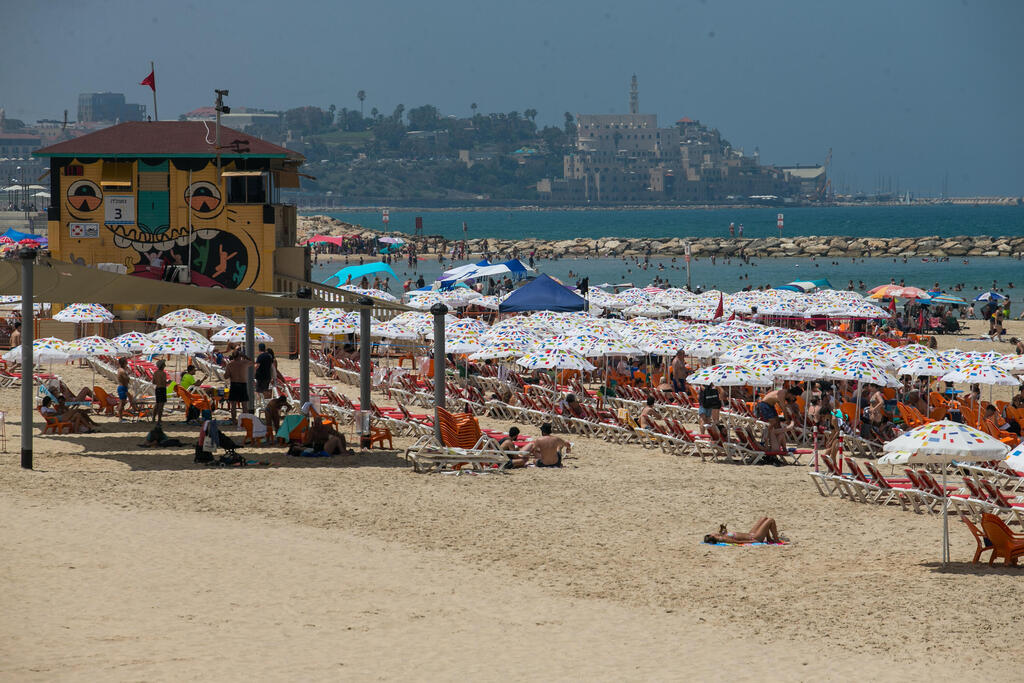
Tel Aviv beach
(Photo: Ido Erez)
In the coastal and lowland regions, the combination of heat and humidity will create extreme heat stress. The Meteorological Service said it will issue heat stress alerts toward the end of the week.
If temperatures do approach 50°C in some areas, the national record for 2025 may be broken. The current high for the year—47.3°C in Mt. Sodom on July 27—is the third-highest temperature ever recorded in the Dead Sea region.
Tuesday's weather will still reflect typical seasonal conditions, but a slight warming is expected Wednesday in the mountains and inland areas. Thursday will bring another small rise in temperature and increased heat stress. From Friday onward, conditions are expected to be among the hottest of the year.
Meanwhile, the Water Authority has instructed Mekorot, Israel’s national water company, to initiate a controlled adjustment of the Degania Dam to restore consistent water flow to the southern Jordan River. The directive follows a sustained drop in the Sea of Galilee’s water level, due to ongoing drought conditions affecting Israel and the region. The measure aims to support natural ecosystems, agriculture, and nearby tourism sites.
Get the Ynetnews app on your smartphone: Google Play: https://bit.ly/4eJ37pE | Apple App Store: https://bit.ly/3ZL7iNv
The plan involves a slight elevation of one of the dam’s gates to allow steady flow downstream toward the recently constructed Alumot Dam. The adjustment will not be visible at surface level but will restore regulated flow to the lower Jordan.
Officials explained that while the Alumot Dam was designed to deliver a planned water volume downstream, structural constraints mean even minor changes in the Sea of Galilee’s level can disrupt flow and, at times, halt it almost entirely. This has caused substantial harm to local ecology, agriculture, and attractions such as the Yardenit baptismal site and the Rob Roy canoeing area.