

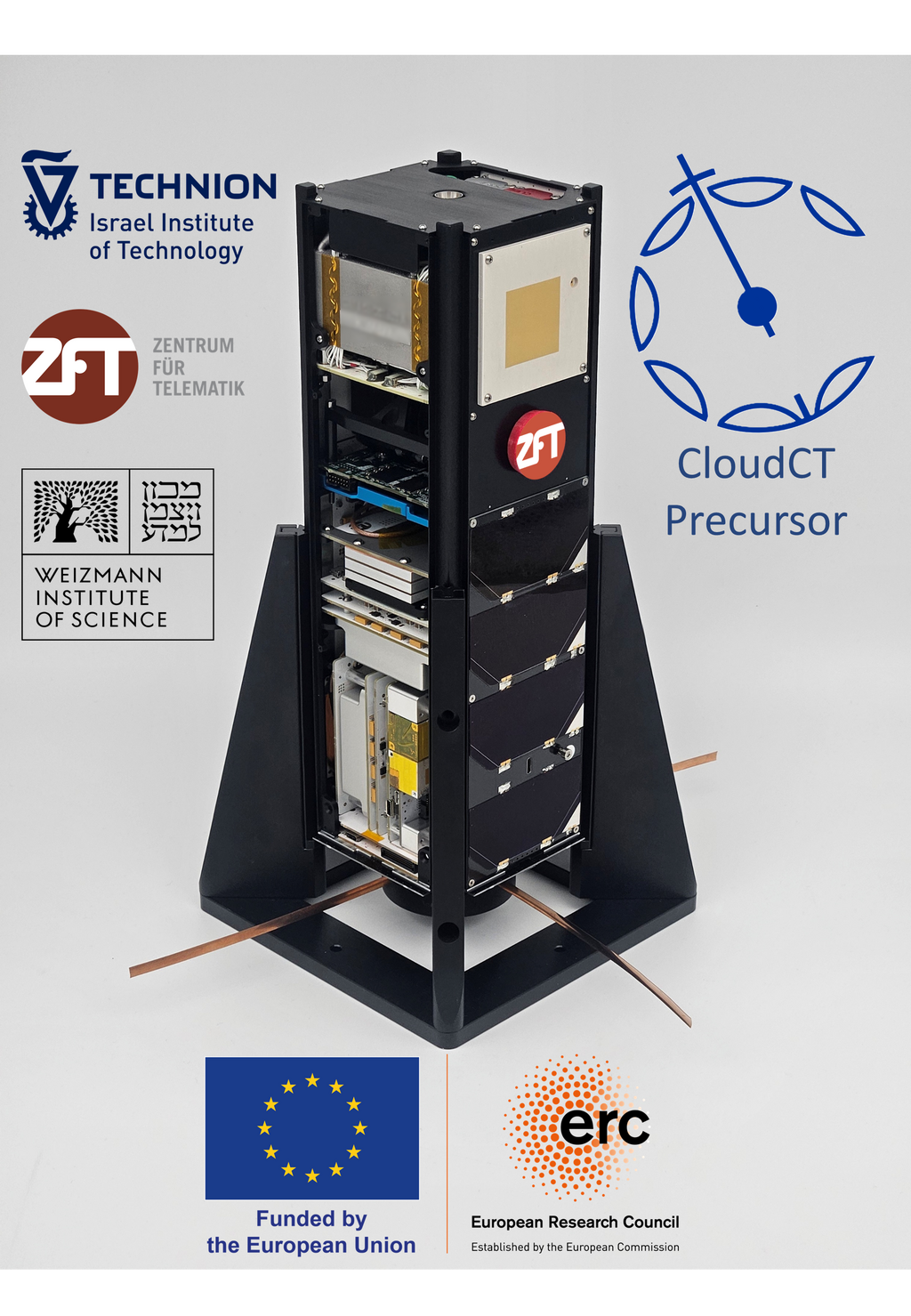
The first tiny satellite in an Israeli-German research satellite network, CloudCT, has been built, tested and prepared for launch from California. The launch is expected in June.
The success of the pioneering mission is expected to pave the way for the launch of 10 additional CloudCT satellites next year and advance research into clouds and their role in the climate.
The Israeli-German CloudCT satellite
(Video: Technion)


The satellite is the product of seven years of intensive joint research by Israeli and German scientists from the Weizmann Institute of Science, led by Prof. Ilan Koren; the Technion, led by Prof. Yoav Schechner; and the Center for Telematics in Germany, led by Prof. Klaus Schilling.
The achievement was made possible by a prestigious ERC Synergy research grant from the European Research Council. Discoveries by the international research team on AI-based tomographic observation methods, cloud physics and advances in satellite technology have been published in leading scientific journals.
“The mission focuses on in-depth study of small clouds, which are often not observed by current remote-sensing technologies,” said Koren, a world-renowned expert in atmospheric and climate research. “The mission addresses significant sources of uncertainty that currently limit long-term climate models and forecasts.”
Researchers said that after flight tests, the pioneer satellite will test its innovative sensing technology from orbit. The satellite weighs only about 4 kilograms and must autonomously tilt itself toward specific cloud fields.
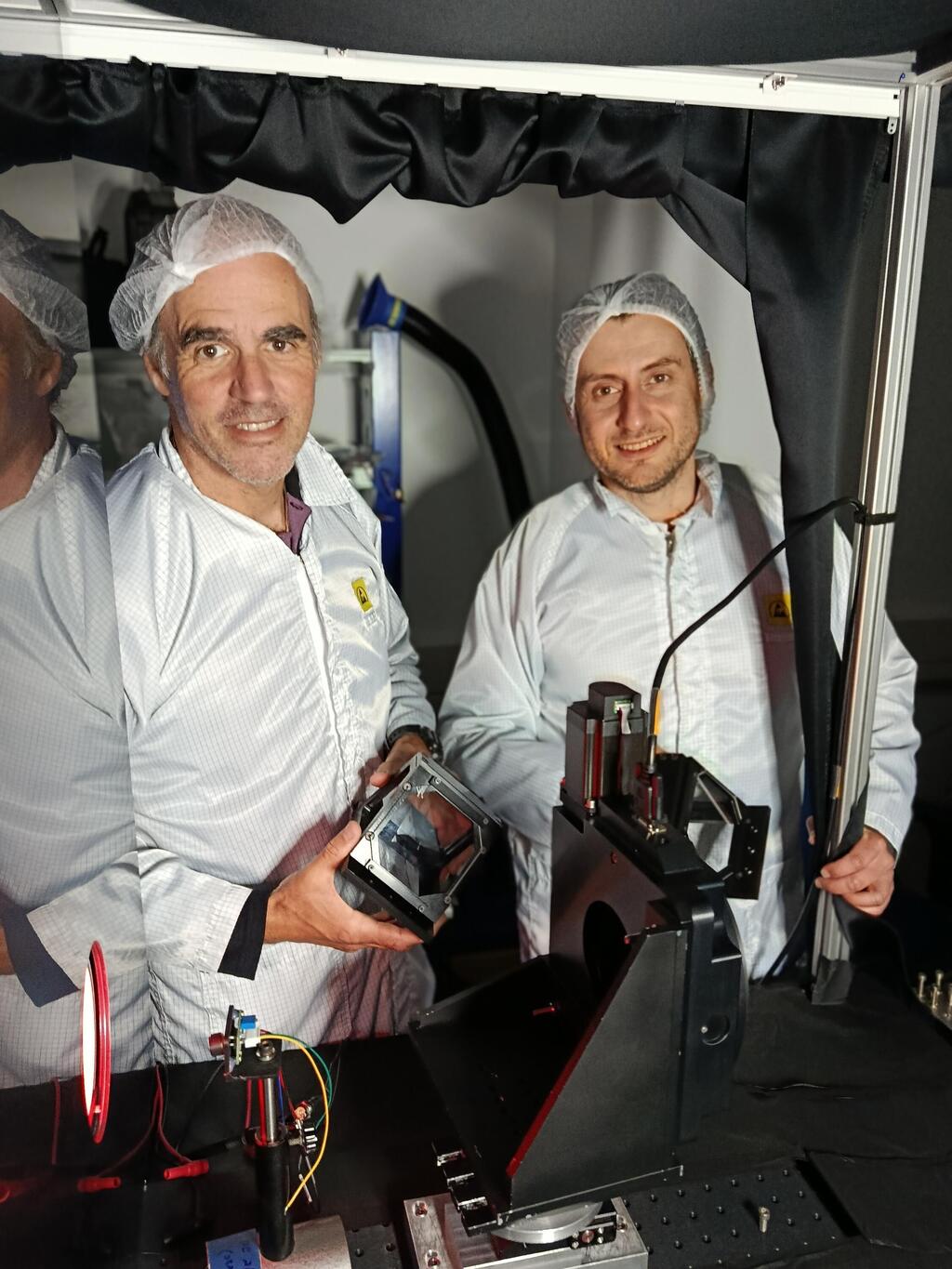
Vadim Kholodovsky and Prof. Yoav Schechner in the clean room at the Asher Space Research Institute with the system they built to test and calibrate the CloudCT camera
(צילום: דוברות הטכניון)
“Precise aiming and coordination between 10 tiny satellites flying in formation in space are significant challenges for such small guidance and control systems,” said Schilling, president of the Center for Telematics and an expert in small-satellite development. “This is the key to autonomous formation flying.”
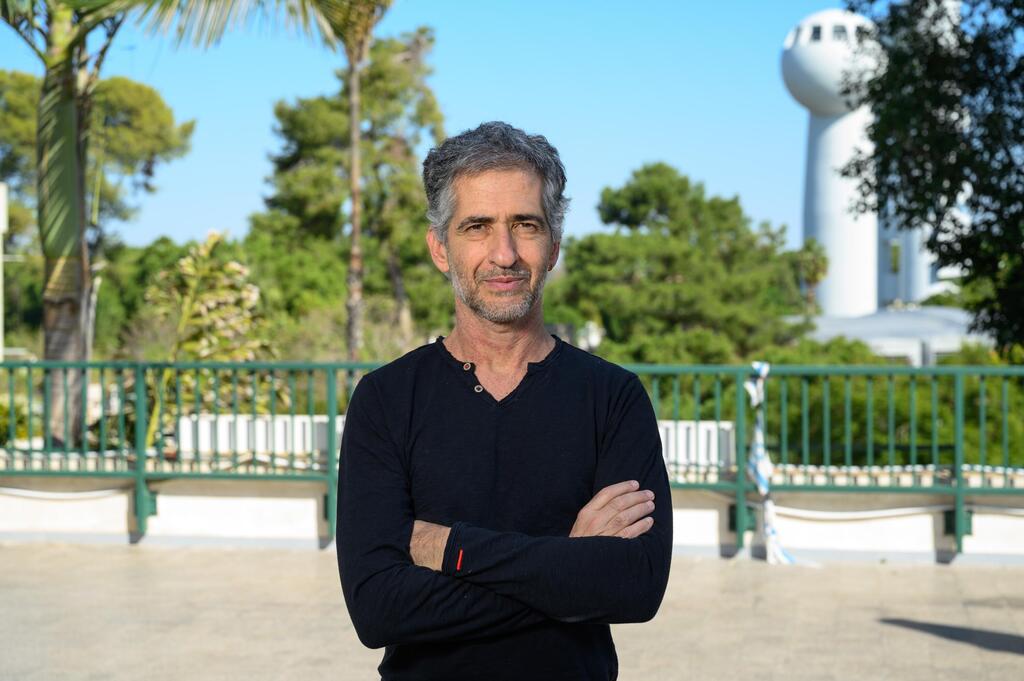
Prof. Ilan Koren
(Photo: Weizmann Institute of Science)
The group developed an entirely new observation approach inspired by medical CT, or computed tomography. The method maps the internal structure and properties of clouds in three dimensions, including unprecedented measurements of the microphysics of cloud droplets. It uses AI and allows scientists to assess the reliability of the mapping.
“Optical CT of clouds requires simultaneous images from many directions in space, using a unique camera,” said Schechner, an expert in computational photography. “The camera is sensitive to light polarization: polarization is invisible to the human eye but provides information about cloud droplets. The camera was developed especially for CloudCT, and we will test its performance in space in the upcoming mission.”