


The bushy-tailed jird, a small desert rodent recognized by its tufted tail, was first documented in Israel’s southern Arava region in 1950 and has since been spotted only rarely, averaging one sighting per year. Recently, it was observed again in a nature reserve near the Dead Sea.
Dr. Gilad Weil, accompanied by West Bank district ecologist Amos Sabah and Israel Nature and Parks Authority ranger Hanan Goldberg, conducted a rodent survey in the Nahal Arugot Nature Reserve.
Gallery
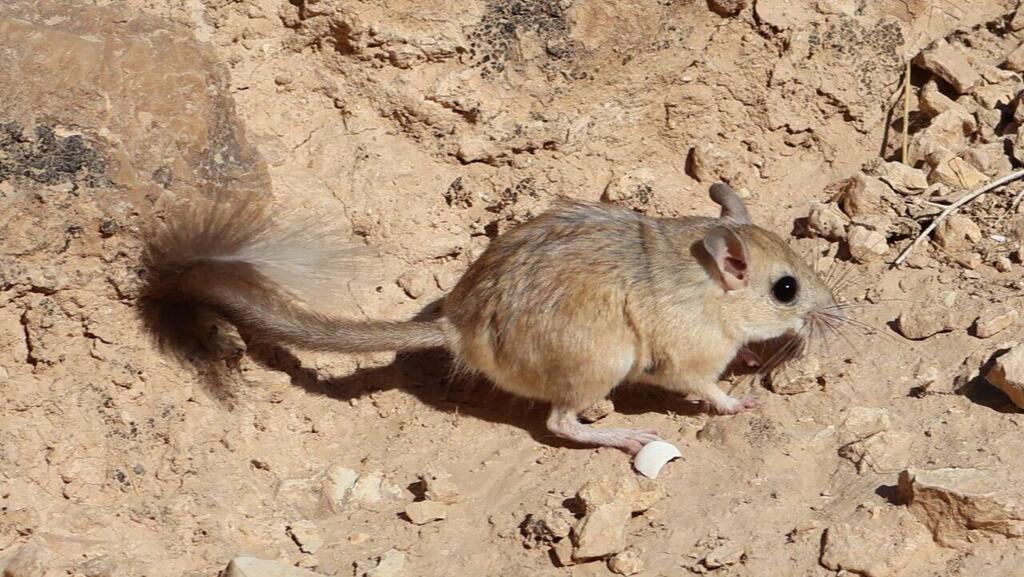
Bushy-tailed jird seen in southern Israel
(Photo: Dr. Gilad Weil, Nature and Parks Authority)
“We identified three bushy-tailed jirds in daylight, a sign of a healthy population in the cliffs,” Dr. Weil said with excitement. “This is a rare sighting because the animal is nocturnal and information about it is scarce. The observation confirms the population’s significance in these cliffs.”
While not endangered, the bushy-tailed jird is seldom seen. Dr. Dotan Rotem, an open spaces ecologist with the Nature and Parks Authority, noted that this rodent inhabits desert regions in Israel and neighboring countries like Egypt, Jordan and Saudi Arabia.
Little is known about its habits due to infrequent sightings. Its distinctive tail, with a tuft of hair at the end, aids in maneuvering to evade predators. “The bushy-tailed jird lives in cliffs and rocky areas, not digging burrows but residing in rock crevices and sheltered nooks among scree,” Dr. Rotem explained. “It’s an excellent climber on rock surfaces.”
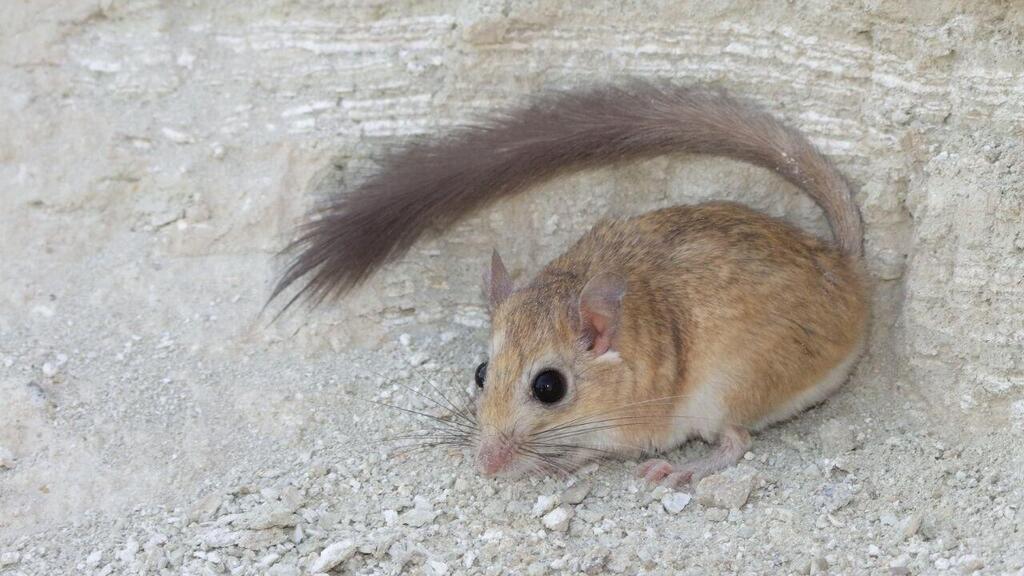
(Photo: Dr. Gilad Weil, Nature and Parks Authority)
The jird feeds on seeds, plant parts and small arthropods gathered from its surroundings. Like other desert rodents, it forms part of the food web, with its remains found in the droppings of rock foxes and nests of nocturnal desert raptors. Primarily active at night, the bushy-tailed jird breeds during the cooler winter months.
Its presence in the Judean Desert exemplifies the region’s “rain shadow desert” conditions, extending beyond typical global desert zones. The rocky cliffs and arid environment draw suitable habitats northward for this and other species.
Get the Ynetnews app on your smartphone: Google Play: https://bit.ly/4eJ37pE | Apple App Store: https://bit.ly/3ZL7iNv
Large nature reserves in the Judean Desert and Negev sustain stable populations of this unique rodent. The cliff habitat’s sensitivity underscores the need for careful management to protect it from human disturbances.
The rare sighting highlights the delicate balance of Israel’s desert ecosystems. The bushy-tailed jird’s persistence in these harsh, isolated environments reflects the resilience of desert wildlife but also the vulnerability of their habitats. Proper conservation, free from human interference, remains critical to preserving these populations and the biodiversity they support.