

Rujm el-Hiri, also known as the “Wheel of Spirits,” is considered one of the most enigmatic archaeological monuments in Israel, placing it at the center of research for more than 50 years. Over the years, the site, often dubbed the “Israeli Stonehenge,” and its surroundings have been surveyed, excavated and extensively studied. Yet key questions remain about its age, function and purpose.
Because no similar structures had been identified, the site was long viewed as relatively isolated, exceptional in its design and scale, and lacking clear parallels in both its immediate and broader surroundings.
Gallery
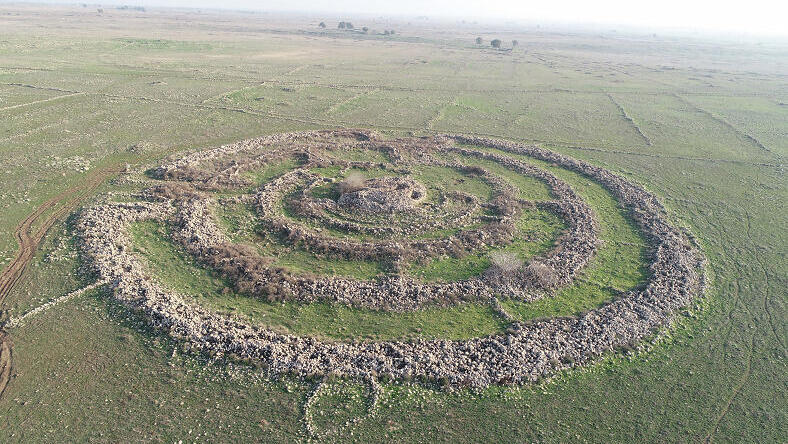
The Rujm el-Hiri stone circle in the Golan Heights
(Photo: Yaakov Shmidt and Alex Vigman, Israel Antiquities Authority)
Advances in satellite imaging and remote sensing now allow archaeologists to observe landscapes in new ways, including areas that are difficult to access on foot due to terrain or local geopolitical constraints. By analyzing images from different seasons, vegetation conditions and lighting, a research team led by scholars from Ben-Gurion University of the Negev identified a range of archaeological features. These include field walls, enclosures, stone piles and large stone circles, many of which had not been previously documented.
Dr. Michal Birkenfeld of Ben-Gurion University, alongside Dr. Olga Khabarova of the University of Luxembourg, Prof. Lev Eppelbaum of Tel Aviv University and Azerbaijan University, and Uri Berger, a doctoral student at Ben-Gurion University and an archaeologist with the Israel Antiquities Authority, identified nearly 30 similar circular stone structures. All were found within a 25-kilometer radius of Rujm el-Hiri in the Golan Heights.
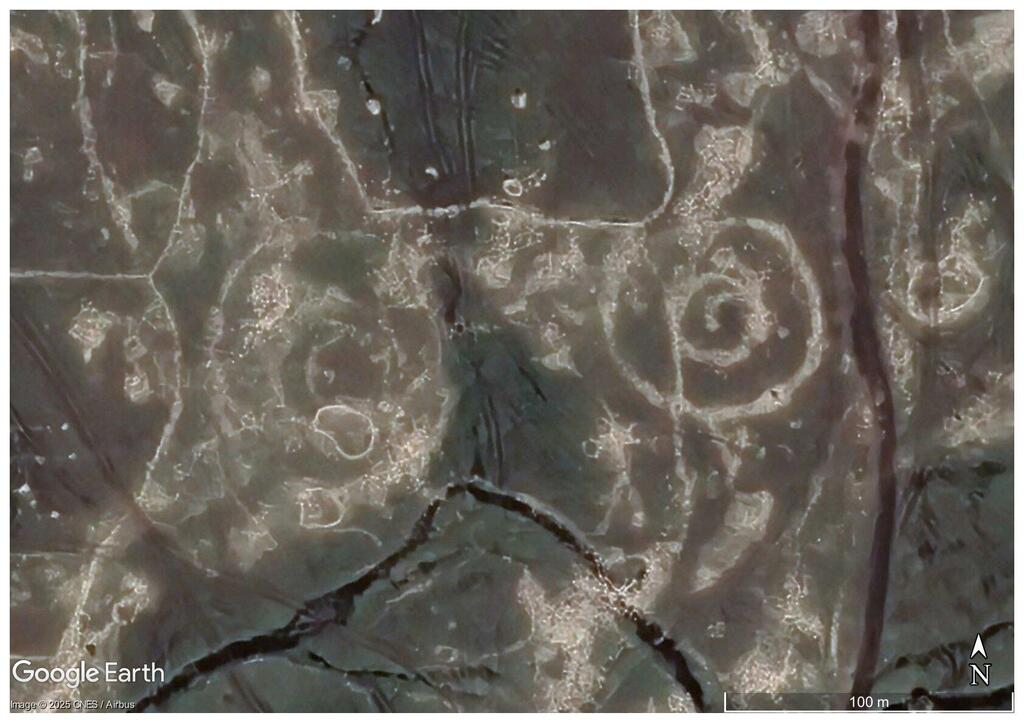
Stone circles identified in the Golan Heights in an aerial survey
(Photo: Dr. Michal Birkenfeld and Dr. Olga Khabarova)
According to the study, published in the journal PLOS One, the sites share a common design. They consist of large circular structures, more than 50 meters in diameter, built from local basalt fieldstones and featuring circular walls, connecting walls and internal partitions. Most of these sites have not been excavated or recorded in previous field surveys. Due to their poor preservation and the reuse of building materials in later periods, their visibility is significantly limited.
A notable feature of these sites is their placement within the landscape. All are located on gentle slopes or small plains near natural drainage channels. Many, like Rujm el-Hiri itself, lie close to seasonal watercourses.
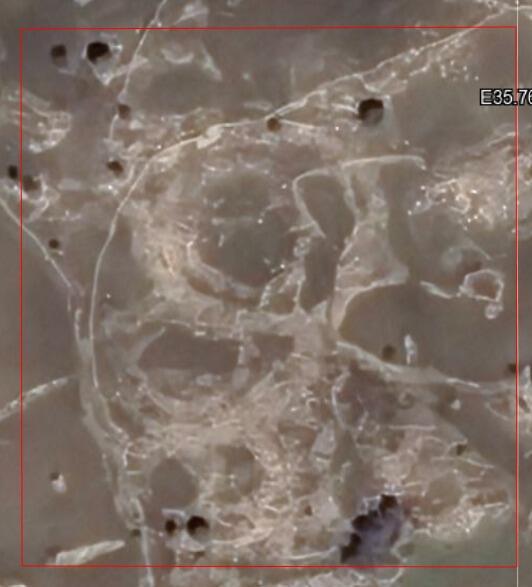
Three stone circles found in the Golan Heights, one atop the other
(Photo: Dr. Michal Birkenfeld and Dr. Olga Khabarova)
Using high-resolution satellite imagery, geophysical models and spatial analysis, researchers documented the newly identified sites. Despite their lower state of preservation, they share monumental construction, similar design and comparable architectural features with Rujm el-Hiri. Their positioning near seasonal water sources and within broader agricultural and pastoral land-use networks further reinforces these similarities.
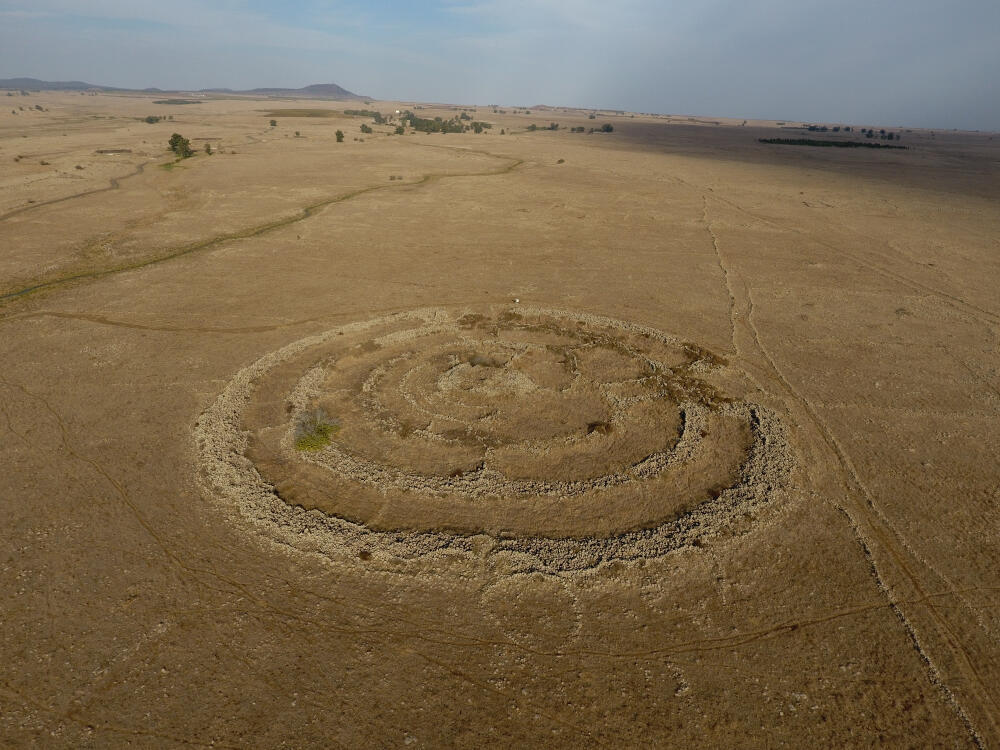
The Rujm el-Hiri stone circle in the Golan Heights
(Photo: Samion Buchas/Shutterstock)
Together, these findings point to a consistent architectural tradition, challenging the long-standing view of Rujm el-Hiri as an isolated monument and instead placing it within a wider regional phenomenon of monumental stone architecture. The study is part of a broader project focused on applying remote sensing methods to archaeological surveys across diverse landscapes in the region, from northern Israel to arid desert areas. This broader understanding of Rujm el-Hiri and the cultural landscapes in which it existed carries significant implications. Rather than a singular case, the site may represent the most complex example of a much wider architectural tradition.
These stone circles may have served multiple purposes, including ritual gathering sites, territorial markers or memorial monuments. They may also have been linked to herding practices or seasonal assembly points. Their construction near water sources and integration into field systems suggest a strong connection to broader patterns of land use.
 Dr. Michal Birkenfeld, Ben-Gurion UniversityPhoto: Dani Machlis, Ben-Gurion University
“Our analysis may have implications for previous interpretations of the function or functions of Rujm el-Hiri,” Birkenfeld said. “This study advances a broader, landscape-based perspective. However, further analysis using traditional archaeological methods, alongside renewed examination of the human landscape, will allow for a more complete understanding of these monuments within our shared human past.”