


Lior Liani, the security chief of Kibbutz Afik in the Golan Heights, refuses to leave behind his elderly dog Bari — even during rocket sirens. After each alert, Liani carries the 14-year-old dog on a stretcher up the stairs and out of the shelter.
Bari, a Pyrenean shepherd dog adopted about 11 years ago from a shelter, is able to make his way down to the safe room on his own along with other residents, but struggles to climb back up due to his age and weight. The kibbutz’s solution for the roughly 70-kilogram dog: a stretcher, used by members of the local emergency squad, volunteers and sometimes Liani’s wife.
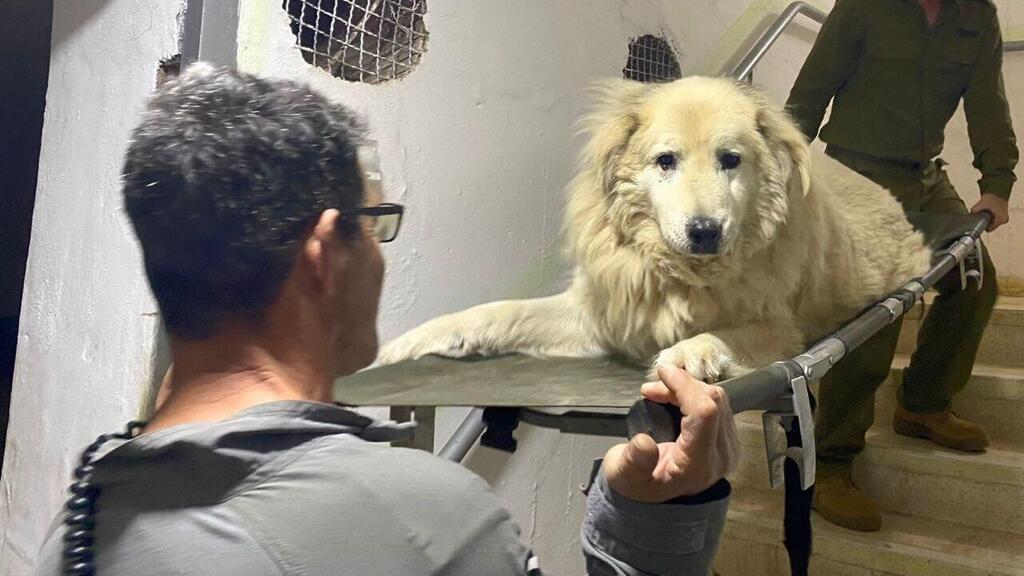
“We’re close to the Syrian border, but it’s relatively quiet here,” Liani said. “There aren’t many sirens, but we experience the war like the rest of the country.” According to him, Bari has already learned to recognize the alerts. “He hears the phone, sees everyone going into the shelter — and goes with them. At first it was hard for him to go down, but he got used to it. The main problem is getting back up because of his age and weight.”
“He’s a very independent dog. He does what he wants. He’s mostly active at night. In the morning he sleeps at home, and in the evening he roams around the kibbutz. At 6 a.m. he knocks on the door to be let inside and goes to sleep. Every time, I find someone to help lift him out of the shelter because I can’t do it alone. Sometimes it’s members of the emergency squad, sometimes my wife and sometimes volunteers. Each time it’s someone else — usually it’s me and my wife,” Liani said.
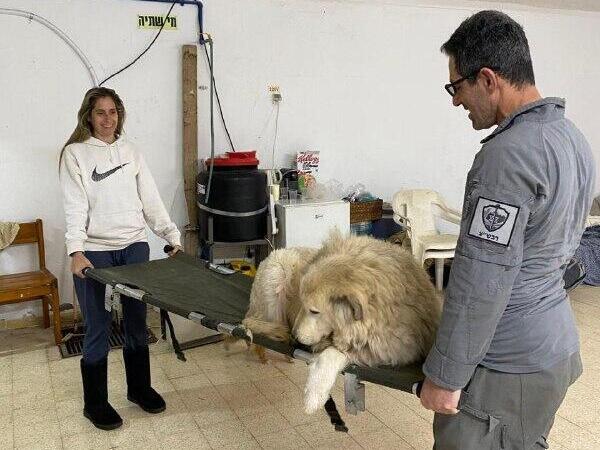
Bari the dog on a stretcher in the shelter
(Photo: Maayan Liani)
(Video: Dimon Buro)


Against the backdrop of a rise in pet abandonment during the war, Liani is seeking to send a message that especially in difficult times, people should not abandon their pets. “Because we live in a kibbutz, I see many dogs being abandoned. People arrive, leave the dog and drive away. Three days ago, a Belgian shepherd puppy — three or four months old — was left here. It’s very sad.”
Speaking about Bari, he added: “The kids love him, and he loves being petted. Whenever he sees people, he comes over and gets attention — he really asks for it. At first many people were afraid of him because he’s a big dog, but they learned to love him in the kibbutz. It’s important for me to say: don’t abandon your dogs during war. Especially now. A dog is family.”