

Radiologists at the Keck School of Medicine of the University of Southern California in Los Angeles diagnose and treat disease and injury using computerized tomography (CT) scanners. Recently, this advanced technology was applied to two ancient Egyptian mummies.
CT scans were performed on the remains of two Egyptian priests, Nes-Min and Nes-Hor, whose bodies were dated to about 330 B.C. and 190 B.C., respectively. Each mummy was scanned inside the lower half of its sarcophagus. The mummies were wrapped in linen shrouds. Around Nes-Min’s neck was a beaded necklace, and his body was covered with a netlike garment adorned with beads.
Gallery
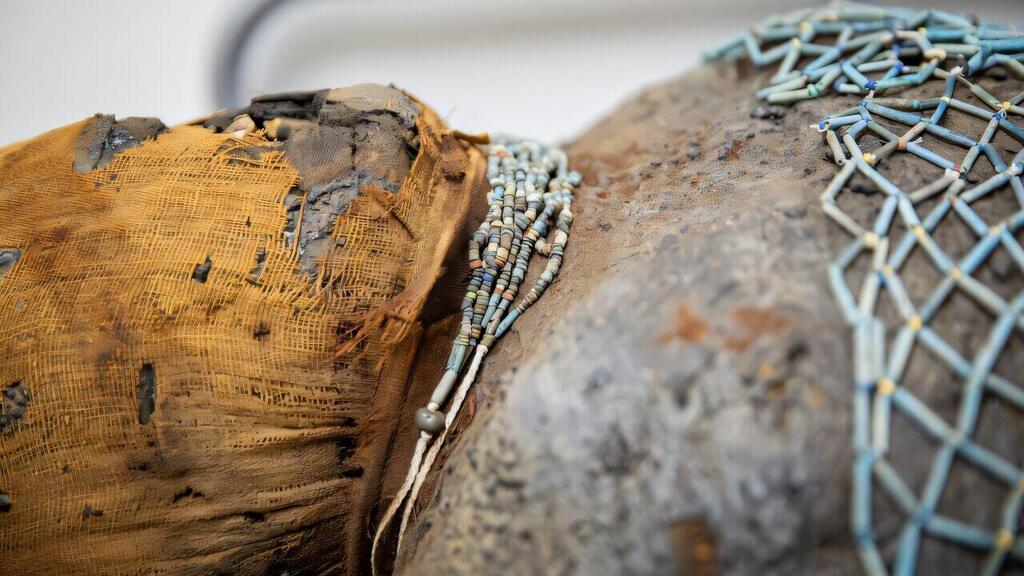
The mummy of the Egyptian priest Nes-Min, wearing a beaded necklace and a netlike garment adorned with beads
(Photo: Ricardo Carrasco III)
The CT scans effectively “sliced” the mummies into 320 digital layers, revealing not only facial features, eyelids and lips, but also shedding light on the priests’ health, life events and life expectancy. The scans uncovered healed injuries, dental problems and disease. Analysis showed that Nes-Min likely suffered from lower back pain, much like many modern people, probably due to natural aging. He was buried with several objects, including scarab beetles and a fish. By contrast, Nes-Hor’s scan revealed dental disease and severe deterioration of the hip joint. He was also older than Nes-Min at the time of his death.
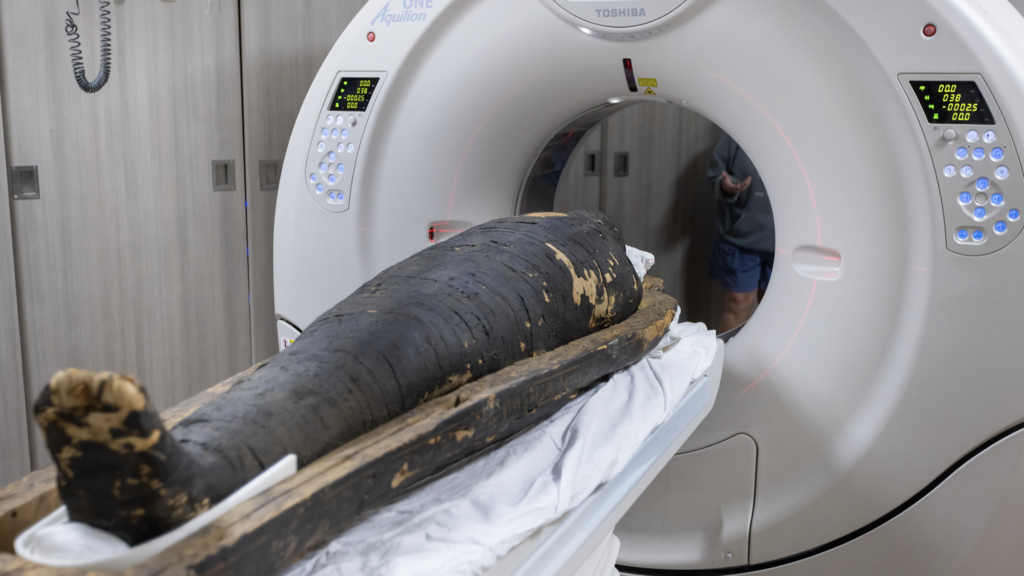
The mummy of the Egyptian priest Nes-Hor as it enters a CT scan
(Photo: Ricardo Carrasco III)
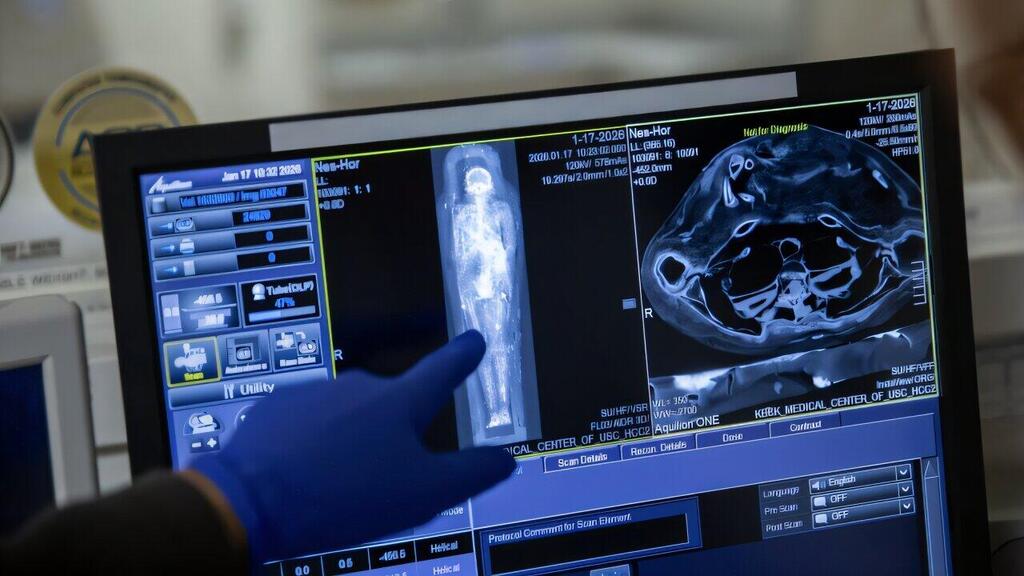
Analysis of the CT scan performed on the mummy of the Egyptian priest Nes-Hor
(Photo: Ricardo Carrasco III)
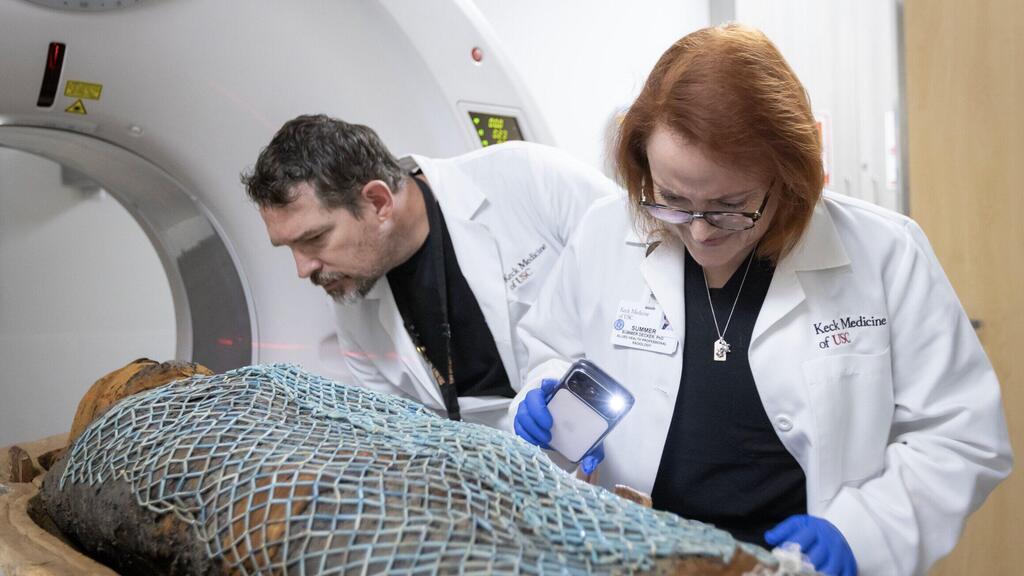
Dr. Summer Decker and Dr. Jonathan Ford
(Photo: Ricardo Carrasco III)
According to Dr. Summer Decker, who leads the field of three-dimensional medical imaging at the Keck School of Medicine of USC, the scans provide a wealth of information made accessible through advances in scanning technology. “These mummies were scanned in the past, but thanks to advances in scanning technology, the results are far more detailed and comprehensive than ever before,” said Dr. Decker, who oversaw the scans and analysis. “The high-resolution images revealed things that were previously unknown and helped create a picture of what the lives of these two individuals looked like.”
After scanning the mummies, Dr. Decker and her colleague, Dr. Jonathan Ford, used the data to create three-dimensional digital models of the Egyptian priests. Using medical-grade 3D printers, they also produced life-size replicas of the priests’ spines, skulls and hips, as well as objects found alongside Nes-Min.
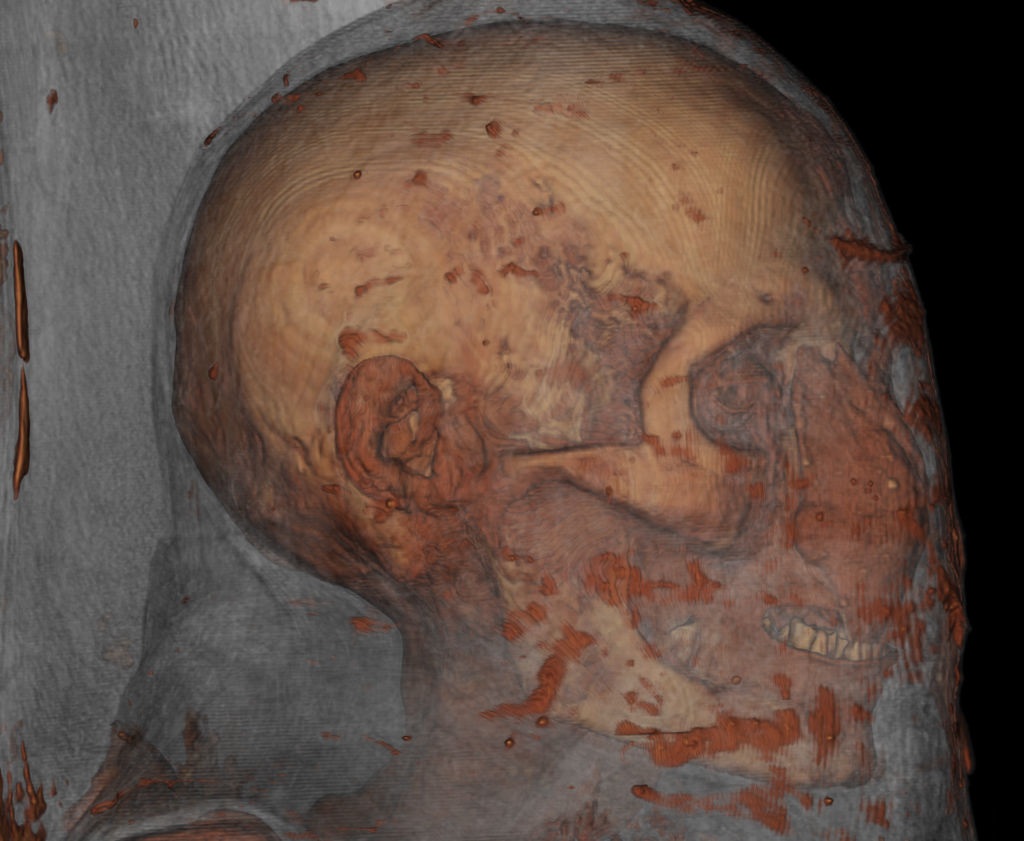
CT scan of the skull of the Egyptian priest Nes-Hor
(Photo: Keck Medicine of USC)
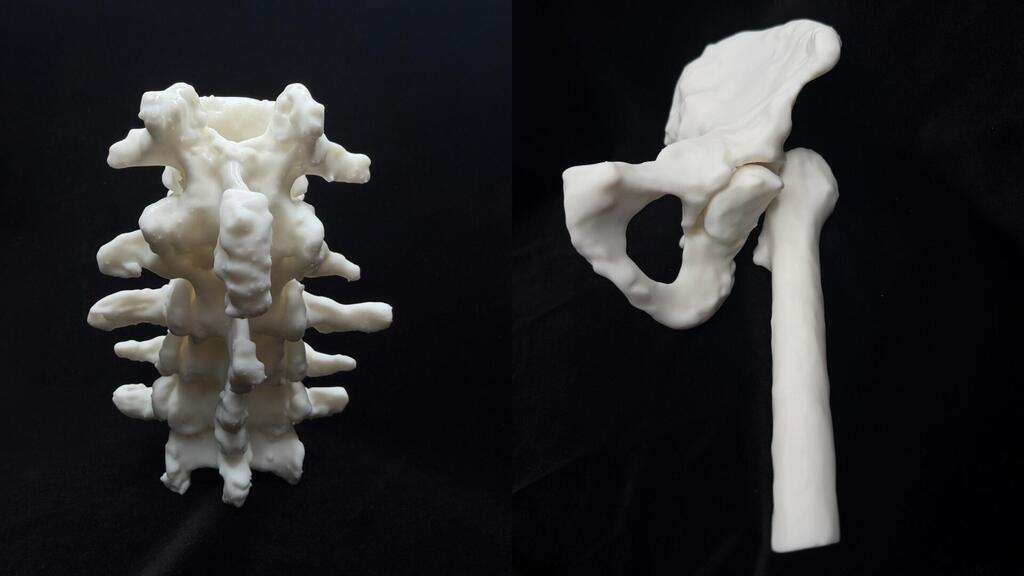
3D-printed models of the spine of the Egyptian priest Nes-Min (left) and the hip joint of the Egyptian priest Nes-Hor
(Photo: Keck Medicine of USC)
The 3D imaging and printing technologies applied to the mummies demonstrate how medical imaging, such as CT or MRI scans, can be transformed into physical reconstructions of a patient’s liver, heart, pelvis or other anatomical structures. Looking ahead, such prints could be used in surgery, to better understand complex medical conditions and potentially even to assist with transplants.
“With these advanced technologies, we can deliver care and provide personalized solutions for our patients, which may lead to improved outcomes,” Dr. Decker said. “Patients may also benefit from holding a replica of their own organ in their hands, helping them understand their condition and how it will be treated.”