

For decades, researchers have followed members of the Ngogo chimpanzee community in Uganda’s Kibale National Park as they spent their time eating fruit and leaves, resting, traveling and grooming one another in the tropical rainforest where they live. But that stable community then split into two groups and descended into years of deadly violence.
Researchers now describe what they say is the first clearly documented case of a wild chimpanzee group splitting into two separate communities, with one carrying out a series of coordinated attacks against the other. Adult males and infants were among the targets, and 28 deaths have so far been recorded.
Gallery
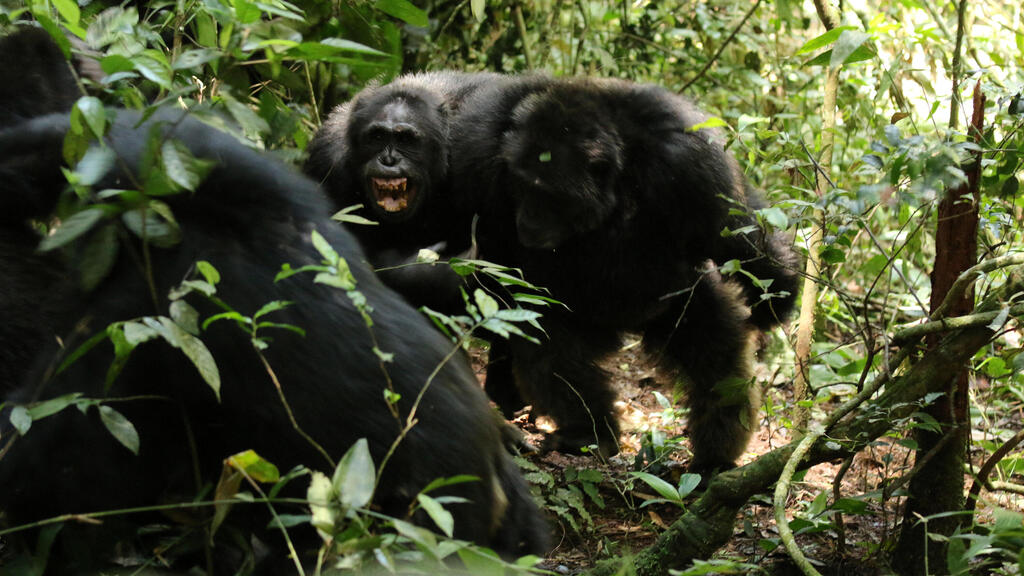
Bites, kicks and jumping on the victim. Chimpanzees from one of the groups
(Photo: Aaron Sandel/ Reuters)
“It involved biting, hitting the victim with hands, dragging, kicking. The attackers were mainly adult males, though adult females sometimes also took part,” said Aaron Sandel, a primatologist at the University of Texas and lead author of the study published Thursday in the journal Science.
Researchers began studying the Ngogo chimpanzees in 1995. It was the largest known community of wild chimpanzees anywhere, peaking at about 200 individuals. Chimpanzee groups usually number about 50. Researchers had long known that chimpanzees attack and kill members of neighboring groups, who are effectively strangers, but this case was entirely different.
“It is hard for me to grasp that yesterday’s friend became today’s enemy,” said Professor John Mitani of the University of Michigan, a primatologist and senior author of the study. “The males in both groups grew up together, knew each other all their lives and cooperated and worked together, benefiting from it.”
“So why split? It is possible they became victims of their own success, as the group grew to a size that could no longer be sustained,” he said.
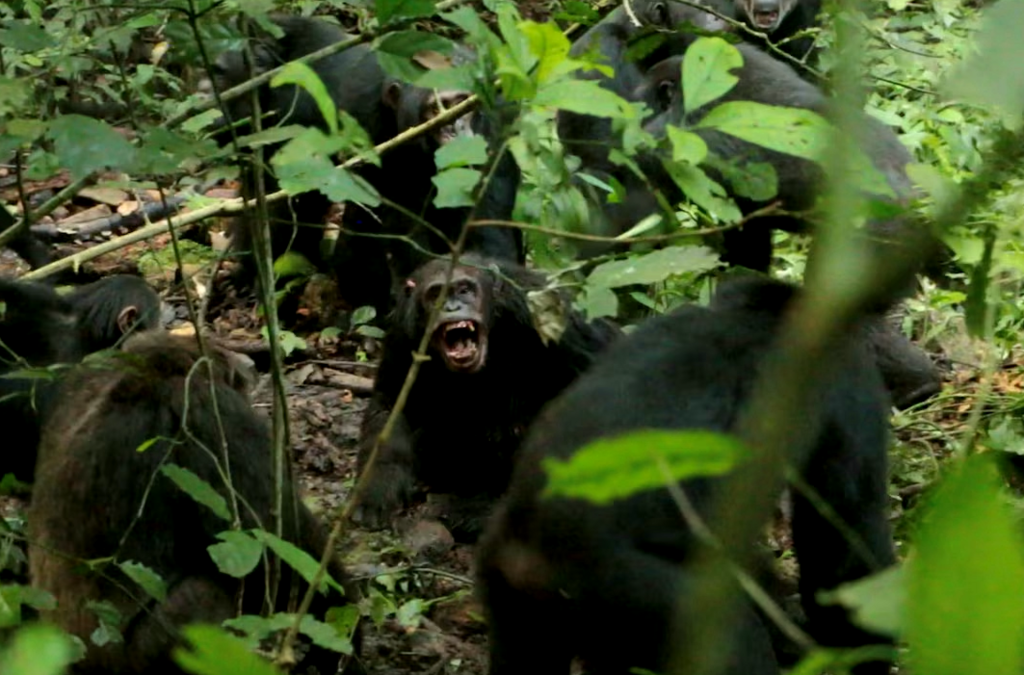
Clashes between chimpanzees from the two groups
(Photo: Aaron Sandel/ Reuters)
The researchers said a combination of factors may have undermined the group’s stability. Its original size may have intensified competition for food and competition among males to mate with females. The deaths of seven chimpanzees in 2014, amid signs of illness, may have disrupted social ties and created hostility within the group.
Chimpanzee communities are dominated by males. In this group, the alpha male, the highest-ranking chimpanzee in the community, changed around the time tensions began in 2015, when a chimpanzee named Jackson overthrew another male.
Before the split, the group was a single cohesive community, though it contained social subgroups. Members of two such subgroups began avoiding each other in 2015. In 2017, an epidemic struck the community and 25 chimpanzees died, most of them infants. Around that time, members of one subgroup attacked Jackson, but he survived.
By the end of 2017, two distinct groups had formed, known as the western group and the central group. The violence that followed was carried out by the western group against the central group, beginning in 2018.
The study included observations through 2024, during which seven adult males and 17 infants were killed, a total of 24 chimpanzees. The violence continued afterward. Last year and this year, one adult male, one adolescent male and two infants were killed, bringing the death toll to 28. Many chimpanzees also disappeared without clear explanation, suggesting additional killings not documented by researchers.
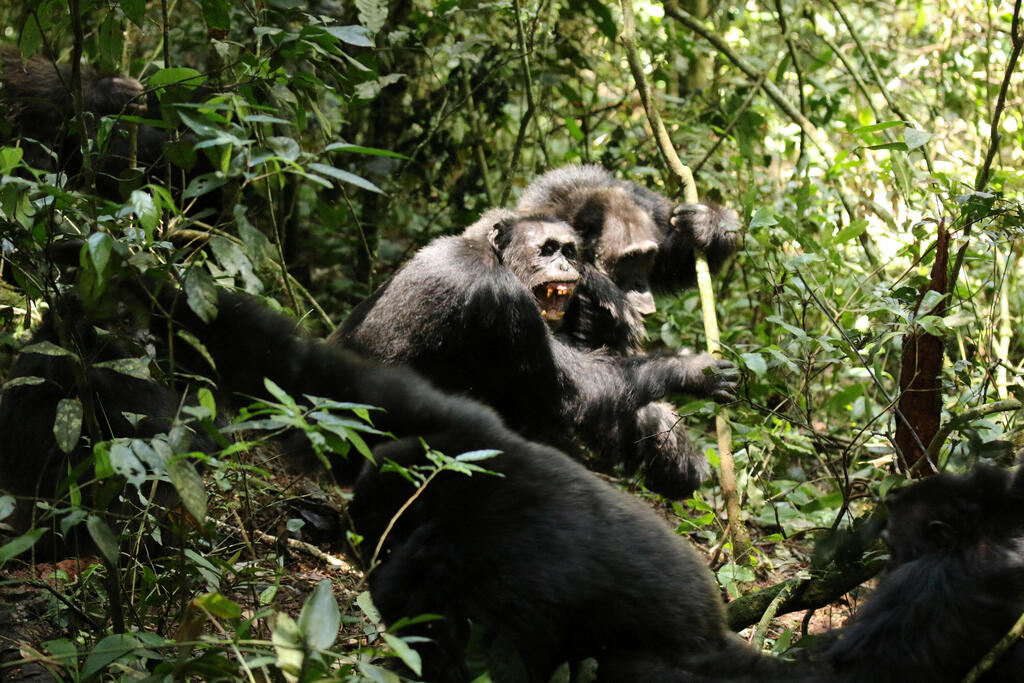
Infants were also killed in the attacks
(Photo: Aaron Sandel/ Reuters)
“They just keep hitting and jumping on the victim,” Mitani said. “I have seen attacks lasting less than 15 minutes. There are also bites, and when you examine the victims’ bodies you see cuts.
“Also, a single adult chimpanzee can snatch an infant from its mother and kill it quickly with a few bites or by blunt force trauma. That may include slamming it on the ground.”
The western group started out smaller in both size and territory, but eventually surpassed the central group on both counts. The western group appears to have suffered no losses at all.
Although the scientists preferred not to call the events a “civil war,” a term with a specific human meaning, they said the case showed important parallels.
The researchers cited one earlier case in which a chimpanzee community appears to have split, also followed by deadly violence by one group against the other. That case took place in Tanzania in the 1970s. In that instance, researchers regularly fed the chimpanzees, altering their natural behavior, and observed them only in the feeding area, leaving many questions unanswered.
Chimpanzees and their close relatives, bonobos, are humans’ closest evolutionary relatives. But the researchers cautioned against drawing direct parallels between chimpanzee violence and human behavior.
“We resemble them in some ways because of our shared evolutionary history, but we also differ from them in fundamental ways, because we have changed over the past 6 to 8 million years since we split from them,” Mitani said.