


A giant blanket of spider webs is covering the vegetation after millions of long-jawed orb-weaver spiders of the genus Tetragnatha gathered along the stream banks in the Nahal Sorek nature reserve and spun vast expanses of webbing. The rare phenomenon was triggered by an outbreak of billions of midges, providing the spiders with an abundance of food and drawing them to the area.
Israel Nature and Parks Authority volunteer Yehiyam Dahan documented the spectacular sight. "The feeling there is simply incredible! It looks like a scene from a science fiction movie! Vast areas are covered in a giant web. It feels as though no one has been here and everything has been covered in spider webs," he said.
Spider webs at Nahal Sorek
(Photo: Yehiyam Dahan/Israel Nature and Parks Authority)


Behind the phenomenon is an ecological dynamic involving the proliferation of millions of local Tetragnatha spiders, feeding on a "buffet" of billions of midges, a type of non-biting mosquito-like insect. The spider outbreak was driven by the flow of treated wastewater and an excess of organic matter in the stream, which created an ideal habitat for billions of midges and mosquitoes to breed.
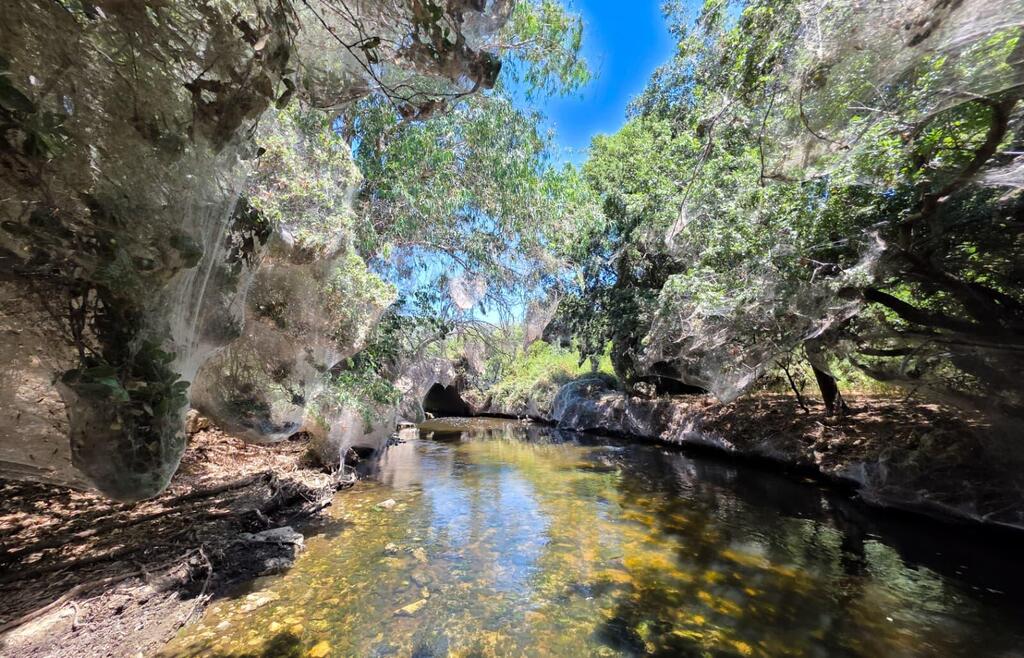
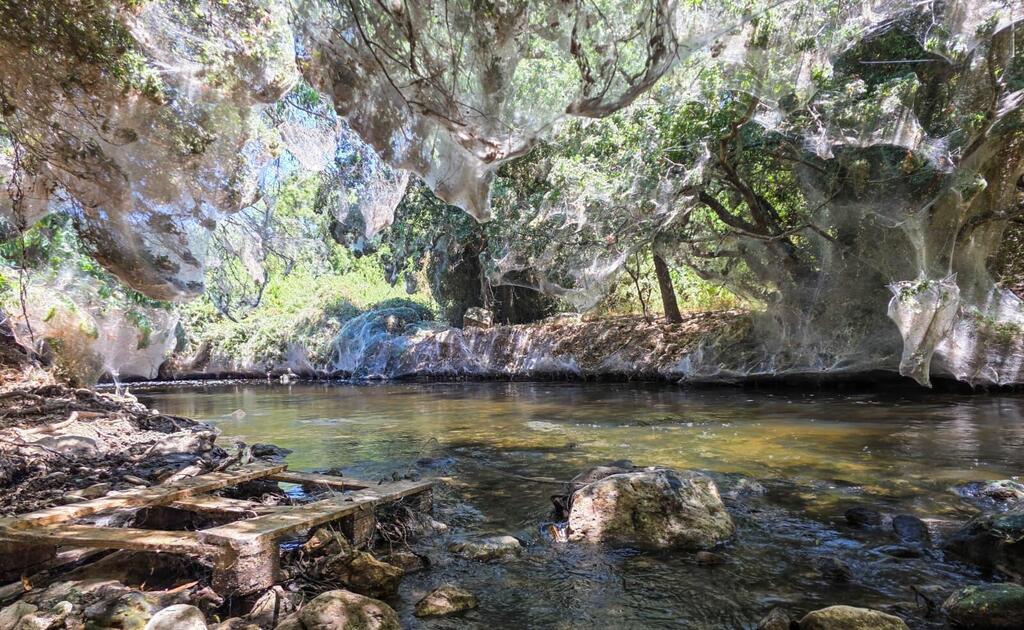
Spider webs at Nahal Sorek
(Photo: Yehiyam Dahan/Israel Nature and Parks Authority)
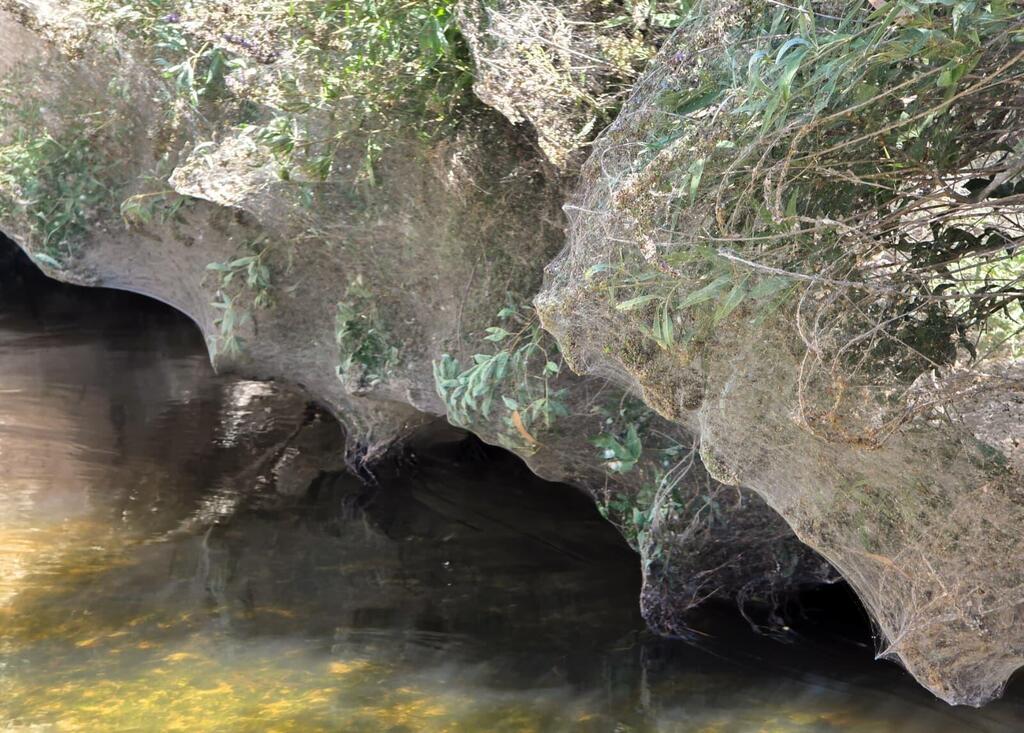
Spider webs, up close
(Photo: Yehiyam Dahan/Israel Nature and Parks Authority)
The Israel Nature and Parks Authority explained that the enormous abundance of food attracted vast numbers of spiders to the area, where they spun millions of webs close together. Over time, the individual webs became intertwined, forming a single enormous blanket of webbing that covers everything in its path.
Tetragnatha spiders, characterized by elongated bodies, long legs and prominent jaws, use the vegetation along the water to hunt with maximum efficiency and are now providing a unique and rare natural spectacle.