

Israel’s Civil Administration and the Israel Nature and Parks Authority said the killing of hundreds of crocodiles at the Petza’el farm in the Jordan Valley last August was carried out over concerns the site could become the target of a sabotage attack. The agencies said hostile actors could have breached the farm’s perimeter fence and released the crocodiles across the West Bank. They also said they will not open an investigation into the culling or the farm’s closure.
Officials said the decision was made both to prevent an immediate public-safety threat and to end the suffering of animals kept in deteriorating conditions. “The decision to carry out the shooting was intended to reduce the crocodiles’ suffering, as they lived in poor infrastructure and harsh conditions, while protecting the public from immediate risks,” the agencies said.
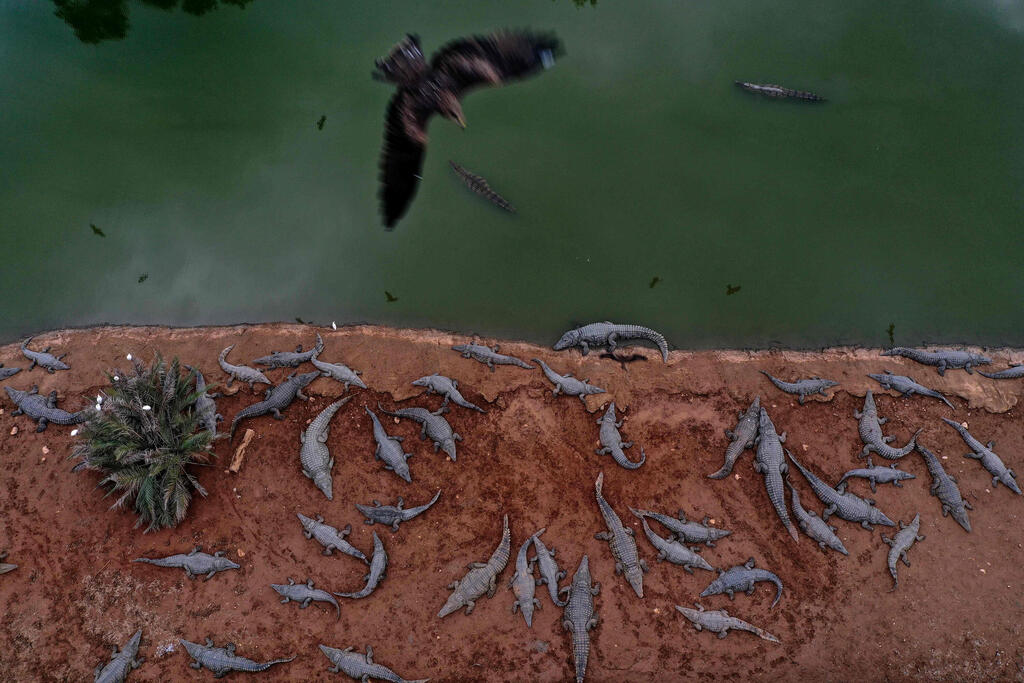
(Photo: AFP)
The killing sparked widespread criticism from environmental groups and animal-welfare advocates. Several organizations — including Let the Animals Live, Animals Now, the Freedom Farm Sanctuary, the Keren Or Sanctuary and others — demanded an investigation and clearer protocols for similar cases in the future.
In their response, the Civil Administration, the Nature and Parks Authority and the Agriculture Ministry said that for years professionals had issued repeated warnings to the farm owner and even carried out repairs themselves to prevent crocodile escapes and to stop unauthorized visitors from entering the property. Several crocodiles had escaped in the past, officials said, and were recaptured without casualties. They also cited a rise in cases of people entering the farm illegally to approach or provoke the animals.
Officials added that the broader security situation raised concerns that hostile actors might deliberately break into the farm as part of an attack, potentially releasing hundreds of crocodiles into surrounding communities. They also said the animals had not been properly cared for, alleging that the owner fed adult crocodiles the carcasses of slaughtered young crocodiles, and that hatchlings were sometimes eaten by older animals.
The agencies said the decision to end the crocodiles’ lives was made reluctantly, “out of a sense of responsibility for public safety and compassion for the animals.” They rejected calls to open an investigation, arguing the move was taken lawfully and only after years of attempts to find alternatives. The culling, they said, was carried out under a valid hunting permit and according to international protocols used at crocodile farms worldwide. They described the event as “unique and extreme,” saying there was no justification for creating a permanent national guideline for similar cases.
Separately, they said the prime minister’s adviser on animal-welfare issues, Tal Gilboa, told Civil Administration officials in April she supported ending the crocodiles’ lives because the conditions in which they were kept constituted suffering on their own.
Animal-welfare groups, including Let the Animals Live, the IDF Vegan Advocacy Project, the Animal Lobby, the Jane Goodall Institute Israel and others, said the authorities’ explanation relied on information that had been withheld from them in response to freedom-of-information requests filed four months ago. They also questioned the claim that conditions justified killing the entire population, noting that the authorities’ own assessments showed that although one crocodile was injured, many others were healthy, raising doubts about the need for a mass culling.