

Historical records documenting earthquakes in the Levant and the resulting damage and loss of life have accumulated over the past 3,000 years. Prof. Motti Zohar of the University of Haifa’s School of Environmental Sciences, together with Dr. Amos Salamon of the Geological Survey of Israel and Prof. Rehav (Buni) Rubin of the Hebrew University of Jerusalem, conducted a critical review and in-depth analysis of existing historical information on major earthquakes that struck the Land of Israel and its surrounding region.
The researchers examined data beginning in the first millennium BCE through the July 1927 earthquake and seismic events recorded by seismographs in the 20th century. To statistically analyze the events and estimate recurrence intervals, the researchers focused on the past 1,000 years, for which the available information is more reliable and complete than for earlier periods.
Gallery
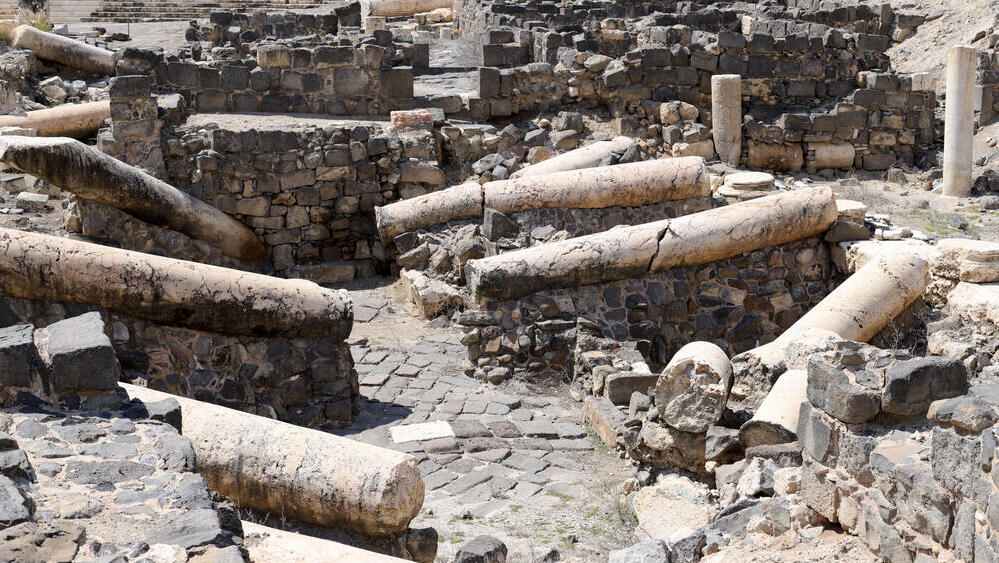
A structure in the ancient city of Beit She’an (Scythopolis) that was destroyed in an earthquake in the mid-8th century CE
(Photo: Shimon Bar/Shutterstock)
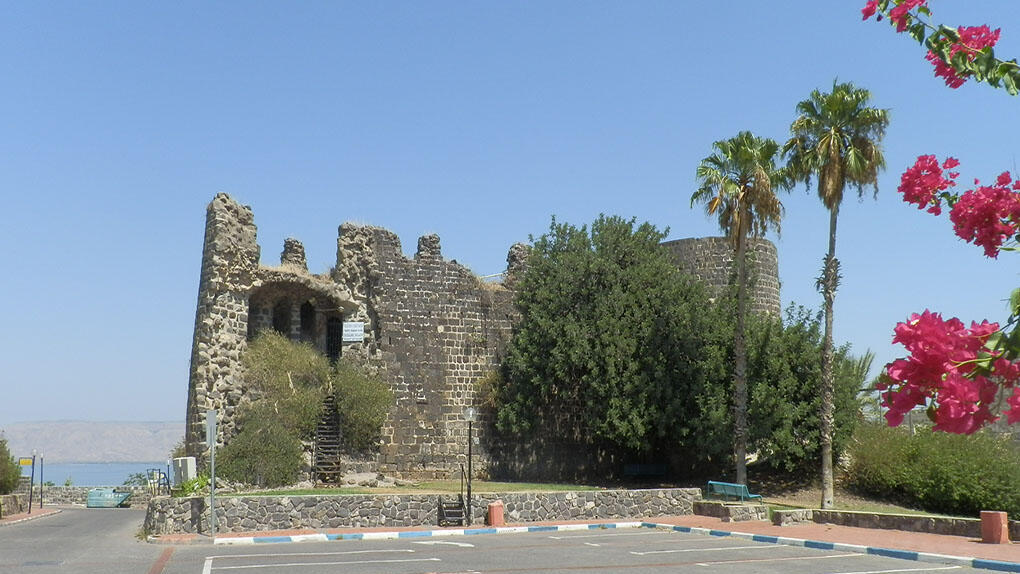
The Chulaybi Fortress in Tiberias, which was damaged in the powerful earthquake that struck in January 1837
(Photo: Motti Zohar)
The researchers found that an earthquake causing some level of damage in Israel and surrounding areas, even minor damage, occurred on average once every approximately 45 years. By contrast, an earthquake causing extensive damage and casualties occurred roughly every 55 years, while a particularly destructive earthquake occurred about once every 170 years.
However, the earthquakes did not occur in a regular cycle, making it impossible to predict when the next one will strike.
“These findings cut in half the commonly accepted public estimate that a major earthquake occurs once every 100 years,” Zohar said. “The implication is that Israel’s seismic risk is tangible and real. Therefore, there is great importance in preparedness at both the personal and national levels, reinforcing older buildings and implementing emergency guidelines for earthquake response.”
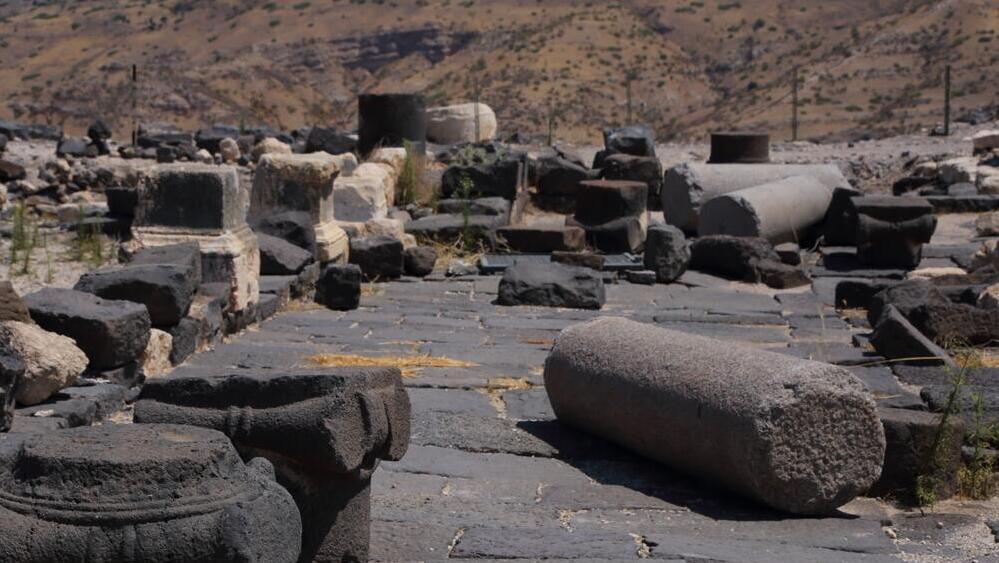
Ruins of Byzantine-era churches in the ancient Roman city of Susita (Hippos), destroyed in the earthquake that struck in 749 CE
(Photo: ai-ivanov/Shutterstock)
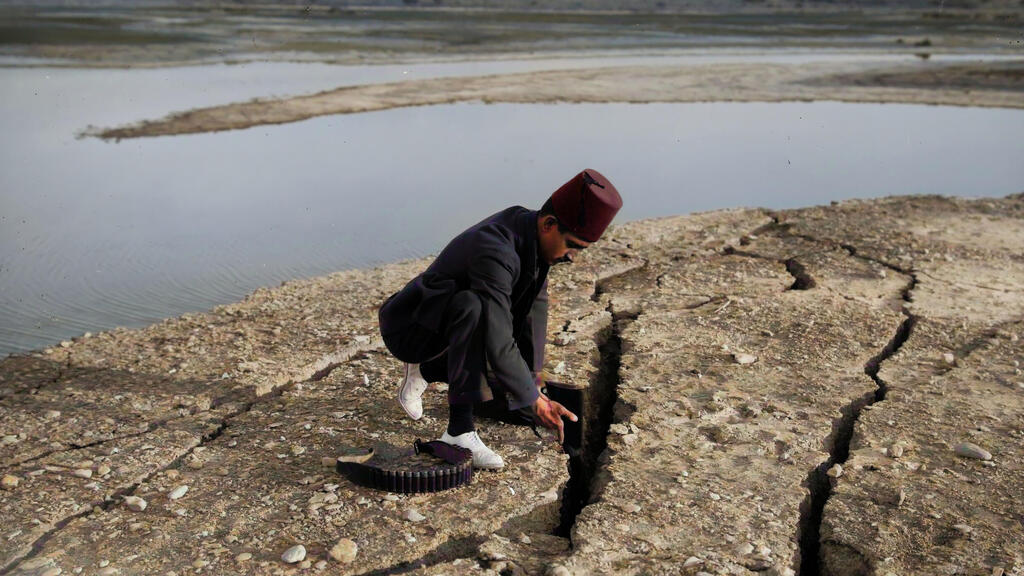
A man examines ground fissures in the Dead Sea caused by the 1927 earthquake
(Photo: American Colony Archive)
During the study, the researchers identified recurring patterns of damage in many communities across the Land of Israel and surrounding areas over the past 2,000 years, mainly along the Dead Sea Fault, also known as the Syrian-African Rift, the region’s most active seismic zone.
Among the cities repeatedly affected were Jerusalem, Tiberias, Safed, Acre, Nablus, Ramle, Jericho, Beit She’an and even Tyre in Lebanon. Jerusalem, for example, is mentioned in historical sources as having suffered repeated earthquake damage dating back to antiquity, including in the years 363, 749, 1033 and 1927.
Tiberias and Safed also sustained heavy damage in several powerful earthquakes that caused casualties. One such earthquake in January 1837 destroyed large parts of both cities and killed many people.
“It is important to emphasize that the same cities damaged in the past, which today are more populated and densely built, are expected to be hit again in the future,” Zohar said.
The study reinforces the understanding that the primary source of earthquakes in the region is the Dead Sea Fault, which stretches from the Gulf of Eilat to southern Turkey and is home to millions of people along its path.
Zohar and his colleagues said the public significance is clear: Israel lies in a tectonically active region, and major earthquakes are not a rare scenario. Therefore, the relevant question is not whether an earthquake will occur, because it certainly will, but when it is expected to happen.
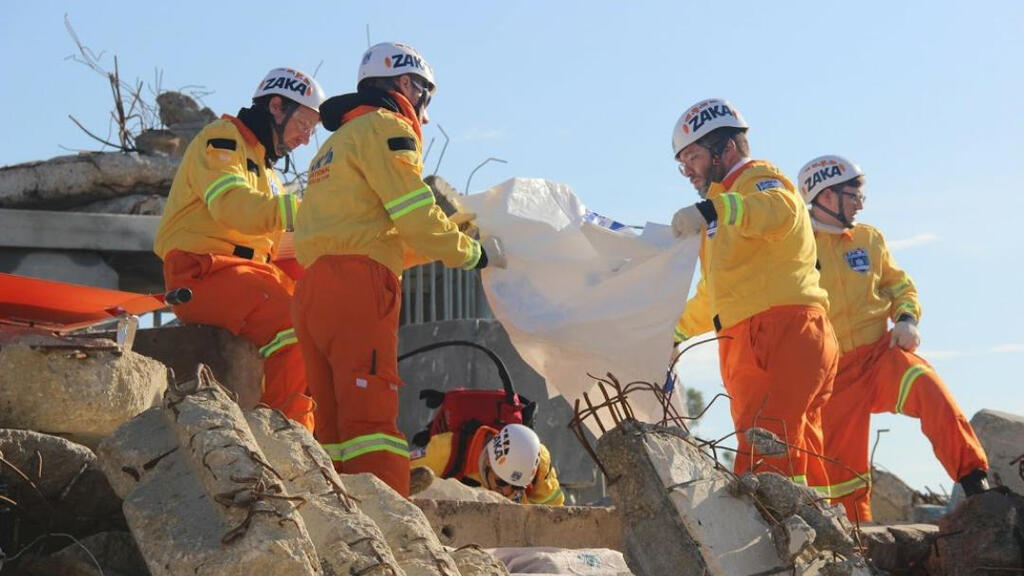
An earthquake simulation drill in Israel
(Photo: ZAKA)
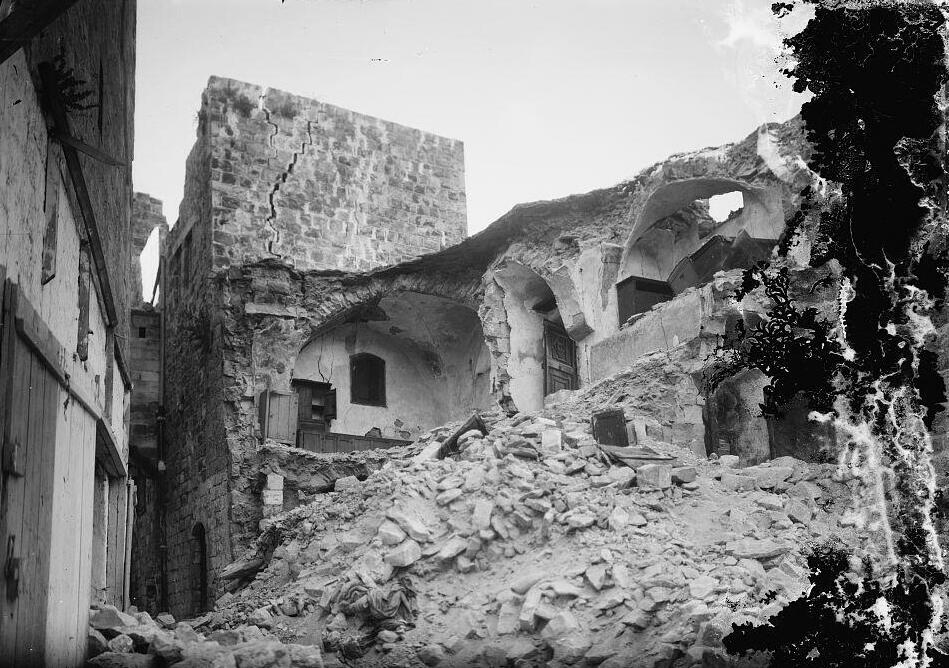
A building damaged in Jerusalem during the earthquake that struck Israel in 1927
(Photo: Courtesy of Dov Friedman)
Another important finding from the study concerns the fact that some of the information relied upon by earthquake researchers for decades was incorrect or unsupported. Dozens of earthquakes previously believed to have struck Israel either never occurred or took place outside the Land of Israel without causing any damage in the country or surrounding areas.
The researchers identified errors that developed in scientific literature over many years of study, including confusion between sources, misinterpretations and duplicate records. For example, an earthquake attributed to 92 BCE appeared repeatedly in scientific catalogs for many years, but a recent reexamination by Dr. Yaakov Kertz of the Geological Survey of Israel found that it was not actually based on a reliable historical source.
One of the study’s key conclusions is that Israel’s current earthquake-resistant building standard, Israeli Standard 413, was based on a list of historical earthquakes containing errors and inaccurate reports. An extensive update to the standard is currently being led by the Geological Survey of Israel.
The researchers have now created a new vetted list of earthquakes that affected the Land of Israel and surrounding areas, providing decision-makers with a more reliable and accurate scientific basis for assessing Israel’s seismic risk.
“An updated catalog of historical earthquakes in Israel is an essential tool for the country’s emergency authorities,” Zohar said. “It will enable a better assessment of national risk and more appropriate preparation for the next earthquake, which will certainly reduce expected damage and loss of life.”