


Israeli mango growers are warning of a severe crop crisis after cold weather and rain in March devastated orchards around the Sea of Galilee, cutting yields by as much as 80% and likely sending consumer prices sharply higher.
Farmers estimate this year’s mango harvest will reach only 20% to 30% of last year’s crop. The blow comes after growers faced the opposite problem in 2025: too much fruit, collapsing prices and blocked export markets that left large quantities of mangoes unsold or sold at a loss.
“One year we are hurt because of the war,” growers said in frustration, “and the year after because of the weather.”
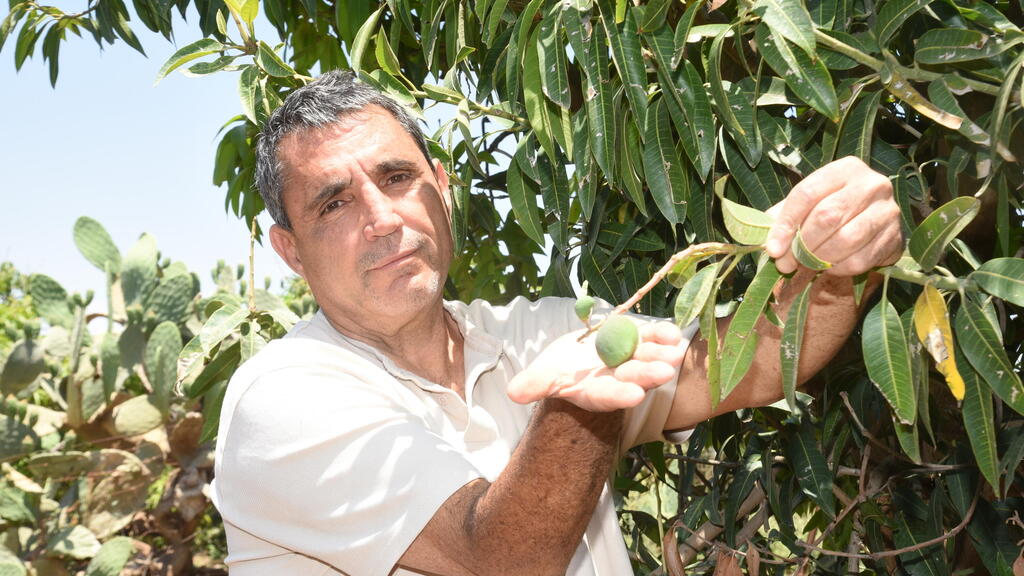
“The situation is simply a catastrophe. There has been a collapse of more than 80% in the size of this year’s crop compared with last year,” said Alex Kaplan, 50, manager of the orchards at Kibbutz Kinneret. “In 2025, I harvested 700 tons of mangoes. This year I expect to reach a maximum of 120 tons. I have been growing mangoes for five years, but from conversations with the veterans of the sector, none of them remembers such a sharp drop in the amount of fruit.”
Kinneret has about 2,500 dunams of orchards, where it grows mangoes, almonds, avocados, lychees, bananas and dates. Mango trees cover about 250 dunams of that land. The kibbutz has grown mangoes for roughly 50 years, and the fruit is considered one of its most successful crops.
But the past two seasons have shown how exposed growers are to both market shocks and weather extremes. In 2025, Kaplan said, flowering conditions were ideal for mangoes and no severe heat waves damaged the fruit. The result was a record harvest, but also a collapse in revenue.
Alex Kaplan
(Photo: Avihu Shapira)
“In 2025, we actually dealt with a record harvest, and at the same time with prices in free fall,” Kaplan said. “It was a record year in terms of the quantity we picked, but at the same time a negative record in terms of the return to the grower. Because of the huge mango surplus, I had to sell a kilo for about one shekel, an amount that did not come close to covering the costs of growing, picking and all the related expenses.”
This year began with cautious optimism. The start of the mango flowering season looked promising, Kaplan said, but March’s weather changed everything.
“As the month progressed and temperatures dropped, we began to fear for the future of the crop,” he said. “We need more than 20 degrees Celsius in March, and this year the temperatures were much lower. There were also days around 10 degrees. In that kind of cold, there is less activity by pollinating insects, whose job is to transfer pollen from the male flower to the female flower. When the pollen is not transferred, there is no fertilization and no fruit develops.”
Kaplan said the low temperatures damaged the trees’ ability to complete fruit set, the stage in which a fertilized flower becomes fruit.
The extent of the damage became clear in April.
“At that stage, many of the flower clusters remained bare, without fruit, and in places where fruit had already developed, it developed abnormally and without a pit,” he said. “The mango pit has an important role in the fruit’s development, size and taste. If a mango grows without a pit, it remains very small, bursts on the tree, has no commercial value and is not worth picking. It stays hanging until it dries out and falls.”
Kaplan estimated the damage to Kinneret alone at several million shekels and said many other farmers were likely to suffer losses of a similar scale.
Robert Kennedy Amrousi, 58, a mango grower from the moshav of Migdal, said growers were heading into a “terrible year.”

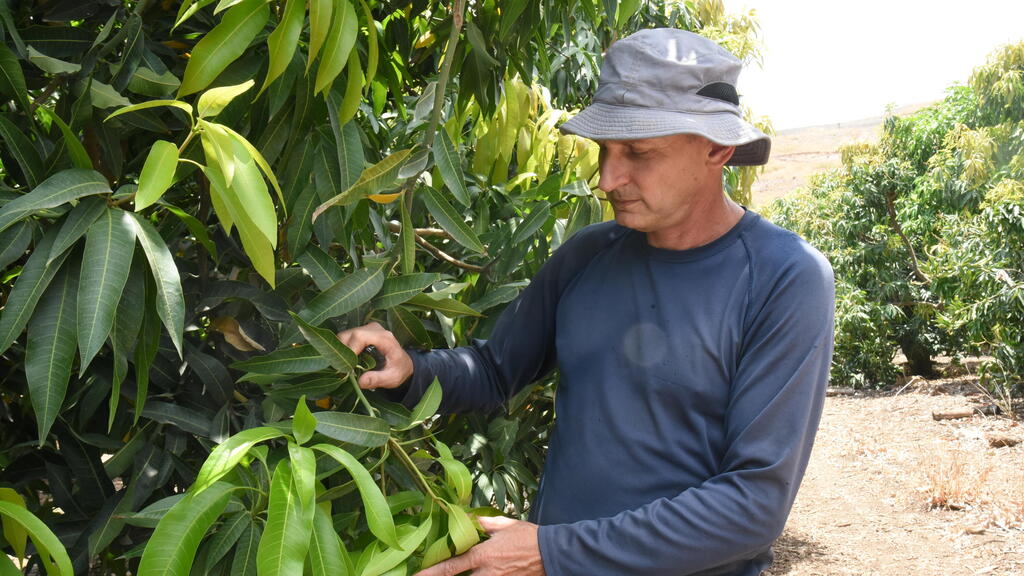
Mangoes in an orchard at Kibbutz Kinneret
(Photo: Avihu Shapira)
“In my estimate, the crop in Migdal this year will be about 30% of what it was in 2025,” he said. “Last year we left hundreds of tons on the ground because the price was so low that it was not worth picking. The European boycott and the blockage of shipping routes by the Houthis in the east destroyed major markets abroad, and in Israel there was a huge fruit surplus and the price collapsed.”
“This year, by contrast, the crop collapsed because of the climate,” he added. “We had rain during flowering and fruit set, and the temperatures were especially low. We have never experienced such a drop. It is discouraging. All the growers around the Sea of Galilee were hurt by it. I spoke with other farmers and everyone is crushed by what happened. One year we are hurt because of the war, and the next year because of nature. I hope at least that prices will be good this year and that we will get a few more shekels for every kilo.”
Anat Leshem, CEO of the Tzemach Avocado packing house, which also packs mangoes and corn, said this year’s mango volume would be the lowest in at least a decade.
“This year we will pack the smallest amount of mangoes in the past decade, and perhaps in even more years,” she said. “We are a regional packing house owned by kibbutzim, and we pack mangoes that come to us from dozens of communities. This time I have only one-third of the average annual quantity. It will be a thin season in terms of work and we will have to cope.”
Leshem said she expected prices to be higher than consumers are used to.
“About half of the mango crop is sent for export every year,” she said. “But this year, because of the expected high price in the local market and because of the strengthening of the shekel, we will probably increase our mango supply to the domestic market, while at the same time preserving the export markets that are so important to us for future seasons.”