

Cats are considered pure in Islam and are therefore invited into homes and onto holy ground, including the sacred mosque in Mecca.
Water that cats have drunk from can be used to wash parts of the body in purification ahead of prayer and food, tasted by the felines, can still be eaten, according to belief.
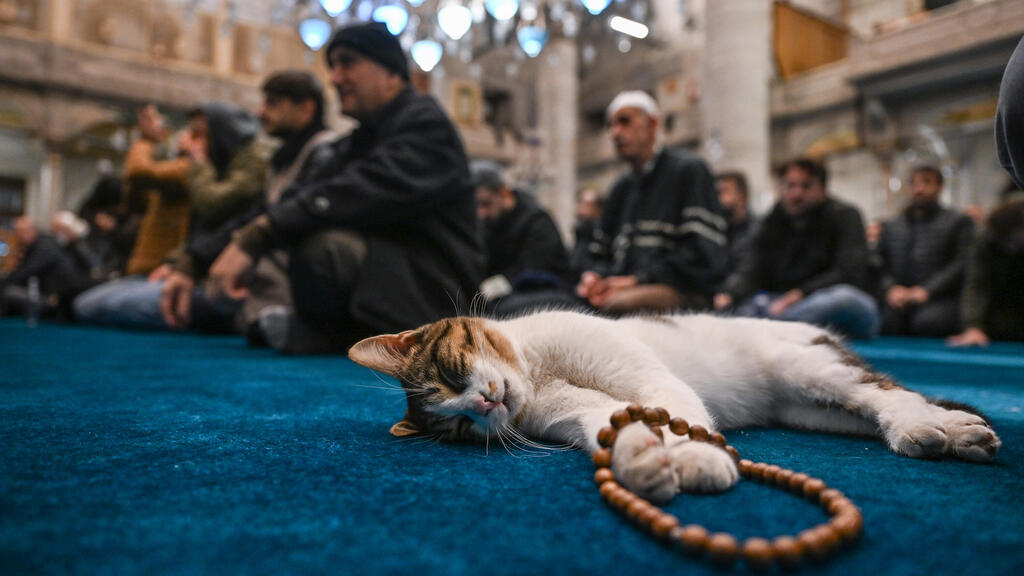
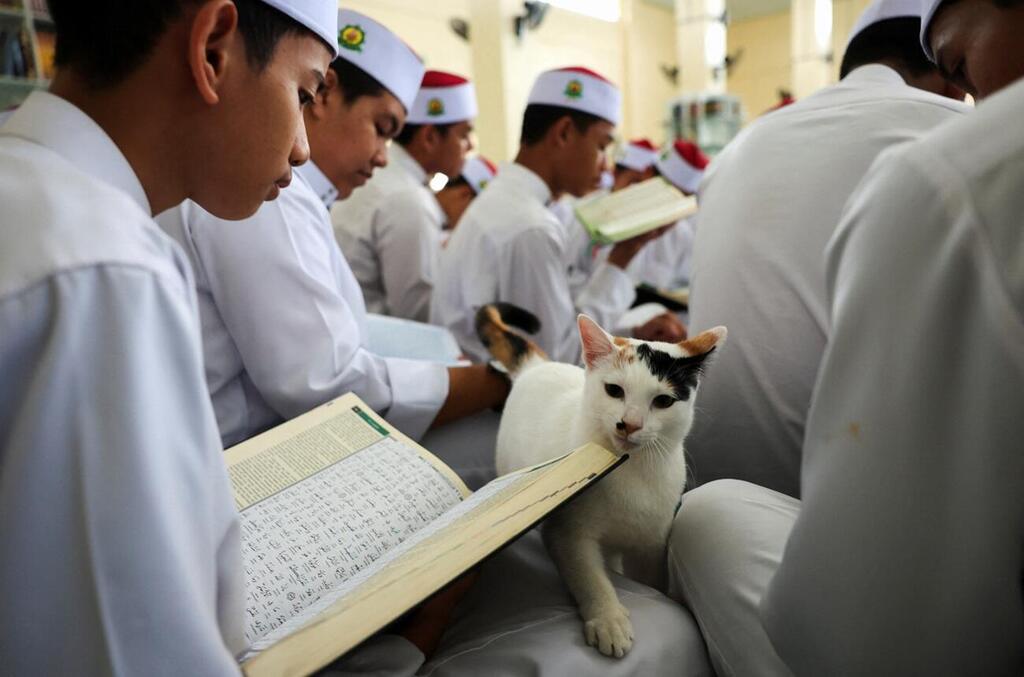
Boys study the Quran in Malaysia
(Photo: Hasnoor Hussain / Reuters)
Sharia — the system of Islamic religious laws and principles — requires Muslims to eat only meat slaughtered in the name of Allah, a practice known as tasmiyah, which refers to reciting the Bismillah blessing before various actions such as eating, speaking, sexual relations, and slaughtering. The meat must also meet specific requirements.
Islamic law forbids the consumption of pork or meat from animals slaughtered without invoking Allah’s name. It also defines haram — other animals prohibited for consumption — including monkeys, dogs, cats, and other carnivorous species.
“Cats, unlike dogs, are considered clean and pure animals, but dietary permissibility is a different category — so even though cats are ritually and legally clean, they fall into the same food category as dogs and pigs,” said Prof. Miri Shefer-Mossensohn of Tel Aviv University’s Department of Middle Eastern and African History.
According to Islamic tradition (hadith), the Prophet Muhammad was known for his deep affection for cats. A well-known story tells of his beloved cat, Muezza, who once slept on the sleeve of his robe. When the time for prayer came, Muhammad preferred to cut off the sleeve rather than disturb her slumber. Another tale credits Muezza with saving Muhammad from a snake bite. As a gesture of gratitude, the Prophet stroked her head, giving rise to the belief that the stripes on many cats’ foreheads are the marks of his fingers.
A saying attributed to Muhammad declares, “Love for cats is part of faith.” Cats also appear as a recurring motif in many Arabic proverbs. One of the Prophet’s companions, Abd al-Rahman ibn Sakhr al-Dawsi, was famously nicknamed Abu Hurayra—“Father of the Kitten”—because of his fondness for cats and his constant companionship with one, which he was said to always carry with him.
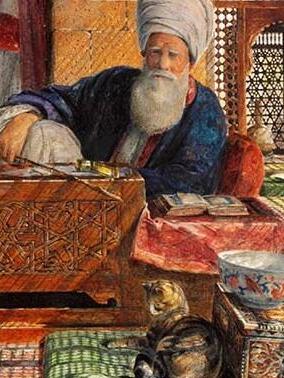
Drawing of a cat resting next to an Imam in Cairo
(Photo: John Frederick Lewis / Wikipedia)
It is not surprising, therefore, that cats are seen as a source of blessing for Muslims and thought to bring calm to a home. They have also been considered useful in protecting stored food from rodents and even valuable manuscripts written on paper.
Get the Ynetnews app on your smartphone: Google Play: https://bit.ly/4eJ37pE | Apple App Store: https://bit.ly/3ZL7iNv
Dr. Nesya Shemer, who teaches Middle Eastern studies at Bar Ilan University, said Islam has a moral code that includes compassion for animals.
"The Quran encourages compassion and justice for all creatures, including animals, who were created by Allah," she said. "Many passages highlight the value of animals and compel people to treat them with mercy."
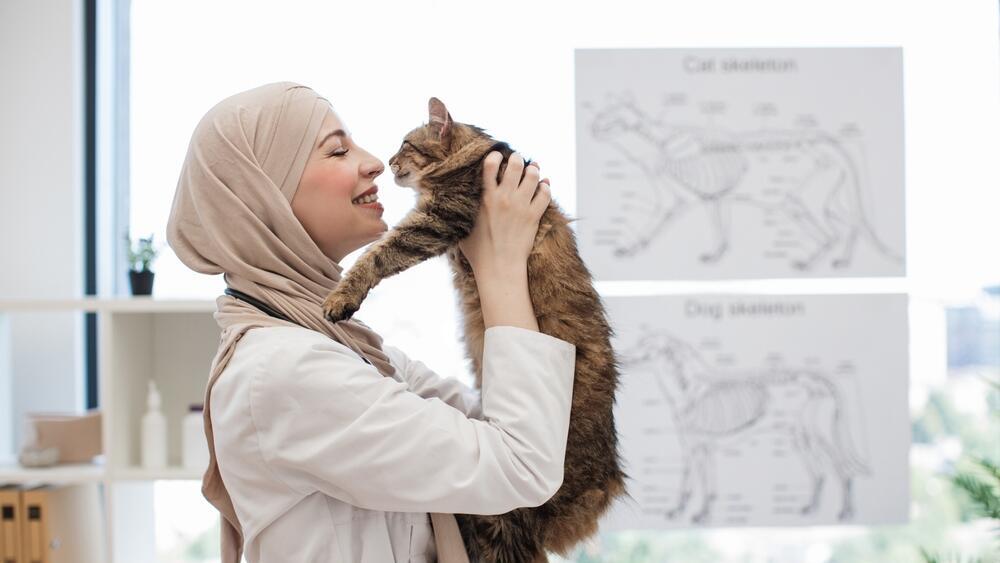
A Muslim woman and her cat
(Photo: SofikoS / Shutterstock)
There are severe punishments for abuse of animals in the hadith and stories of rewards for those who were compassionate to them, Shemer said.
In the early days of Islam, special institutions caring for cats were established, paid for by the Muslim endowment, the waqf. Edward William Lane, a British subject living in Cairo in the 19th century, described a park for cats, originally built by an Egyptian sultan in the 13th century, while in Europe at the time, cats were killed for food or dispatched on the instruction of the Pope.
The care for cats may have originated even before the spread of Islam and the feline was considered a sacred animal even in ancient Egyptian times.
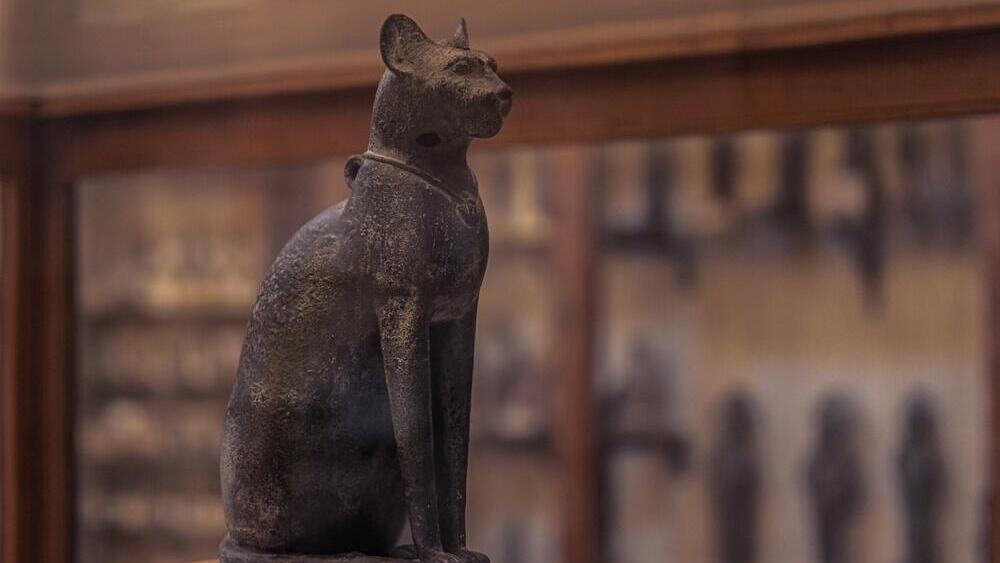
An ancient Egyptian statue of a cat
(Photo: RPBaiao / Shutterstock)
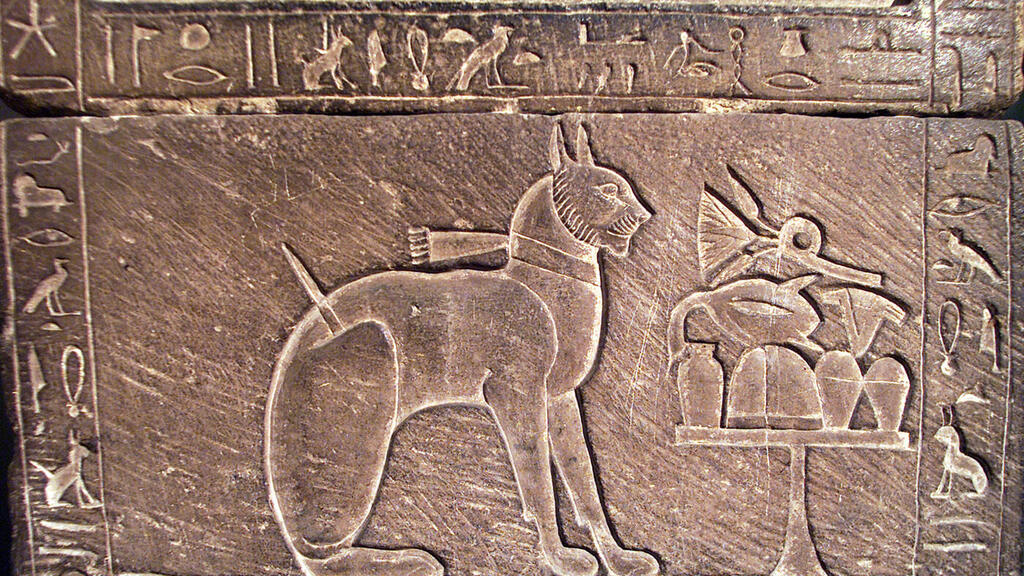
Depiction of a cat in an Ancient Egyptian wall carving
(photo: Aladin Abdel Naby / Reuters)
Shemer said the Arab Peninsula, the birthplace of Islam, came under the influence of many religions and cultures over the years, including ancient Egyptian customs and it was highly likely that the treatment of cats may have been one such influence that remained after Muslims conquered Egypt in the 7th century BCE.