

The mountain gazelle has survived in Israel for tens of thousands of years, enduring long, hot summers and extended periods with little water or food. Yet despite its remarkable ability to adapt to harsh conditions, it now faces a threat it cannot easily overcome: the steady disappearance of the open landscapes it needs to survive.
One of the most recognizable symbols of Israel's natural environment and wildlife conservation efforts, the mountain gazelle is classified as an endangered species. Although it remains part of the country's landscape, its populations face mounting threats from development, habitat fragmentation, disease and climate change.
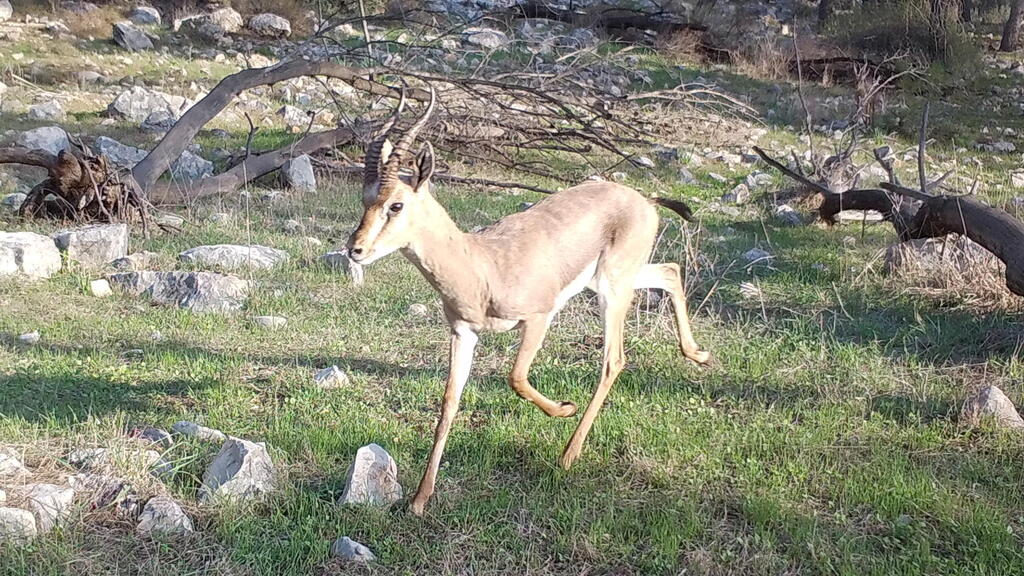
How has this animal managed to survive the Mediterranean climate for so long, and why are open spaces so crucial to its future? Dr. Guy Dovrat, a researcher in the Department of Agroecology and Natural Resources at Israel's Agricultural Research Organization, also known as the Volcani Institute, explains what makes the gazelle so well adapted to life in Israel and what must be done to protect it.
Where in Israel can we find mountain gazelles, and what is their conservation status?
"The Israeli mountain gazelle survives only in Israel and is not found elsewhere in the world. Related gazelle species can be found in neighboring countries and in Africa.
"In Israel, mountain gazelles mainly inhabit Mediterranean scrubland, characterized by relatively low vegetation and shrubs. Significant populations can be found in the Golan Heights, eastern Galilee, Upper Galilee, Mount Gilboa, the Menashe Hills, the Carmel foothills, the southern coastal plain, the Lachish region, the Jerusalem Hills and the West Bank.
"The species is classified as endangered, with an estimated 3,000 to 6,000 individuals remaining in Israel, a figure supported by our research."
How have mountain gazelles managed to survive in Israel for so long?
"Gazelles are a remarkable example of adaptation to the Mediterranean ecosystem, which is characterized by long, hot, dry summers and short, rainy winters.
"For much of the year, food and water are scarce. Yet gazelles have learned to make use of seasonal resources, including fruits, seedpods, fresh leaves and young shoots.
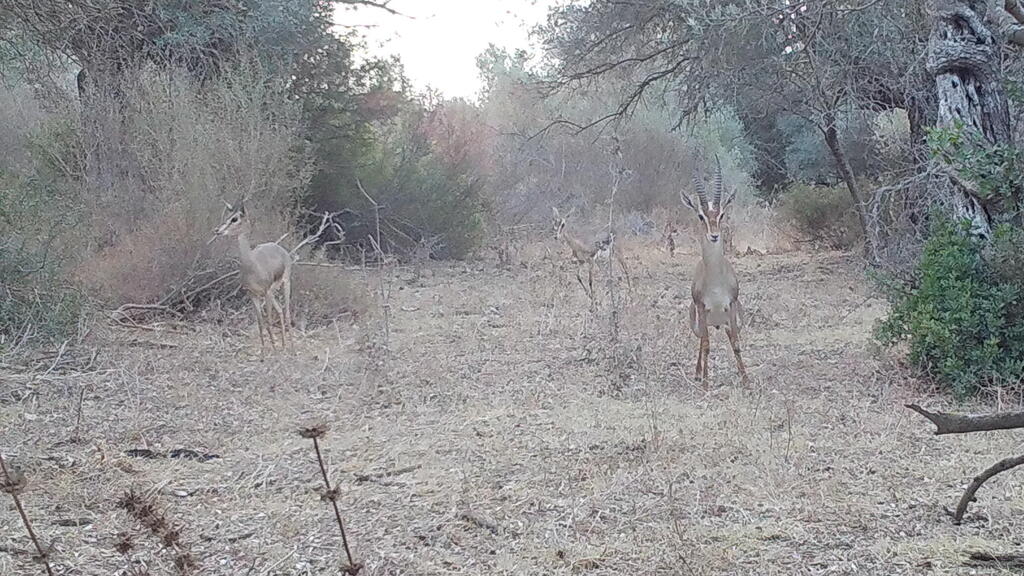
(Photo: Plant and Rangeland Ecology Laboratory team)
"Unlike many other large mammals, gazelles have managed to survive in this region despite tens of thousands of years of human activity. Their success comes from being cautious and alert, and from their ability to adjust their behavior to changing environmental conditions."
What is the difference between a mountain gazelle and the ibex found in southern Israel?
"Both species belong to the bovid family, and both display sexual dimorphism, meaning males are larger and have more prominent horns than females.
"Gazelles are considerably smaller than ibex, weighing less than half as much as adult ibex. Their body structure and senses are adapted to living in open scrubland, while ibex are built for mountainous terrain and cliffs.
"The Nubian ibex is a desert species that lives around oases, whereas Israeli mountain gazelles inhabit the Mediterranean region. They also differ from the gazelles found in the Negev desert."
What does everyday life look like for a mountain gazelle?
"Unlike many hoofed mammals that undertake long seasonal migrations, gazelles generally remain within established territories covering tens or hundreds of hectares, depending on food availability and the threats around them.
"One of their most fascinating behaviors is the way they communicate through what we call marking stations or scent stations.
"These are specific locations where males and females deposit urine and droppings, allowing them to identify which other gazelles are in the area and even determine their hormonal status.
"They visit these stations frequently, sometimes several times a day and sometimes once every few days. Essentially, they function as communication points based on chemical signals."
What role do gazelles play in the ecosystem?
"Gazelles play an important role in shaping vegetation. Their grazing increases and maintains the diversity of herbaceous plants and has a noticeable effect on woody vegetation.
"They influence the structure of shrubs and the distance between tree canopies and the ground.
"They are also important seed dispersers. One way they spread seeds is through their droppings, a process known as endozoochory.
"In addition, research by Dr. Amir Arnon of Ramat Hanadiv showed that gazelles can disperse surprisingly large seeds from trees and shrubs, including jujube, hawthorn, carob and olive trees, through regurgitation.
"While chewing their cud, gazelles release these seeds in the areas where they rest. When researchers examined the collected seeds, they found them in excellent condition, with exceptionally high germination rates."
What are the greatest threats facing mountain gazelles today?
"The first and most serious threat is habitat fragmentation.
"Gazelles are directly affected by encounters with humans, and large numbers are killed when they attempt to cross roads.
"Fragmentation also isolates populations from one another, preventing genetic exchange and making it difficult for gazelles to move into new areas.
"This pushes them into closer contact with other threats, including illegal hunting and predation by dogs and jackals.
Another major threat is disease.
People may not remember that in the early 1980s, Israel's gazelle population experienced a brief period of prosperity, reaching more than 12,000 animals.
"That growth followed the introduction of nature conservation laws in the 1950s, the expansion of irrigated agriculture after Israel's establishment and the release of gazelles in the Golan Heights after the Six-Day War.
"But outbreaks of foot-and-mouth disease halted that growth and reduced the population to just a few thousand within several years.
"That episode taught us an important lesson: we cannot protect a species without preserving large enough areas of natural habitat to support viable populations."
How is climate change affecting Israel's mountain gazelles?
"Climate change in our region is increasing the frequency of extreme weather events, including intense heat waves and prolonged droughts.
"We've found that gazelles shift their activity toward nighttime and the early morning hours during hotter periods.
"But these behavioral adaptations are not enough when there are drastic changes in food availability, particularly during droughts.

Dr. Guy Dovrat
Habitat fragmentation and development prevent them from moving to other areas when conditions become unfavorable.
"For example, following extensive wildfires near Beit Meir, gazelles were unable to cross Route 38 to reach Eshtaol Forest. They remained trapped in areas where they faced continuing threats."
How do you study gazelles, and what have you discovered recently?
"Our research relies on remote monitoring without direct contact with the animals.
"We collect droppings, use motion-activated cameras and analyze vegetation in the areas where gazelles live.
"We're also using an innovative method to assess the nutritional value of their diets through spectral analysis, which examines how light is reflected from their droppings.
"This allows us to estimate the nutritional quality of what the gazelles have eaten without disturbing them.
"We've discovered that gazelles in different regions manage to maintain a remarkably high-quality diet throughout the year thanks to local adaptations.
"We've also found that they can survive and even thrive in pine forests where the trees are relatively widely spaced."
What can ordinary people do to help protect mountain gazelles?
"It's important to understand that protecting gazelles is really about preserving large, continuous areas of natural habitat.
"The public needs to advocate for the protection of open natural spaces, oppose harmful development and support the preservation of green ecological corridors that allow wildlife to move between habitats.
"Ultimately, only by protecting the land can we ensure that the Israeli mountain gazelle remains part of our landscape."
This article was produced by Zavit, the news agency of the Israeli Society of Ecology and Environmental Sciences.