

A missile fired by Hezbollah terrorists from Lebanon on Friday evening toward communities in the Galilee caused damage to a roughly 1,400-year-old Byzantine-era church in Nahariya. The church dates back to the early 7th century and was originally destroyed in 614 during the Persian conquest of parts of the Land of Israel from the Christian Byzantine rulers.
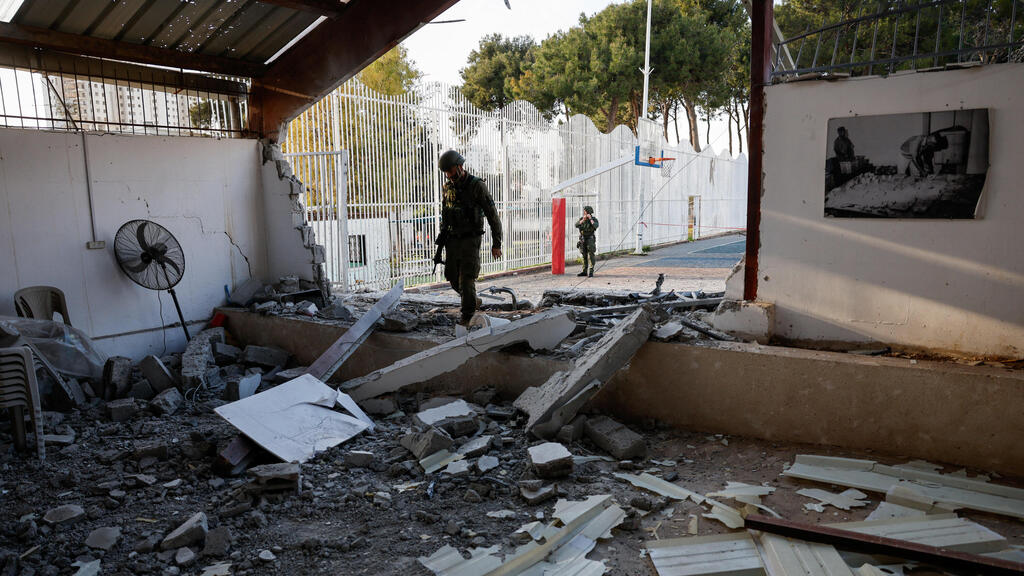
The Israel Antiquities Authority said an initial inspection indicated the ancient mosaic itself was not damaged, but was covered by debris from the modern structure built to protect it. Archaeologists and conservation experts from the authority are expected to meet with municipal representatives at the site at the earliest opportunity for a security assessment.
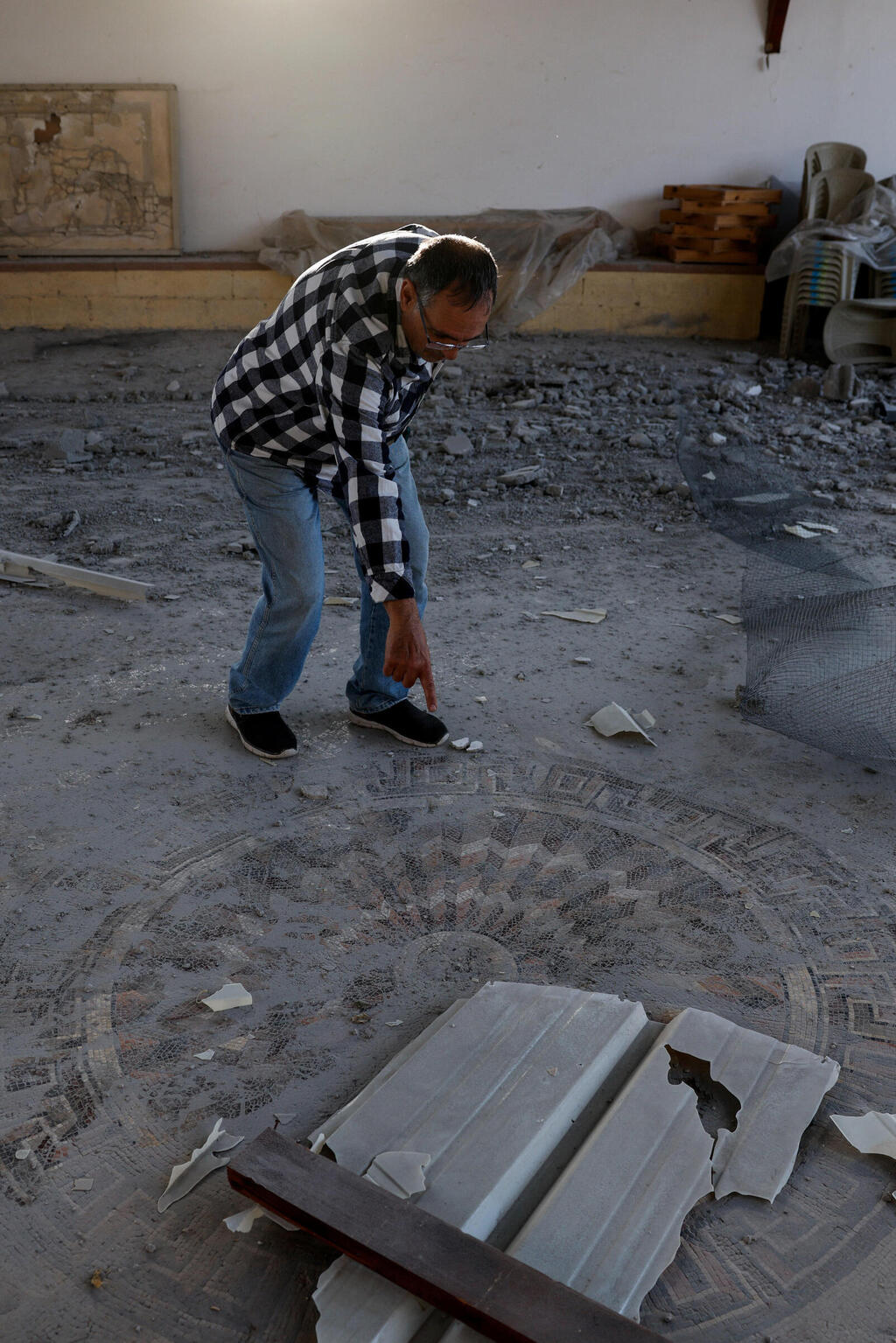
Damage to the mosaic
(Photo: Amir Cohen/Reuters)
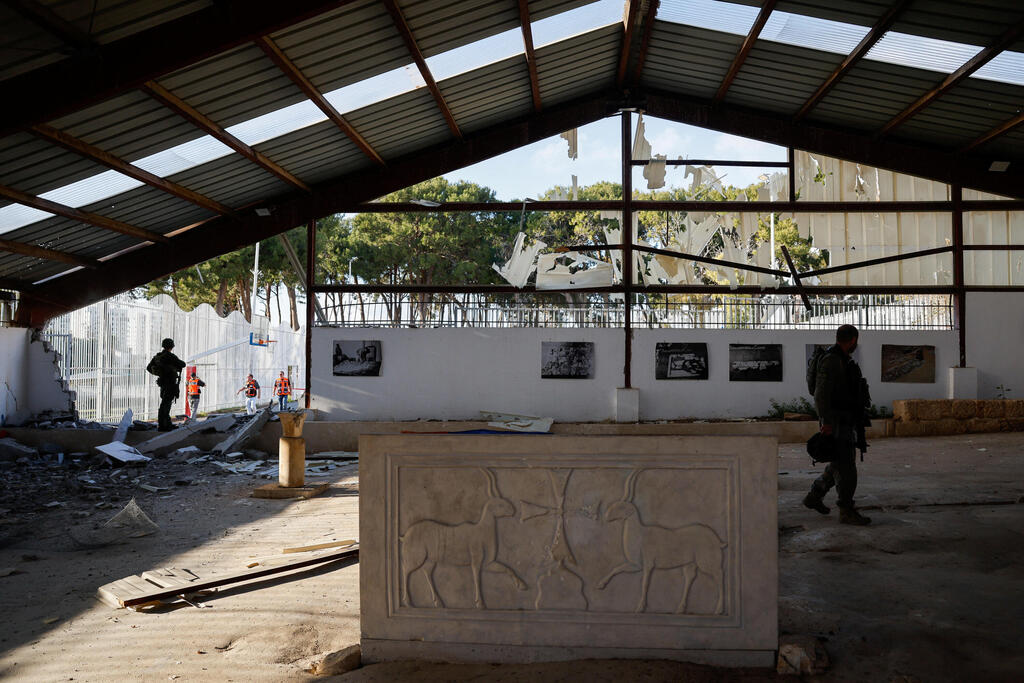
The ancient site
(Photo: Amir Cohen/Reuters)
According to the Antiquities Authority, the edges of the mosaic floor, which once welcomed pilgrims in the early 7th century, include more than 100 medallions, of which 87 remain. The medallions depict various animals, birds and human figures in different scenes. At the center of the floor is a rosette that has survived almost intact, creating a three-dimensional optical illusion when viewed from different angles, reflecting the craftsmanship of the artist who created it.
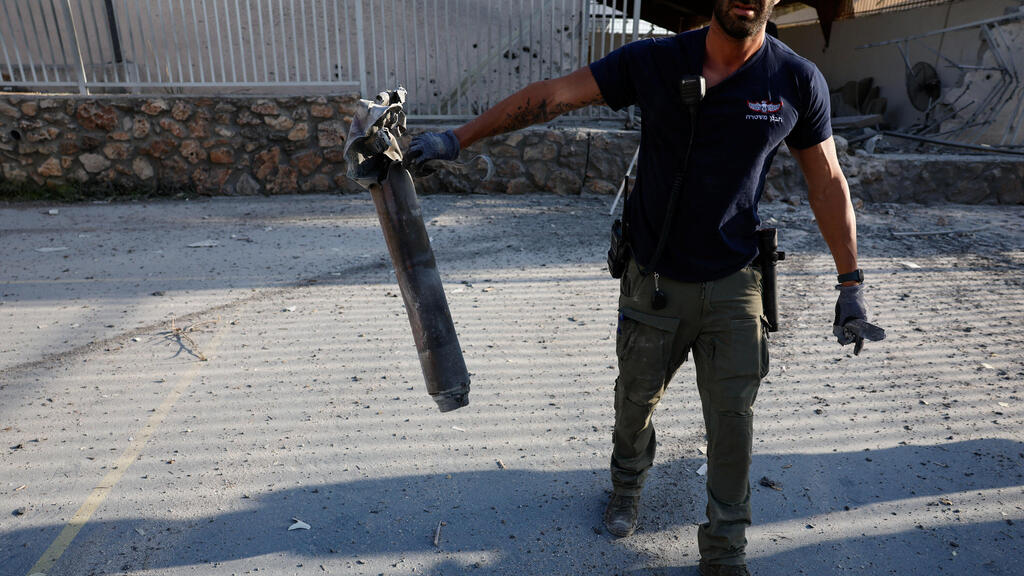
Bomb disposal expert in Nahariya
(Photo: Amir Cohen/Reuters)
Intercepts over Nahariya
(Photo: Ze’ev Krautahamer)


The mosaic was part of a church complex that was destroyed and burned during the Sassanian Persian invasion in 614. The remains were discovered by chance in 1964 during foundation work for a youth club as part of the expansion of Katznelson Elementary School. In 1974, the floor was exposed by the Department of Antiquities and large sections were restored. In 1984, a protective structure was built above it with a generous donation from Nahariya’s German sister city, Bielefeld. Part of that structure was damaged in the Hezbollah missile fire.
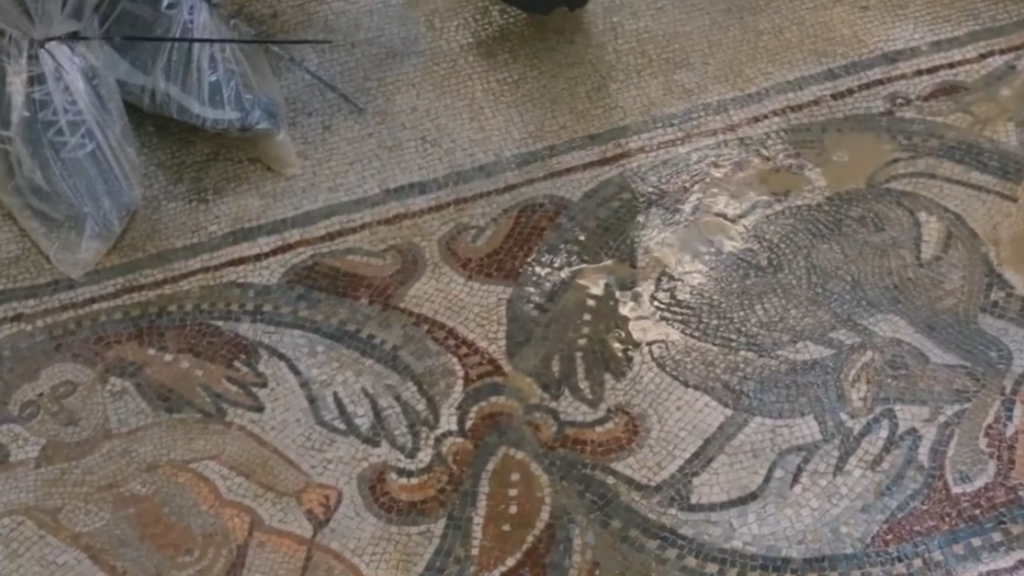
Mosaic in the Byzantine church in Nahariya
(Photo: Israel Antiquities Authority)
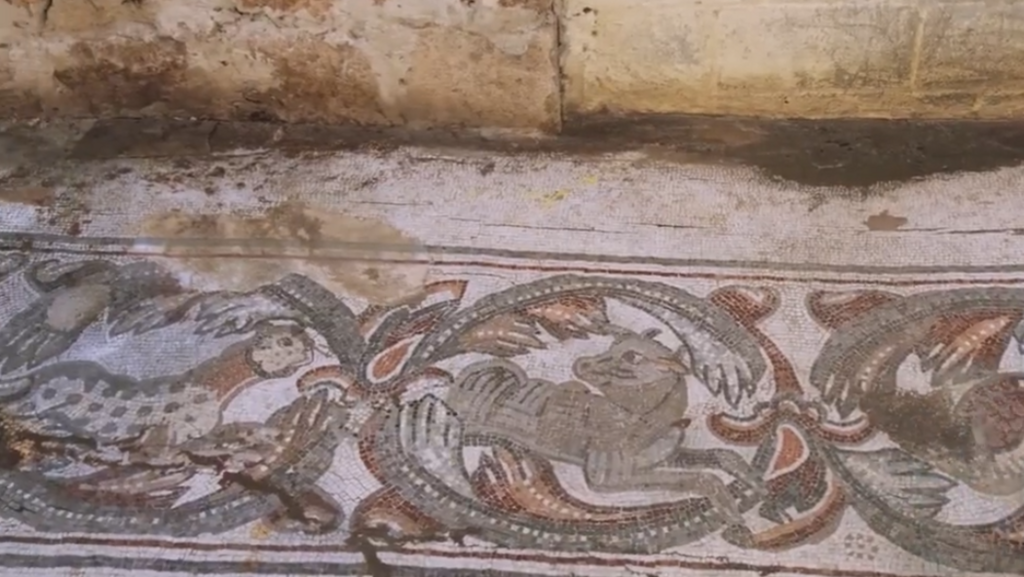
Animal mosaic
(Photo: Israel Antiquities Authority)
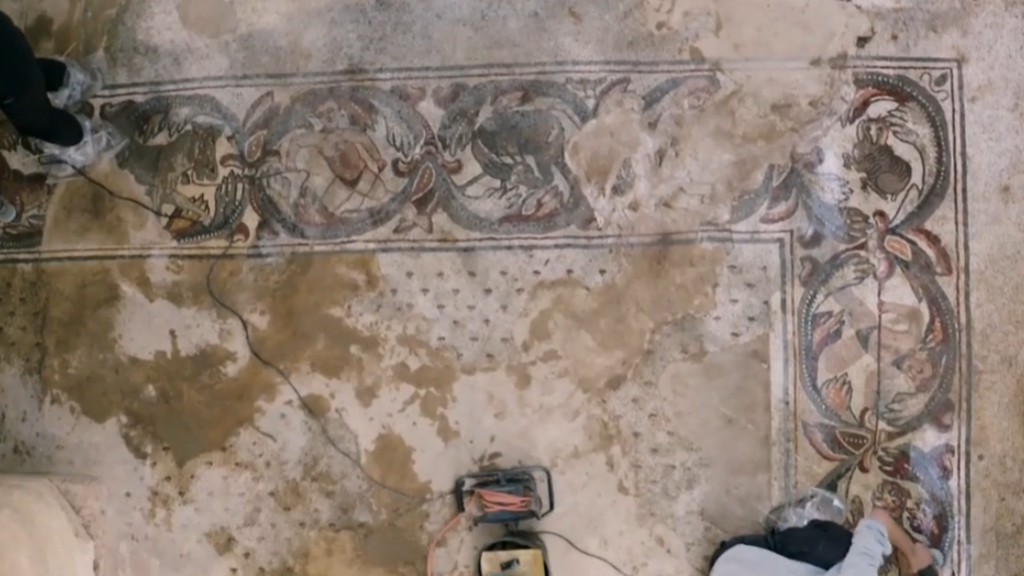
The mosaic in Nahariya
(Photo: Israel Antiquities Authority)
The site was closed to the public in 1992 and was left largely unmaintained for years. Vegetation covered the area, windows were removed, bars were broken, and birds nested inside. In December 2019, a group of tour guides from Nahariya approached the municipality. Following a meeting with Mayor Ronen Marel, and in coordination with the Israel Antiquities Authority and the Jerusalem and Heritage Ministry, a restoration process began to revive the site and turn it into a tourist attraction. Under the supervision of the Antiquities Authority, cleaning, renovation, landscaping and repair work was carried out both inside the complex and around it.