


A citizen science initiative is updating Israel’s anemone rainfall and flowering map for the first time since 2019, explaining why northern and central Israel host anemone populations in a range of colors while the “Darom Adom” (Red South) festival in the Negev features almost exclusively red anemones. A study based on the map was published in the American Journal of Botany.
Israel’s new 2026 anemone map is a joint project of the Yehuda Naftali Botanical Garden at Tel Aviv University, the Israeli Center for Citizen Science at the Steinhardt Museum of Natural History at Tel Aviv University and the Society for the Protection of Nature in Israel. The anemone is Israel’s most beloved and widespread flower, growing from Mount Hermon in the north to the desert in the south. Anemones are widely considered a red flower, but in different regions they also appear in white, pink, purple and even blue.
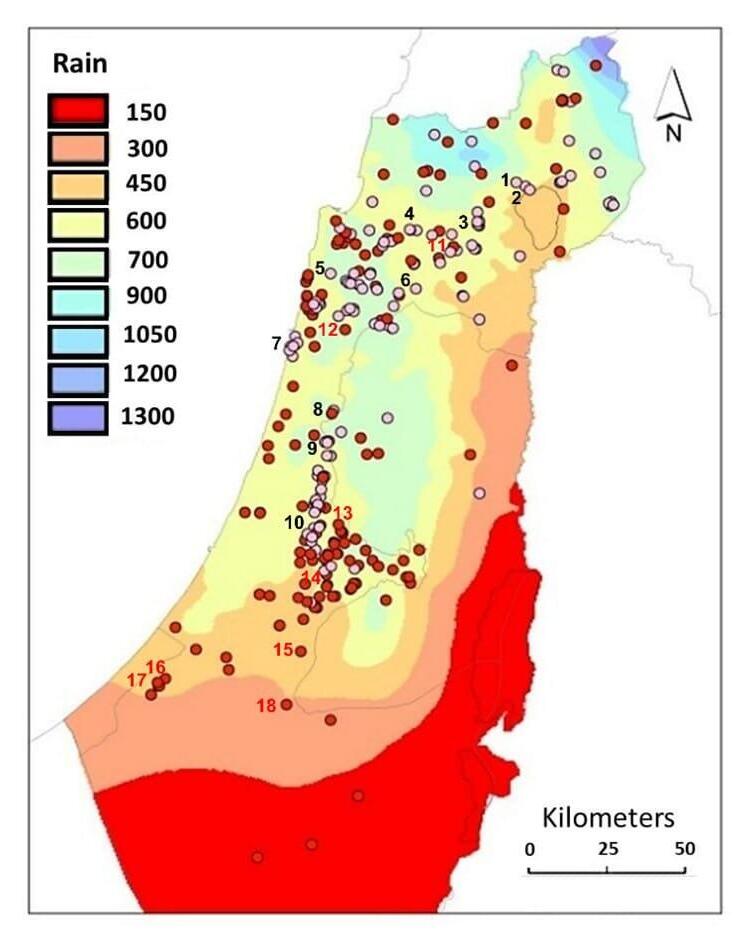
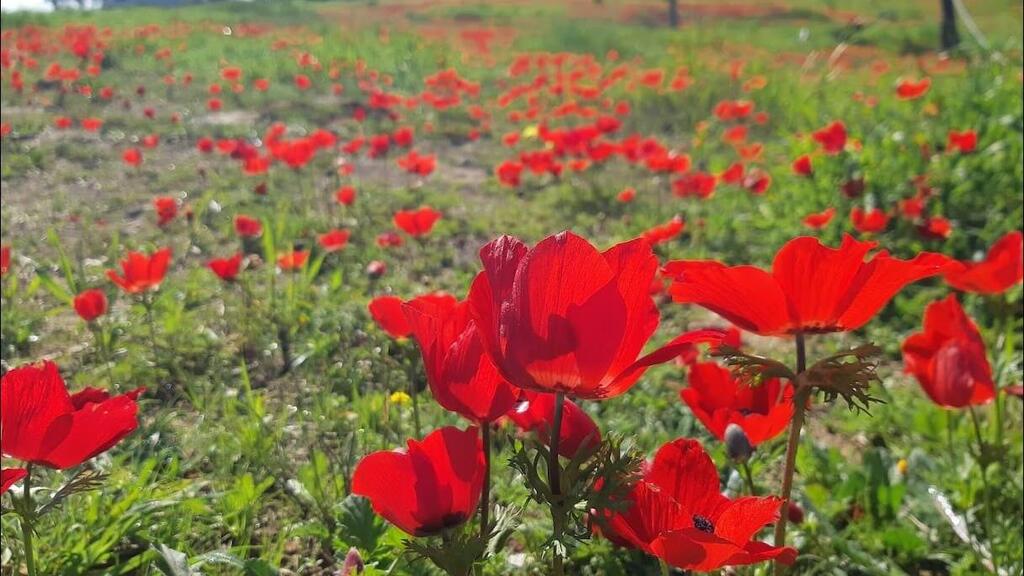
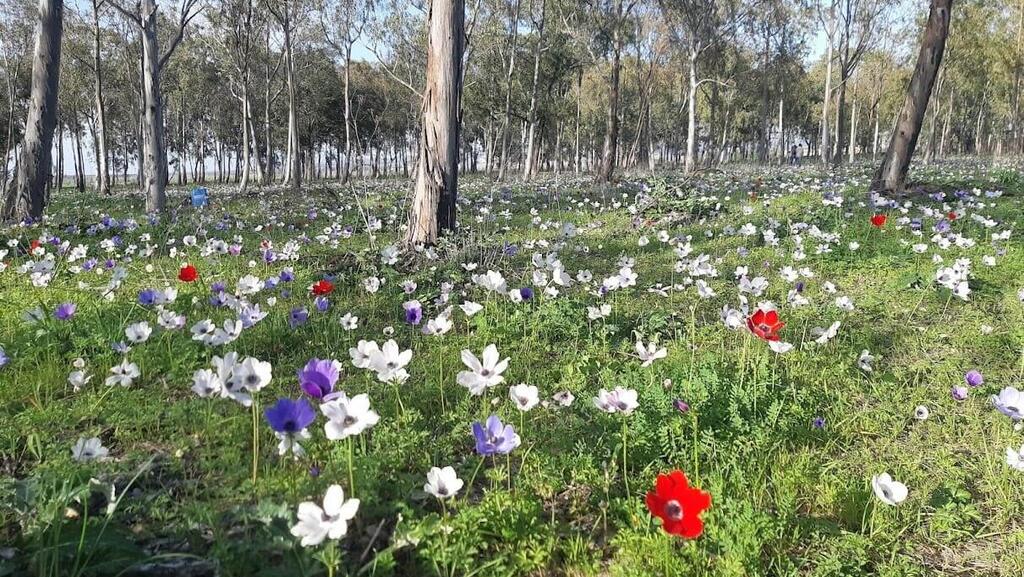
The new anemone survey, which includes hundreds of observations from across the country, reveals the geographic distribution and flowering times of different anemone colors in Israel, according to rainfall levels. The survey found that populations with a range of colors — red, purple, blue and white — appear only in rainy areas with water-rich soils, meaning Mediterranean regions with more than 450 millimeters (about 18 inches) of annual rainfall, such as northern and central Israel, down to the Judean Lowlands. By contrast, populations of red anemones alone are common in both Mediterranean areas and in Israel’s hotter, drier regions, such as the Negev, where they grow in chalky soils.
Project leaders say this explains why only red anemones bloom at the Darom Adom festival, an annual spring event in the western Negev that celebrates the flower’s peak bloom. The initiative is led by Prof. Yuval Sapir, director of the botanical garden at Tel Aviv University. “The survey findings indicate that flower colors are not only the result of pollinator preferences, but also of adaptation to environmental conditions,” Sapir said. “Red anemones are adapted to arid regions and dry, chalky soils, while anemones with other flower colors — pink, purple and white — can grow in wetter areas. Public participation in the project led to reports of hundreds of anemone observations from across the country through a simple online form.”
(Photo: Tzlil Labin)
The research team and the Society for the Protection of Nature in Israel are now calling on the public to continue reporting anemone sightings nationwide. The ongoing survey aims to collect long-term, multi-year data to better understand the impact of climate change and extreme weather events on anemone flowering dynamics.
As part of a follow-up study funded by the German Research Foundation (DFG) and conducted in cooperation with the University of Haifa, researchers selected 18 sites along Israel’s climatic gradient, from the Mediterranean region of the Lower Galilee to the arid western Negev near the Gaza border area. The study found that flowering times also vary by color: non-red anemones bloom earlier in the season, usually in January and February. In mixed populations, red anemones bloom on average about two weeks later than non-red anemones, mainly in early spring, March and April. In populations consisting only of red anemones in drier regions, flowering occurs even later.
(Photo: Tzlil Labin)
Dr. Nirit Lavie Alon, citizen science coordinator at the Society for the Protection of Nature in Israel and the Israeli Center for Citizen Science at the Steinhardt Museum of Natural History, said the data collected through the citizen science project provide a foundation for understanding spatial genetic variation and the ecological and evolutionary processes that create and preserve Israel’s diversity of anemone colors. “The anemone survey makes it possible to involve the public in scientific research that shows how flower colors and flowering times reflect the delicate balance between climate, soil and pollinators, and contributes to preserving Israel’s biodiversity,” she said.