


The Nubian vulture, which stopped nesting in Israel over 25 years ago, was spotted this week in the Ein Avdat Nature Reserve.
Known for its immense size and strength — its name in Hebrew derives from the word for strength — the Nubian vulture is the largest bird of prey in the region. With a wingspan approaching 3 meters (nearly 10 feet) and a body weight of over 10 kilograms (22 pounds), it was observed soaring above the reserve by Lior Dor, a staffer with the Israel Nature and Parks Authority.
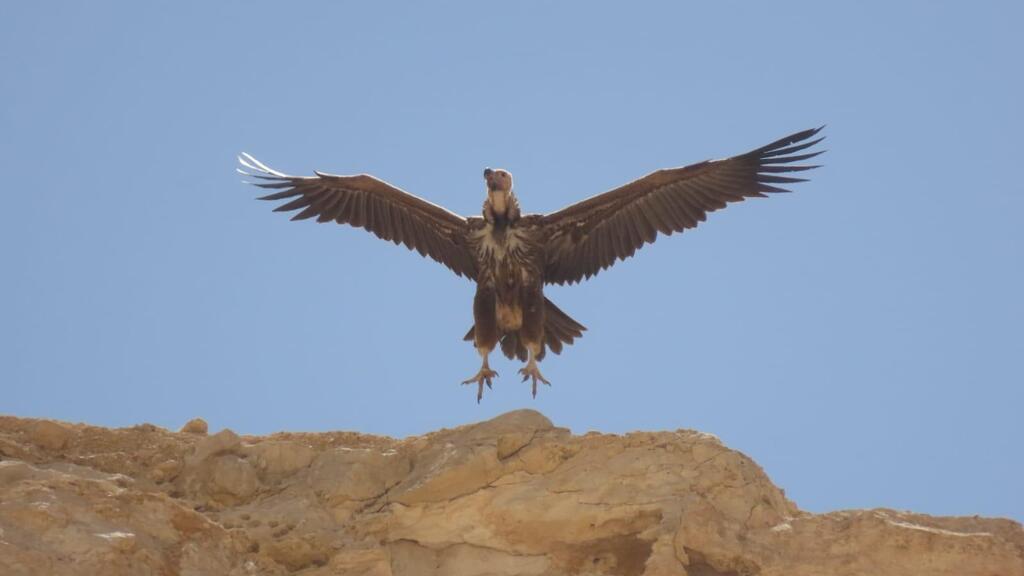
“It started as an ordinary day,” Dor recounted. “I was sitting by the spring pointing out a passing griffon vulture to hikers when I suddenly saw a massive, dark raptor overhead. I realized instantly this was something rare — the Nubian vulture. I ran after it, trying to capture it on camera and find reception to report the sighting.”
The bird circled overhead for close to an hour, Dor said, at times flying low or landing heavily on the cliffs before eventually disappearing into the desert.
Get the Ynetnews app on your smartphone: Google Play: https://bit.ly/4eJ37pE | Apple App Store: https://bit.ly/3ZL7iNv
Meidad Goren, director of the Ramat Negev Birding Center at the Nature and Parks Authority and the Society for the Protection of Nature in Israel, said birdwatchers from across the country rushed to Ein Avdat and the nearby Zin Cliffs Reserve in hopes of spotting the rare visitor. Some managed to see and even photograph it.
According to Goren, the same bird may have been seen three weeks earlier about 40 kilometers (25 miles) west of Ein Avdat by Yiftach Magen, head of the Northern Negev region for the Nature and Parks Authority.
It had been flying with other large scavenger raptors, including a radio-tagged Eurasian griffon vulture from Serbia that continued its migration toward Europe and a black vulture whose whereabouts are now unknown.
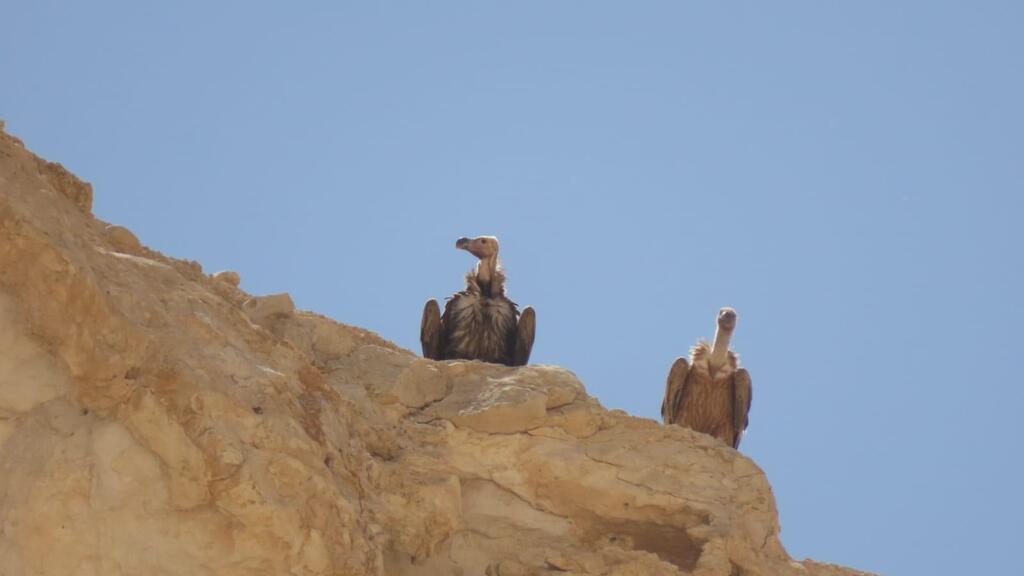
(Photo: Lior Dor, Society for the Protection of Nature in Israel)
Goren suggested the birds likely met in Saudi Arabia, where a small population of Nubian vultures still nests.
“They probably flew to Israel together and split up once here,” he said. “I personally managed to see and photograph the last Nubian vulture that visited the Yotvata wildlife reserve in 2021 before it took off and vanished.”
Orly Gilad, head of the Negev Highlands region for the Nature and Parks Authority, noted that conservation efforts to breed Nubian vultures in captivity in Israel have faced major setbacks. Still, she expressed hope that more vultures would visit the country — and perhaps even return to nest, as they once did in the Negev. Plans are underway to establish a breeding nucleus in collaboration with Gulf countries, where the species is more common.
The Nubian vulture is dark brown with a pale underside, a bald grayish head and neck and feeds primarily on carrion. Its strong beak can tear through the thick hides of large animals like camels. It also preys on smaller animals such as hares and desert lizards.
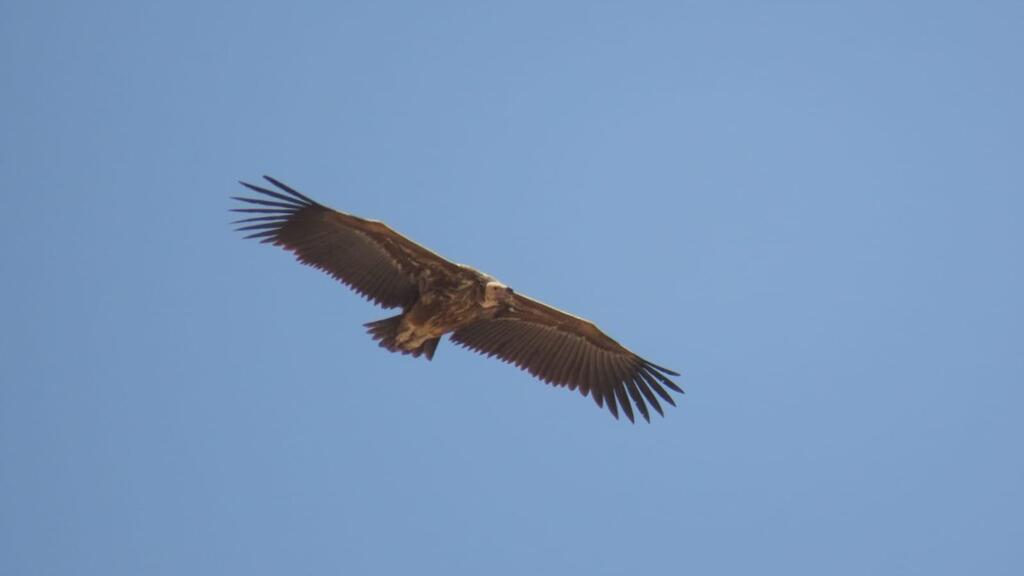
(Photo: Lior Dor, Society for the Protection of Nature in Israel)
Typically living alone or in pairs, the vulture nests in wide wadis and savanna landscapes, building massive nests from sticks and branches. These nests can reach 1 meter (3.3 feet) high and span 2 meters–3 meters (6.5 feet–10 feet) across. Each breeding cycle yields one egg and lasts about a year.
The species disappeared from Israel as a breeder due to unregulated hunting, food scarcity and nesting disturbances. It’s now considered globally endangered. Experts estimate around 8,000 individuals remain in Africa and just 500 of the local subspecies, all in the Arabian Peninsula.
The last recorded nesting in Israel occurred in 1989 near Yotvata. In the 1970s, conservationists launched efforts to save the species, including the establishment of feeding stations in the Arava and Eilat mountains and a captive breeding program at Tel Aviv University’s zoological gardens. The effort, which involved collecting chicks from wild nests, ultimately failed and faded over time.
Dr. Yoav Perlman, director of the Birding Center at the Society for the Protection of Nature, added, “Despite decades of effort, the Nubian vulture’s return remains uncertain — but this sighting gives us a reason to hope.”