


Israel is bracing for an unusually intense summer weather system this weekend, with heavy rain, thunderstorms, possible flooding and even hail forecast for parts of the country overnight Saturday and into Sunday morning.
The most severe conditions are expected along the northern and central coast, including the Haifa and Sharon areas, where hail could fall despite the late-August heat.
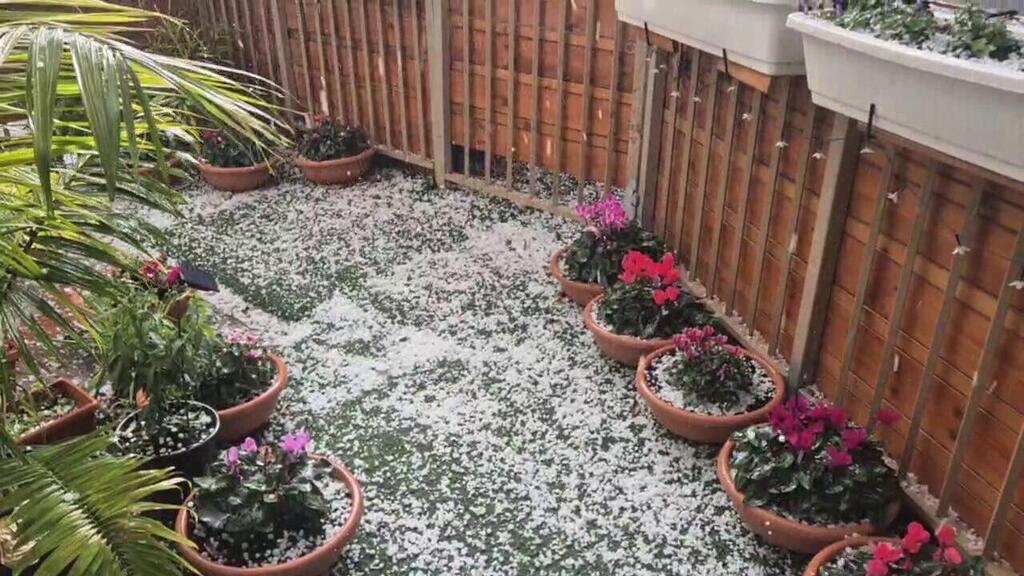
Dr. Amir Givati, director of the Israel Meteorological Service, said the rain is expected to concentrate along the northern and central coastal regions and could fall heavily enough to cause flooding.
“The rains are expected to focus on the northern and central coastal areas and could cause flooding because of their intensity,” he said.
Significant seasonal rain usually arrives around October, and in some years even later. The unusually early rainfall means local authorities will have to prepare drainage systems far earlier than usual.
“The first rain of every season requires special preparation because of dust, leaves and other material that accumulates during the summer, and this can affect urban drainage systems,” Givati said.
The weekend forecast
Thursday night will be partly cloudy, with heavy fog potentially reducing visibility in the northwestern Negev.
Friday is expected to be mostly clear, with a slight drop in temperatures, especially in the mountains and inland areas. Temperatures will be close to seasonal averages and heat stress will ease.
Little change is expected Saturday, though light rain could fall in northern Israel during the morning.
Conditions are then expected to deteriorate overnight Saturday, with rain developing mainly across northern and central Israel and isolated thunderstorms possible, particularly in the north. Forecasters have warned of possible flooding along the coastal plain.
Rain could continue Sunday morning from northern Israel as far south as the northern Negev. Isolated thunderstorms may persist in the north until around midday.
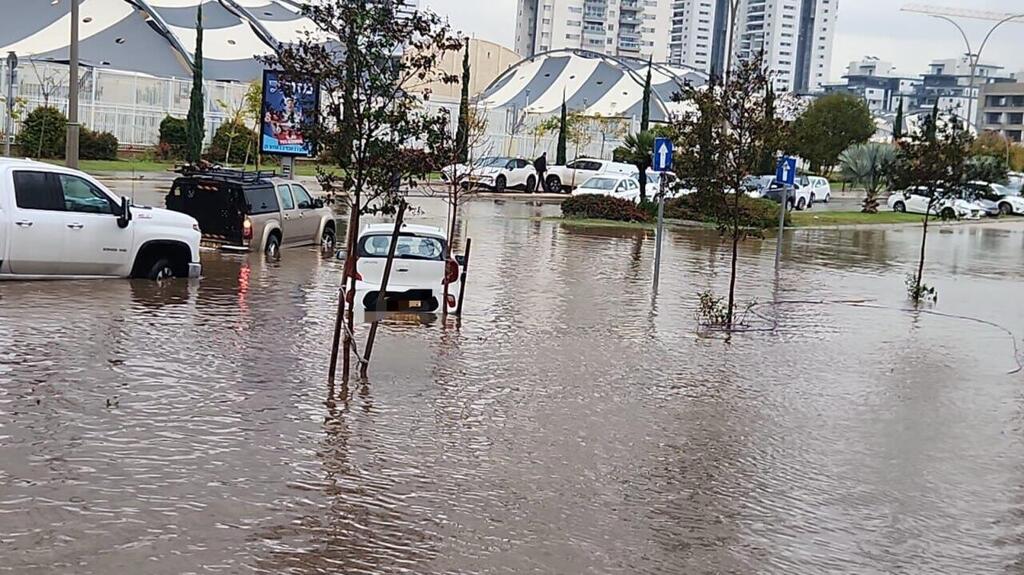
‘There is a risk of flooding if the rain falls over a short period’
(Photo: Israel Fire and Rescue Services, Central District)
Temperatures are expected to fall sharply Sunday, dropping below seasonal averages in the mountains and inland areas, with a significant easing of the heat.
By Monday, conditions should become partly cloudy. Light rain may still fall along the coast during the morning, while temperatures will rise but remain slightly below average for the season.
Drainage systems nearing their limits
The Yarkon Drainage and Streams Authority is preparing for the expected rainfall.
Its director general, Arik Leibovitz, said drainage authorities carry out engineering work to regulate streams and clear blockages, but even well-functioning urban drainage networks generally cope with only about 25 to 30 millimeters of rain per hour.
“Any amount beyond that could cause flooding,” he said.
The current forecast calls for around 30 millimeters of rain along parts of the coastal plain, he added, putting the expected rainfall close to the capacity of some drainage systems if it falls over a short period.
Leibovitz said the larger problem is a lack of long-term investment in flood prevention.
“The drainage project needed for Ariel Sharon Park has only been partially completed because the required funding is unavailable,” he said. “There are additional projects in northern Tel Aviv and Herzliya that are not budgeted.”
He said the Agriculture Ministry allocates around 75 million shekels annually to all 11 drainage authorities nationwide, while a single major project can cost around 100 million shekels.
“This illustrates the gap between the overall budget and the actual needs,” he said.
Leibovitz called for climate change and flood protection to be formally treated as a national crisis requiring a comprehensive government response and dedicated funding.
‘The weather is going crazy’
Givati said the approaching storm is part of a broader pattern of extreme weather seen around the world in 2026.
“This year, the weather is going crazy all over the world,” he told ynet. “This is really not amusing, it is very serious.”
He pointed to extreme heat in parts of Europe while cooler air from Eastern Europe moves toward the Middle East.
Givati attributed the instability to what he described as a “super El Niño” phenomenon, involving exceptionally warm ocean temperatures that affect atmospheric circulation.
“The bottom line is that 2026 is a crazy year, and 2027 will probably be like this too, because weather patterns are simply changing,” he said.
“Areas that are not supposed to receive rain in summer, such as the Middle East, have already had summer rain twice, something that has never happened before. Areas that are supposed to receive summer rain and be cooler, such as Europe, are drying out, with rivers running dry and rain not falling.”
Orly Babitzky, head of economics and climate resilience at the environmental organization Adam Teva V’Din, said the government had failed to prepare despite warnings issued by the Meteorological Service in July.
“Israel needs a national, funded and binding plan to deal with flooding and extreme weather as part of broader preparation for the climate crisis,” she said.
“In 2026, Israel is drying out and Israel is flooding, and these are two sides of the same crisis.”
Babitzky said better management of runoff water could both reduce flooding and help replenish Israel’s aquifers.
Ahead of the election, she said, the organization is calling on candidates to make preparations for the climate crisis a national priority.