

The world’s oceans and seas are heating like a cup of tea. The extreme heat wave gripping Europe, alongside severe weather in other parts of the world, is also being felt across the planet’s oceans and seas. Data show that June saw the most intense marine heat on record for that month, and new records could be set in the coming months.
The surge comes as forecasts for an El Niño year begin to materialize, with scientists warning of a significant chance that the climate phenomenon could intensify into an even more extreme “super El Niño” event.
Gallery
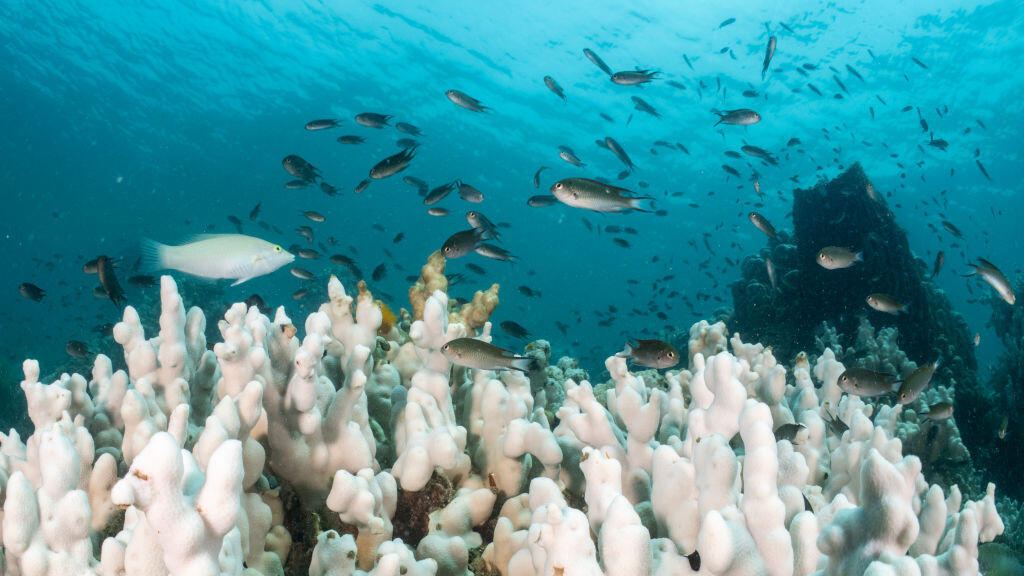
Coral reef bleached by a marine heat wave in Thailand
(Photo: Sirachai Arunrugstichai/Getty Images)
Average global sea surface temperatures in June reached 20.98 degrees Celsius, breaking the previous records set in 2023, when they reached 20.83 degrees, and in 2024, when they reached 20.86 degrees, according to the European Union’s Copernicus Marine Service.
The June record capped six months of almost unprecedented ocean heat in 2026, with prolonged marine heat waves across large parts of the planet. Average water temperatures in the first half of the year reached 20.04 degrees Celsius, slightly below the record set during the same period in 2024.
The Mediterranean also broke its June record, reaching 24.3 degrees Celsius, above previous highs set in 2023 and 2025. Marine heat waves affected 98% of the Mediterranean basin during the first six months of the year, alongside reports that a marine heat wave in the northwestern Mediterranean had reached record intensity in recent days.
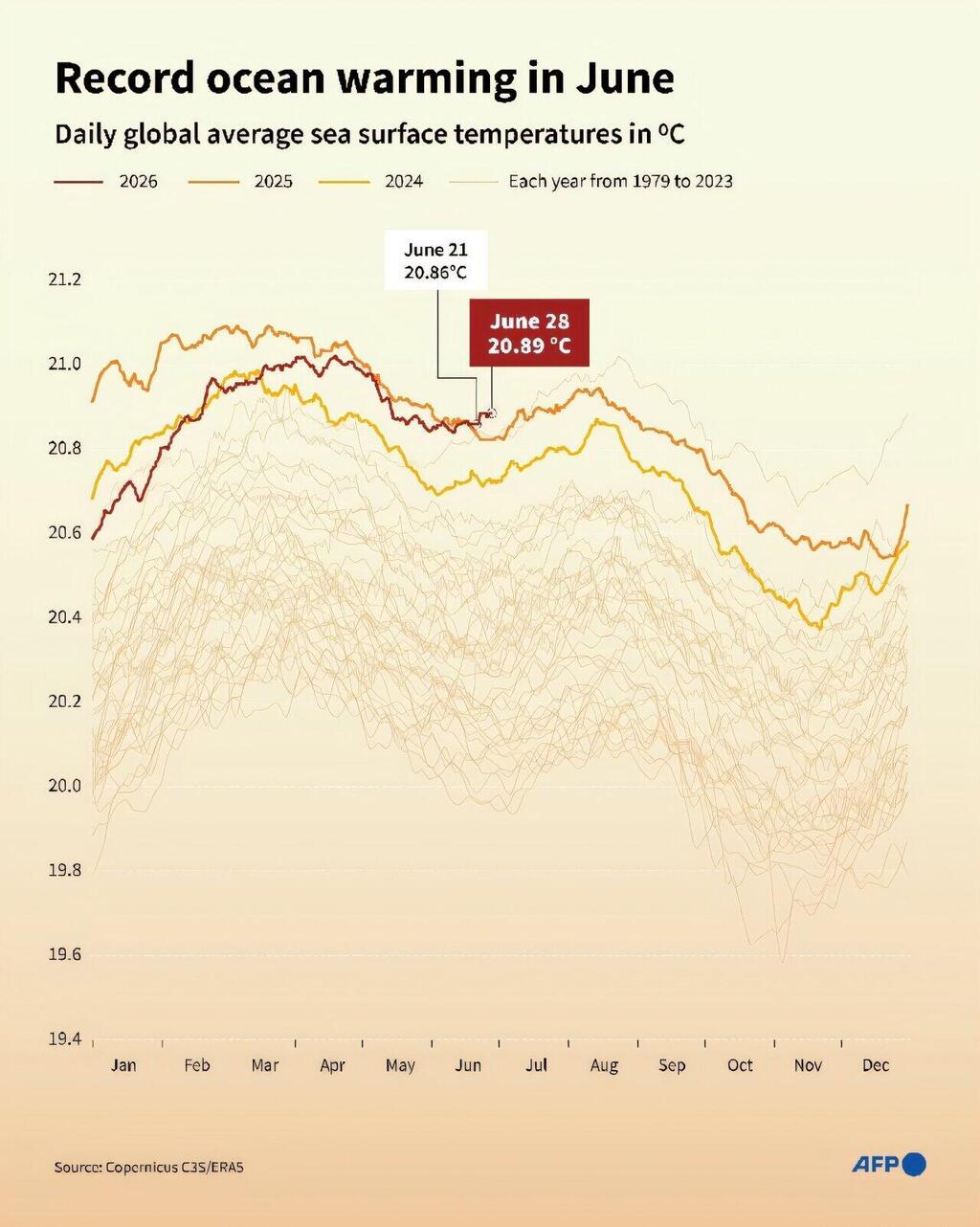
June marine heat wave record set this year compared to previous years
(Photo: Jonathan Walter, Sofie Ramis/AFP)
The tropical Pacific also recorded its hottest June in history, at 27.26 degrees Celsius. The region matched its 2016 record for the January-June period, with the strongest and most persistent warming recorded in the western equatorial Pacific and off the coasts of Peru and California.
Scientists said the El Niño event, still in its early stages, could further increase global ocean and atmospheric heat this year and next.
“Current conditions may indicate the start of a new period, leading into unknown territory,” said Carlo Buontempo, director of the Copernicus Climate Change Service, the European Union body that monitors global and European climate conditions in real time. The service gathers data from satellites and measurement stations, issuing official updates on temperature shifts, extreme events and long-term climate trends.
Global warming over recent decades
(Video: UN Climate Change)


“With ocean temperatures at these levels and El Niño on the horizon, it is likely that we will see additional temperature records in the coming months,” Buontempo added.
El Niño is marked by unusually warm waters in parts of the Pacific Ocean, releasing more heat into the atmosphere and affecting wind, cloud and weather patterns around the world. The phenomenon, which occurs on average every two to seven years and usually lasts nine to 12 months, can increase the risk of extreme weather, from floods in Peru to droughts in parts of Africa and wildfires in Australia.
It can also cause a temporary rise in global temperatures, worsening the long-term warming caused by human use of fossil fuels. The last El Niño event, two years ago, coincided with all-time records for both land and sea temperatures.
“With the arrival and beginning of an El Niño year, we can expect 2026 to be among the hottest years ever recorded,” said Dr. Simon Van Gennip, chief oceanographer at the Copernicus Marine Service. “That is due to El Niño, but also to the warming caused by greenhouse gas emissions that we continue to release into the atmosphere.”
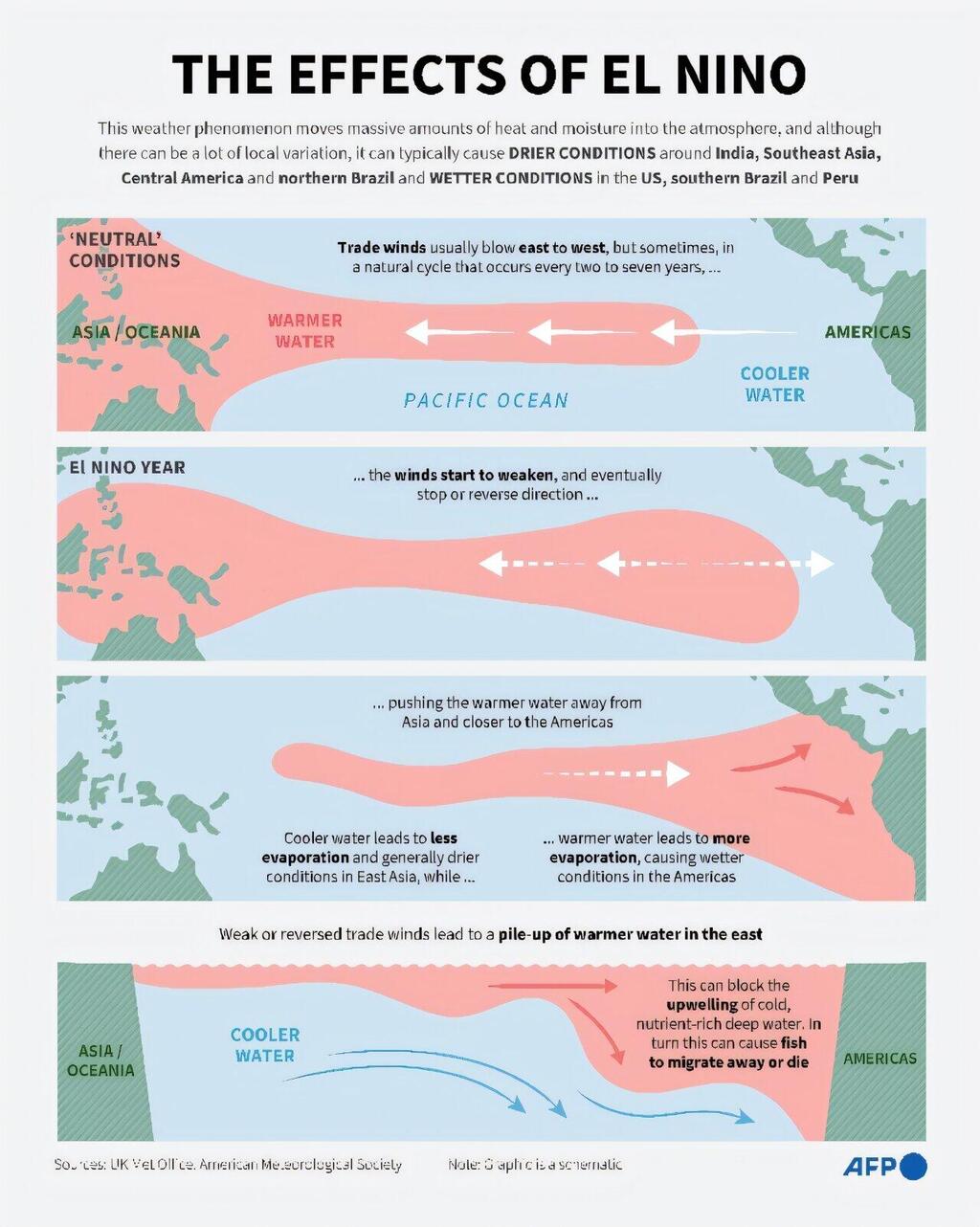
The effect of El Niño
(Photo: Nicholas Shearman/AFP)

Extreme heatwave in Spain
(Photo: Marcelo del Pozo/Getty Images)
A United Nations scientific assessment last month warned that the world’s oceans are in a “deepening crisis,” including rising sea levels and warming waters.
Oceans are a central regulator of Earth’s climate because they absorb about 90% of the excess heat caused by human greenhouse gas emissions, including carbon dioxide and methane. Warmer oceans increase atmospheric moisture, feeding destructive storms and heavy rainfall. Ocean warming also contributes directly to sea-level rise because water expands as it heats.
Those conditions are also intolerable for coral reefs, which bleach and die during prolonged marine heat waves.
The first six months of the year were marked by widespread marine heat waves affecting about 82% of the world’s oceans, the second-largest extent after 2024, according to the Copernicus Marine Service.
Like heat waves on land, marine heat waves are defined as prolonged periods of unusually high temperatures. They affect not only weather systems and coral reefs, but can also be deadly for marine wildlife.