

Each spring, Israel undertakes its National Butterfly Count—an expansive citizen-science initiative that enlists students, families, and amateur lepidopterists. The project is coordinated by the Israeli Butterfly Enthusiasts Society in collaboration with the Steinhardt Museum of Natural History at Tel Aviv University, Ramat Hanadiv Gardens, and the Citizen Science Center, with support from the Nature and Parks Authority, the Jewish National Fund (JNF), and the Society for the Protection of Nature.
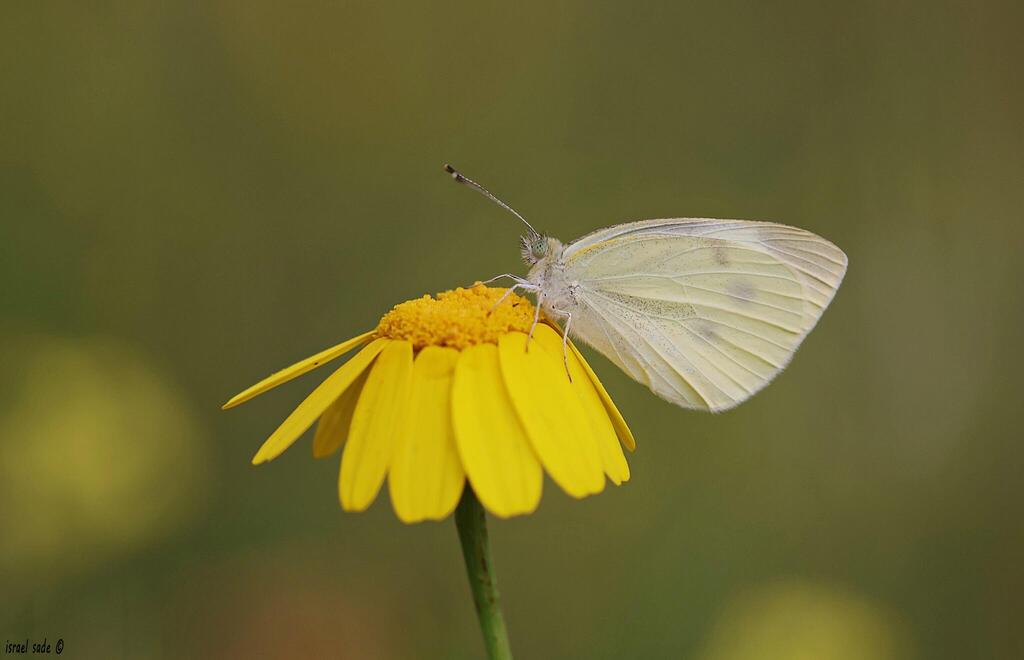
As in previous years, 2025’s data reaffirmed that the Small White (Pieris rapae) remains the most frequently encountered species. Observed in more than 68% of all surveys, it accounted for over 3,380 individuals—roughly 30% of all specimens recorded. The Large White (Pieris brassicae) followed, appearing in 49% of counts with a total of 1,807 individuals (16%). Other commonly recorded species included the Marbled White (707), Painted Lady (677), and Bath White (474).
While many butterfly species are easily identified by their wing patterning and coloration, others require a finer taxonomic eye—particularly when morphologically similar. The Small and Large Whites exemplify this. The former has a body length of approximately 0.6 inches and a wingspan around 1.6 inches; the latter measures closer to 0.8 inches in body length and spans 2 to 2.2 inches.
“The frequency of Small Whites stayed consistent with 2024, but their absolute numbers declined,” noted Lea Binyamini of the Butterfly Society. “The likely culprit was the dry winter, which reduced host plant abundance. Large Whites seem more resilient, perhaps due to their egg-laying strategy—laying clusters versus single eggs, as the Small Whites do.”
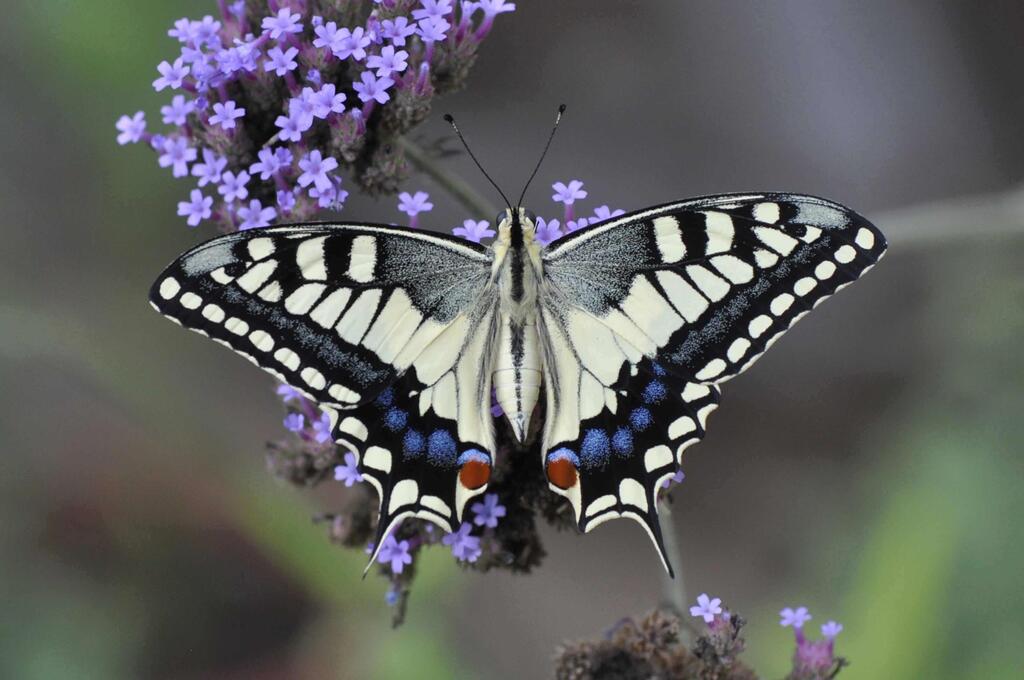
Swallowtail
(Photo: Dubi Binyamini)
Distribution patterns were largely governed by larval host specificity and microhabitat availability. Generalist species with broad host ranges and ecological tolerances dominated the survey. In contrast, specialists—such as the Desert Orange Tip—were confined to their respective habitats in southern Israel. In montane zones, peak-dwelling species were most easily observed where males congregate on ridges to await mates.
Beyond common taxa, the count also revealed several rare and human-assisted species. While the bulk of observations came from the coastal plain, records spanned much of the country—from Mount Hermon in the north to Eilat in the south, including the Galilee highlands, Judean hills, Syrian-African Rift Valley, and parts of the Negev Desert. However, data remain sparse from certain regions including the West Bank, the Arava Valley, and central Negev.
This year’s atypical winter—marked by low precipitation and erratic March weather—delayed phenology, especially at higher elevations like Mount Hermon. “We recorded 13 species not seen at all in 2024, including the Lemon Swallowtail, Lycaena thersamon, the Zizyphus Blue, and the Southern Comma. Seven species observed last year were absent in 2025,” said Binyamini. Notably, a Lemon Swallowtail was spotted at Giv’at HaSeflulim in Shoham—the southernmost sighting of this species ever recorded in Israel.
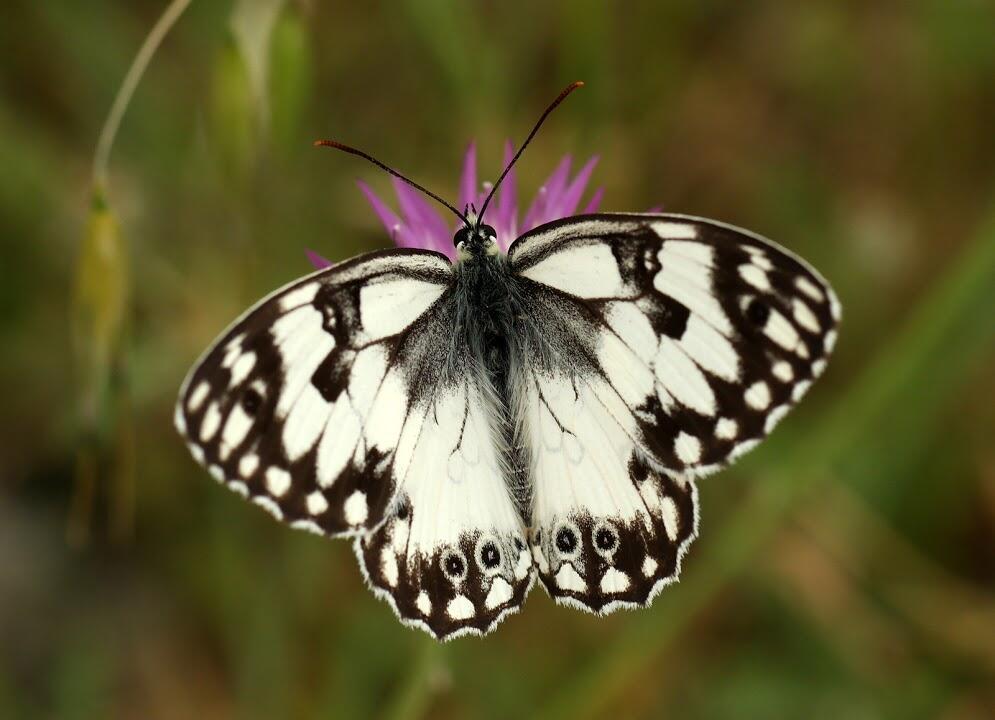
Melanargia Titea
(Photo: Moshe Laudon)
Introduced species like the Pelargonium Blue and Lycaena thersamon appear to be expanding their range, likely due to the availability of widespread cultivated host plants. Of particular interest was a post-count observation: the Swamp Fritillary (Euphydryas aurinia), a migratory species absent from Israel for five decades before reappearing in recent years, was once again confirmed.
Since 2019, this national count has yielded 5,125 observations, documenting 72,944 individual butterflies across 86 species. Longitudinal data suggest that fluctuations in abundance and distribution are driven by annual rainfall variability, host plant dynamics, and migratory events—but also by improved observer skill and species identification.
Get the Ynetnews app on your smartphone: Google Play: https://bit.ly/4eJ37pE | Apple App Store: https://bit.ly/3ZL7iNv
Roughly 80% of this year’s participants self-identified as experienced naturalists, predominantly over the age of 40. Data were collected using online submission forms and analyzed by the Butterfly Society, which also oversees Israel’s year-round National Butterfly Monitoring Program. The spring count offers a broad seasonal and geographic snapshot that complements the ongoing monitoring routes while enhancing public engagement.
The next national count is scheduled for March 29 through April 18, 2026, coinciding with peak butterfly activity and the Passover holiday. Annual comparisons of the dataset are essential for tracking climate-related changes, identifying conservation needs, and monitoring population trends among Israel’s Lepidoptera.
Timed to coincide with maximal species richness, the initiative draws hundreds of volunteers and contributes critical data for ecological research and conservation policy. It is one of the most comprehensive butterfly census efforts in the region.