


Deep inside the sea caves of Rosh Hanikra, on Israel's Mediterranean coast near the Lebanese border, sunlight barely penetrates the darkness. Yet researchers have identified a red alga that not only survives in these extreme conditions but continues to photosynthesize efficiently despite receiving only a tiny fraction of the light available outside. The discovery, made during a survey of Israel's coastline, highlights the remarkable adaptability of marine life and the importance of sea caves as natural refuges for vulnerable species.
The research was led by Prof. David Iluz of Beit Berl College and Prof. Sophia Barinova of the University of Haifa. Their findings, published in the scientific journal Aquatic Sciences, reveal a unique ecosystem that thrives under conditions usually considered challenging for photosynthetic organisms.
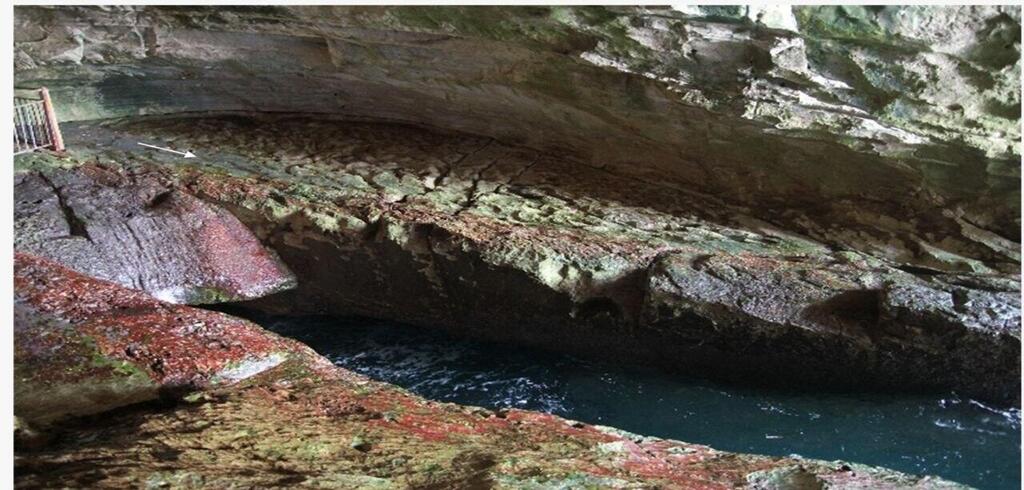
The researchers found that light intensity inside the caves ranges from just 0.5% to 2.5% of the levels measured outside. Despite the near-total darkness, they identified a red alga known as Hildenbrandia rubra, which is capable of carrying out photosynthesis efficiently even with extremely limited light.
Between 2019 and 2022, the research team surveyed Israel's Mediterranean coastline, from Ashdod in the south to Rosh Hanikra in the north. They identified the alga in the area near the Lebanese border, where the caves provide a shaded, sheltered habitat that allows it to survive in conditions uncommon elsewhere along the coast.
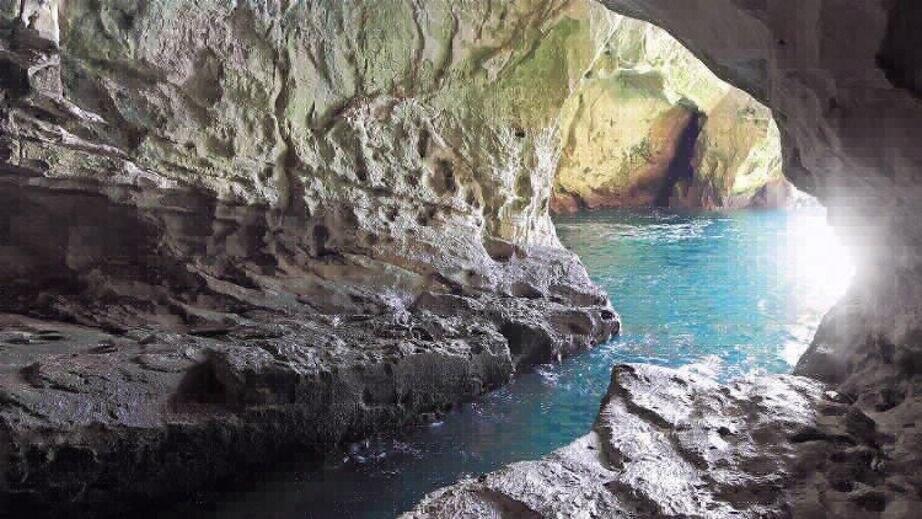
The red alga survives despite receiving only a fraction of the sunlight available outside the caves
(Photo: Prof. David Iluz)
The study also found that the alga's life cycle changes with the seasons. Reproductive activity is most pronounced during autumn and early winter, while its coverage of the cave walls reaches its peak during the warmer months.
Using genetic analysis and microscopic examinations, the researchers also identified other algae, photosynthetic bacteria and mosses living in the caves. Together, these organisms form a colorful and complex ecosystem, demonstrating that even environments receiving almost no sunlight can support diverse forms of life.
"We tend to think of caves as environments where living conditions are limited, but our research shows that sometimes it is precisely the extreme conditions that allow certain species to thrive," Iluz explained.
"The alga we studied can make use of a minimal amount of light and survive in an environment that protects it from some of the environmental pressures found outside," he said.
"The broader implication is that marine caves are not just impressive geological formations, but ecosystems of great importance. Understanding how life survives in them is essential for preserving biodiversity, particularly at a time when the marine environment is facing increasing changes and pressures."
The red patches along the lower rocks are epilithic algae, which grow attached to rock surfaces
(Photo: Prof. Zvy Dubinsky))
The researchers emphasized that marine caves can serve as ecological refuges, including for species sensitive to pollution and changes in their surroundings. Their sheltered conditions may offer protection from some of the pressures affecting more exposed coastal environments.
The findings provide a foundation for further research into how organisms adapt to extreme conditions and could contribute to the development of conservation strategies for unique habitats along Israel's Mediterranean coastline.
The study was conducted in collaboration with Bar-Ilan University, the University of Haifa, Talpiot Academic College of Education and Israel Oceanographic and Limnological Research.