

Jonathan, a giant tortoise from the Seychelles, has spent most of his life on St. Helena, a British territory in the South Atlantic Ocean, on the grounds of the island governor's residence. He arrived from the Seychelles 144 years ago as an adult, presented as a gift to the governor. Now, an international research collaboration has uncovered one of the secrets behind the 194-year-old tortoise's extraordinary longevity.
Weighing approximately 180 kilograms (397 pounds), Jonathan shares the grounds with other giant tortoises. Although cataracts have left him blind, he retains excellent hearing and a healthy appetite.
Gallery
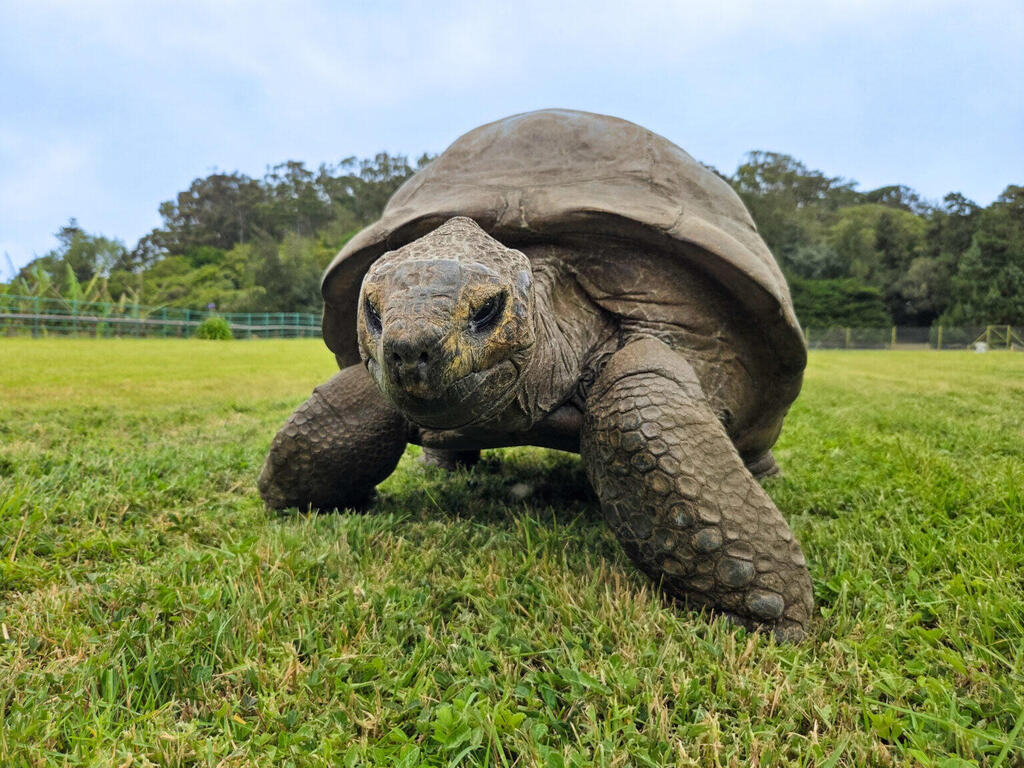
Jonathan the tortoise, who hatched around 1832
(Photo: St. Helena Government Communication Hub)
Over the decades, he has received visits from generations of British royalty, including Queen Elizabeth II.
Giant tortoises from the Galápagos and Seychelles islands are among the last surviving representatives of the enormous land reptiles that once played dominant roles in the ecosystems of many islands around the world.
But even among these famously long-lived animals, Jonathan is exceptional.
One of the hallmarks of aging is declining mitochondrial function. Mitochondria are the structures within most animal cells responsible for producing the energy needed to sustain essential biological processes.
This deterioration is associated with increasing disorder, or entropy, in the regulatory mechanisms that control genes involved in mitochondrial efficiency.
Yet Jonathan appears to have avoided some of the cellular deterioration typically associated with advanced age.
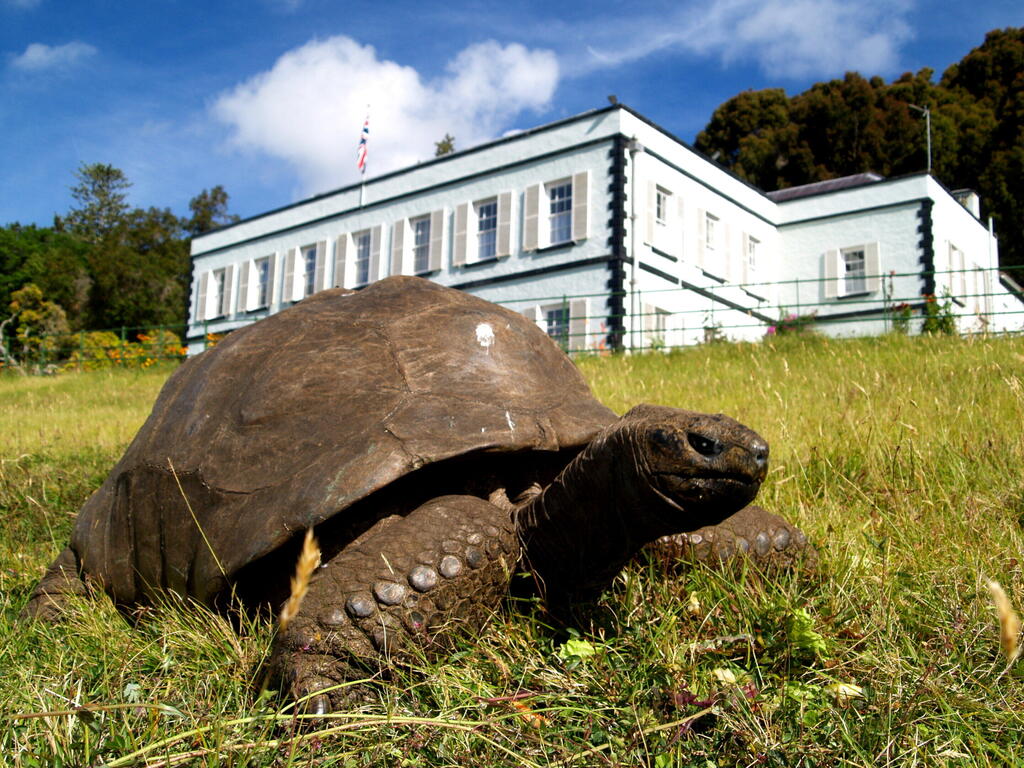
Jonathan has spent most of his life on St. Helena
(Photo: Joe Holland)
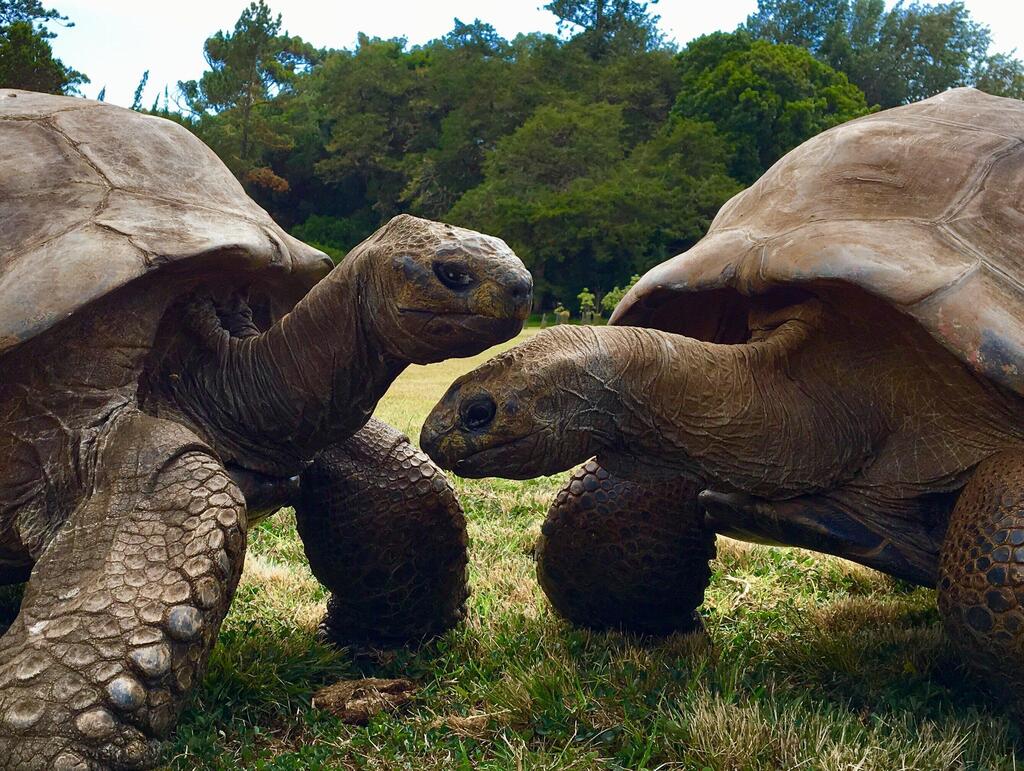
Jonathan, the world's oldest living giant tortoise and oldest living land animal
(Photo: Joe Holland)
Through detailed sequencing of his genome, researchers discovered that his longevity may be linked not only to favorable genes but also to an unusual resistance to age-related changes in genetic regulation.
In a study published in the scientific journal Science Advances, scientists identified 287 genetic variants in Jonathan associated with biological processes that may help mitigate the effects of aging. These include mechanisms involved in repairing damaged DNA, reducing inflammation, regulating insulin and suppressing cancerous tumors.
The findings suggest that Jonathan's exceptional lifespan may be connected to his body's ability to preserve essential cellular functions over extraordinarily long periods.
Jonathan belongs to the species Aldabrachelys gigantea, native to Aldabra Atoll in the Seychelles.
Members of this species can live for more than a century, but Jonathan has far exceeded even that remarkable lifespan. Believed to have hatched around 1832, he is recognized as the world's oldest living land animal.
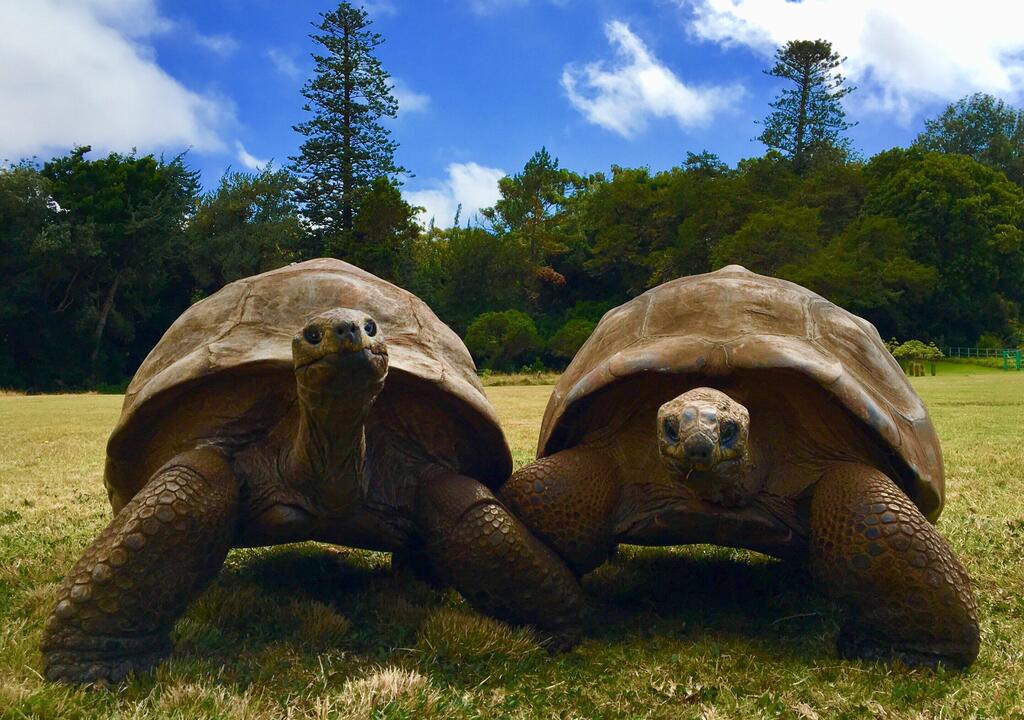
Favorable genes and minimal genetic deterioration have helped Jonathan the tortoise survive for nearly 200 years
(Photo: Joe Holland)
The researchers also examined Jonathan's epigenome, the collection of chemical modifications and regulatory mechanisms that influence when genes are switched on or off without altering the underlying DNA sequence.
They compared his epigenetic profile with those of younger giant tortoises belonging to the same species. The results were striking. Despite Jonathan's extraordinary age, the regulatory mechanisms controlling genes involved in DNA repair and metabolism remained remarkably similar to those found in much younger tortoises.
Ordinarily, epigenetic patterns change over time, contributing to the biological deterioration associated with aging. These changes are among the reasons cells gradually lose their ability to function efficiently as organisms grow older.
Jonathan's unusually stable epigenetic profile suggests that some of these processes may have been substantially slowed or resisted.
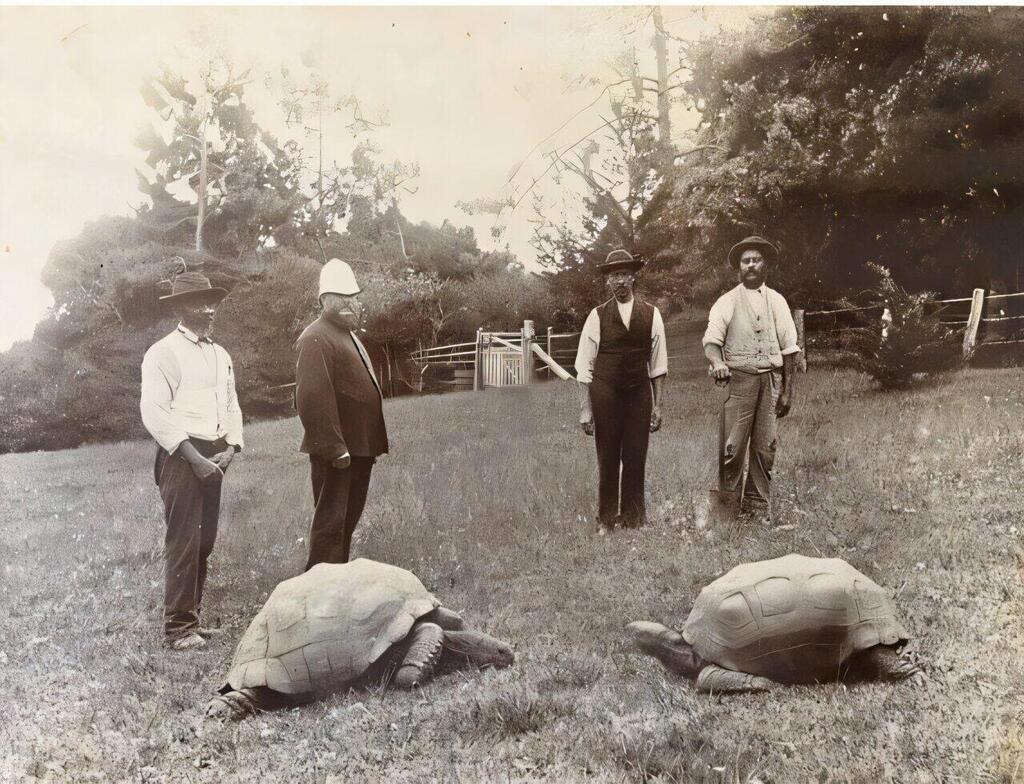
Jonathan arrived on St. Helena in 1882 as a gift to Sir William Grey-Wilson, who later served as the island's governor. This photograph was taken around that time, with Jonathan pictured on the left
(Photo: A.L. Innes)
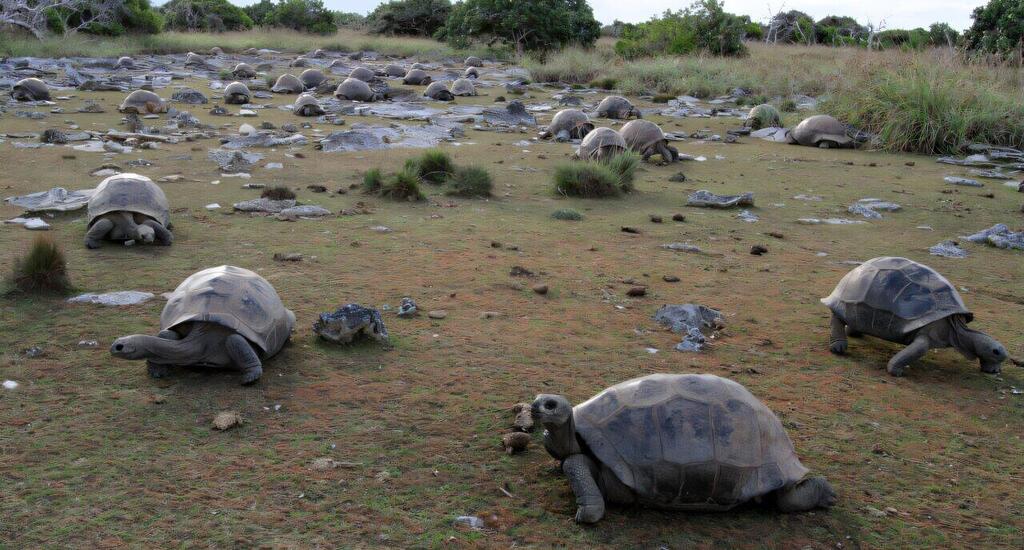
Giant tortoises on Aldabra Atoll in the Seychelles
(Photo: Dennis Hansen)
It is the first time scientists have examined the epigenome of a giant tortoise of this kind. Approximately 180,000 giant tortoises currently inhabit Aldabra Atoll, a population larger than the entire human population of the Seychelles.
The research was led by scientists from Kallel, a U.S.-based nonprofit organization focused on longevity research. The researchers believe that decoding the genetic and epigenetic characteristics of an animal capable of living for centuries could provide valuable insight into the biological mechanisms underlying extreme longevity.
"We found that the gene regulators involved in energy production and DNA repair have remained incredibly stable in Jonathan over almost two centuries," said Dr. Justin Gerlach of the University of Cambridge, who was involved in the research, according to Phys.org.
"There are few creatures that could tell us more about aging than the giant tortoises of the Galapagos and Seychelles islands", he added. "Working with a really old giant tortoise is such a privilege: you get a sense of the tortoise being your collaborator, not your study subject."
Gerlach, who has spent decades studying the ecology and conservation of giant tortoises, said the project marked his first investigation into the biological mechanisms behind their exceptional lifespans.
"Nature has already solved the puzzle of aging in remarkable ways, and Jonathan's genome provides a blueprint for cellular resilience," said Dr. Stephen Clark, M.D., founder of Kallel and senior author of the study, according to Phys.org.
"Our goal is to take these evolutionary insights and immediately translate them into practical, affordable treatments for everyday people," Clark added. "Aging is the greatest risk factor for nearly every chronic disease we face, and through the generosity of philanthropic partners, we can democratize access to longevity medicine."