

Divers who descended to a depth of about 40 meters (130 feet) near a shipwreck in the Strait of Sicily, one of the Mediterranean's most heavily fished areas, spotted a great white shark. It was the first time a shark of this species had been documented in the Mediterranean Sea.
"We were all shocked — and fascinated," Derk Remmers, a volunteer diver and head of the German branch of Ghost Diving, told Euronews Earth. "My fingers were shaking. It was a very large animal and we were not expecting it at all."
Gallery
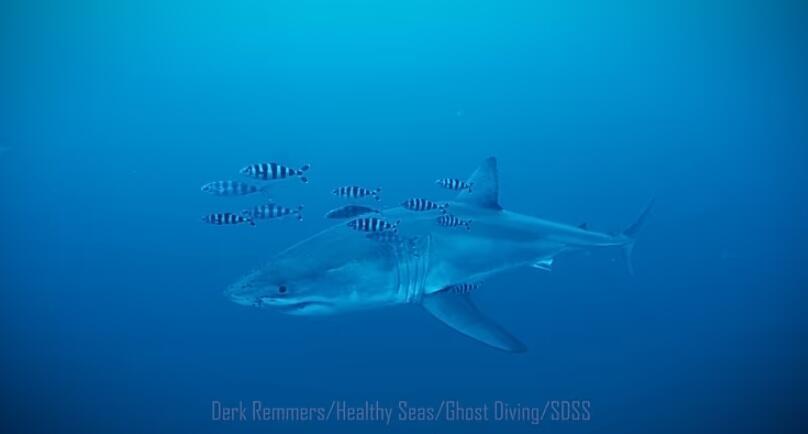
The great white shark documented near Sicily
(Photo: Derk Remmers Healthy Seas/SDSS/Ghost Diving)
According to Remmers, the shark circled members of the group briefly but showed no signs of aggression.
"It passed by us, turned around and came back. It was clear that it was curious, not aggressive. It had a calm presence, as if it were the boss of the area," Remmers recalled. After the divers released air bubbles, the shark suddenly accelerated and disappeared into the depths.
Marine researchers who were briefed after the dive described the sighting as rare and of significant scientific value. Dr. Carlo Cattano, a researcher at the Sicily Marine Center, said that much of the existing knowledge about great white sharks in the Mediterranean is based on dead specimens caught in fishing nets.
"Observations like this are extremely important for understanding the species' distribution, behavior and habits," he said.
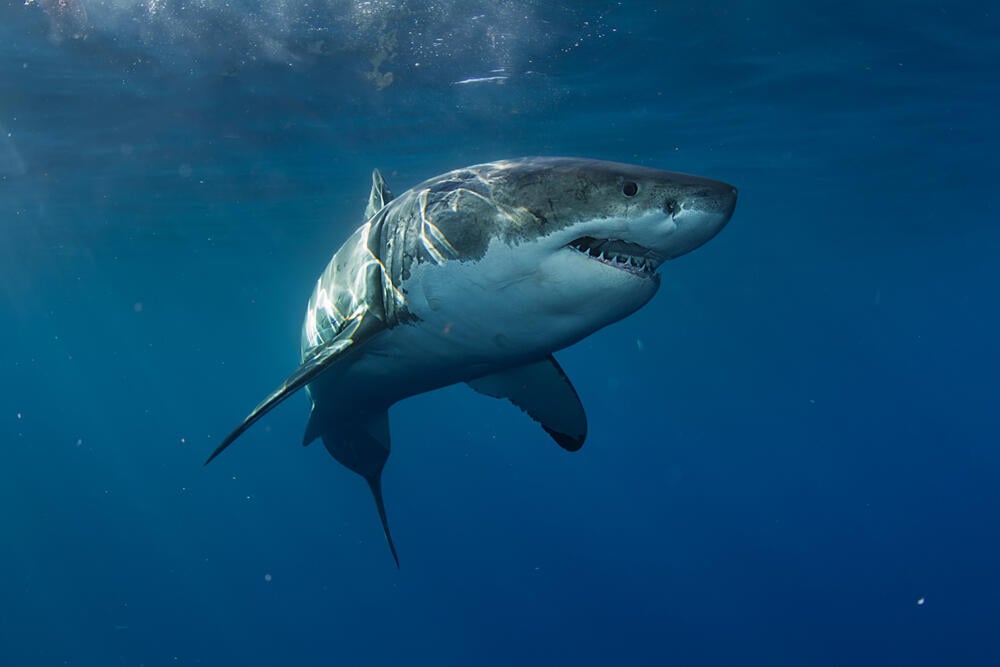
Great white shark
(Photo: Shutterstock)
The great white shark (Carcharodon carcharias), considered one of the ocean's most formidable apex predators, is typically found in temperate waters around the world, from the coasts of South Africa and Australia to California. In the Mediterranean, however, the species is relatively rare and documented sightings are particularly uncommon, making every encounter of great interest to researchers.
Adult great white sharks typically measure between 4 and 5 meters (13 and 16 feet) in length, although exceptionally large individuals can exceed 6 meters (20 feet) and weigh more than 2 tons. As an apex marine predator near the top of the food chain, it feeds on large fish, rays, other sharks and marine mammals.
Scientific knowledge of great white sharks in the Mediterranean remains limited because most records over the years have been based on dead specimens or sharks caught in fishing nets.