


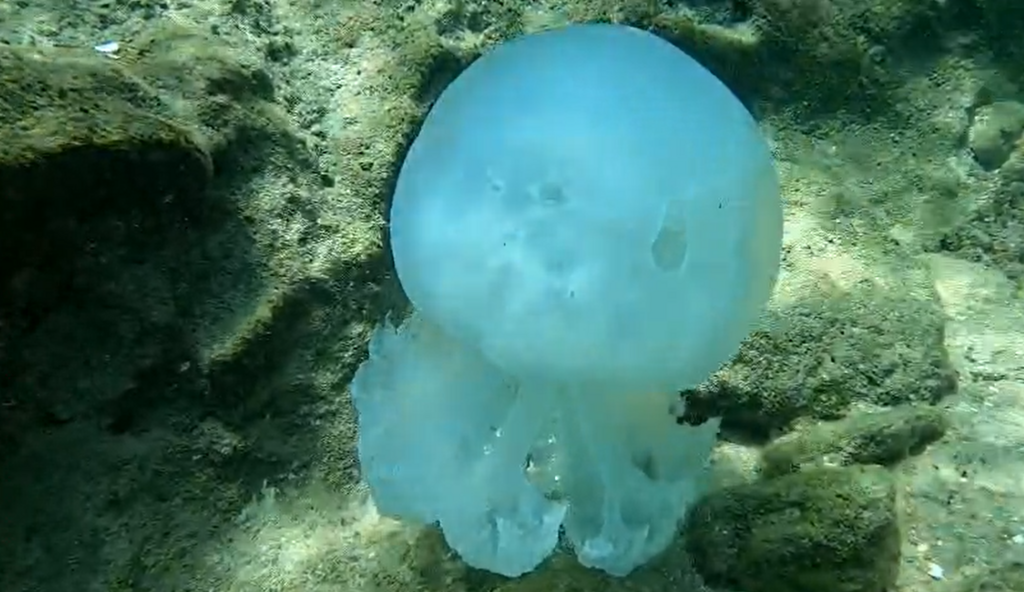
Jellyfish have begun arriving along Israel’s coastline earlier than usual this season. Shlomi Yitzhaki, a volunteer with the Israel Nature and Parks Authority, went snorkeling at Palmachim Beach National Park and documented dozens of jellyfish in the water, with some spotted close to the shoreline.
A check of the Meduzot Ba’Am website showed jellyfish present along all beaches from north of Nahariya to south of Ashkelon. Beachgoers have already reported their first encounters with jellyfish, including several sting incidents.
Jellyfish spotted off Palmachim Beach
(Video: Shlomi Yitzhaki)


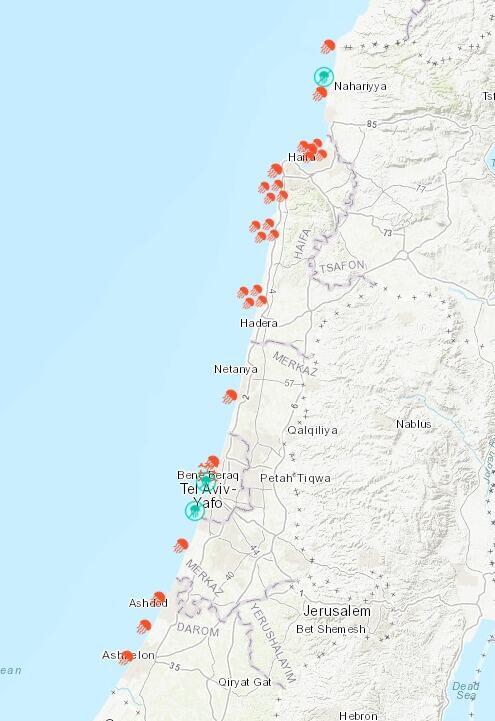
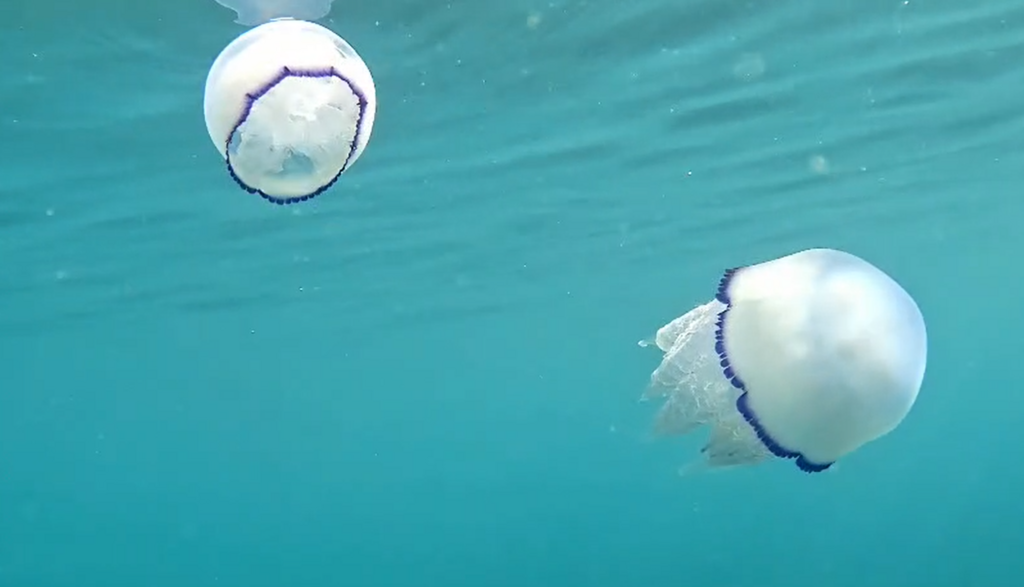
Among the species observed was the nomad jellyfish, the most common stinging jellyfish along Israel’s beaches during the summer, as well as other species, including the blue blubber jellyfish.
The Israel Nature and Parks Authority said that in previous years, summer jellyfish swarms generally appeared during June, and at times as early as May, as sea temperatures rose. Studies conducted in Israel indicate that rising water temperatures in the spring and early summer are among the main factors affecting the timing of jellyfish arrivals, alongside other factors including sea currents, winds and additional environmental conditions.
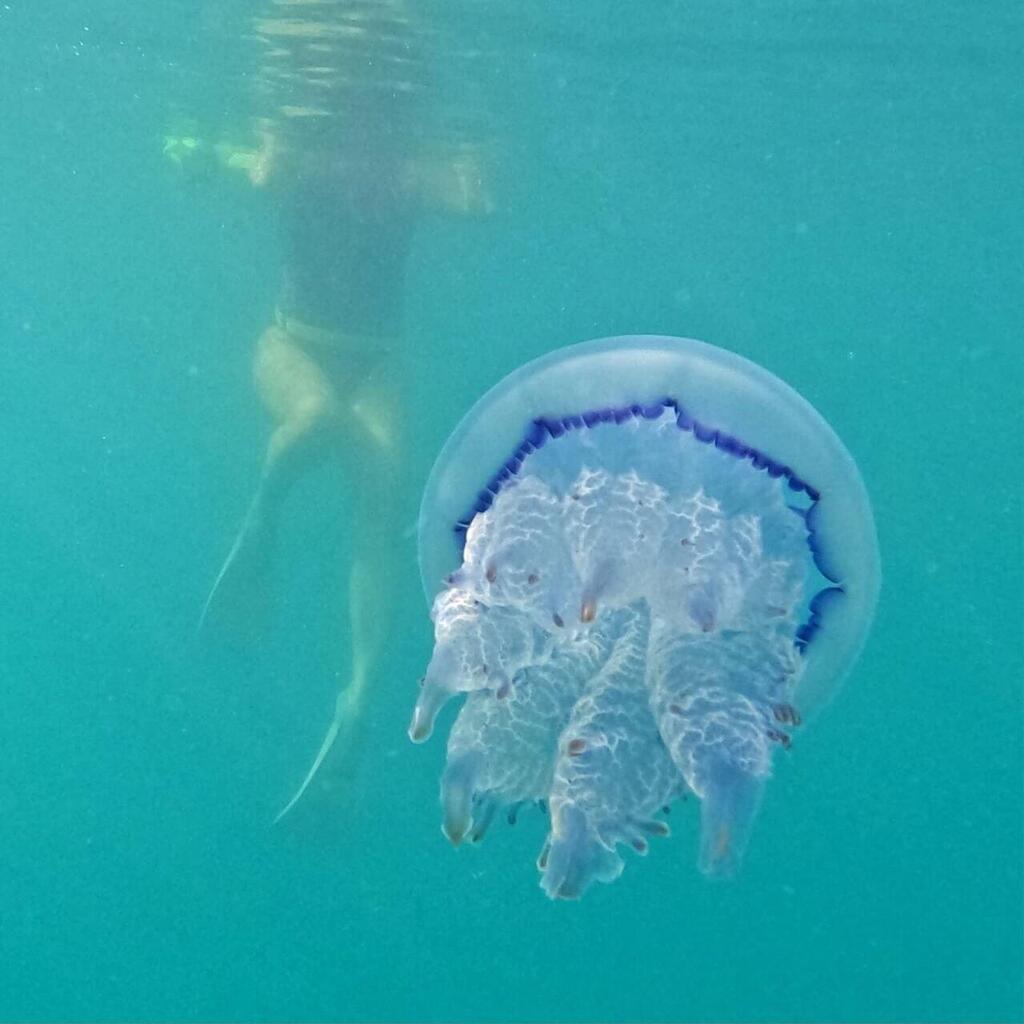
A blue blubber jellyfish near divers off Palmachim Beach
(Photo: Shlomi Yitzhaki)
(Photo: Shlomi Yitzhaki)
(Photo: Shlomi Yitzhaki)
Dr. Ruti Yahel, a marine ecologist with the Israel Nature and Parks Authority, explained that “jellyfish are invertebrates belonging to the phylum Cnidaria, which also includes corals and sea anemones. About 10 species of large jellyfish are known in Israel, some of them invasive species that arrived from the Red Sea through the Suez Canal.”
According to Yahel, “the most common species is the nomad jellyfish (Rhopilema nomadica), the stinging jellyfish most often encountered along bathing beaches during the summer months. Additional species drifting alongside it can sometimes also be seen, such as the blue blubber jellyfish, a native Mediterranean species that was once more common along our shores. It is distinguished by its prominent blue rim, and its sting is generally milder than that of the nomad jellyfish. Other invasive species of striking jellyfish can also be observed, such as the spotted bell jellyfish and the mauve stinger, whose stings are not as painful as those of the nomad jellyfish.”