

Every year on the eve of Lag B'Omer, countless bonfires are lit across Israel. For each group of celebrants, it may be a small, local social event, but satellite images reveal a national hazard: a thick cloud of pollution covering large areas.
It may be hard to imagine how one small bonfire can cause harm but, according to Environmental Protection Ministry data, the impact is dangerous: Every year on Lag B'Omer, pollutant concentrations are significantly higher than on an ordinary day. This raises a critical question about how each of our personal actions becomes a broad environmental and health hazard — and most important, what we can do differently.
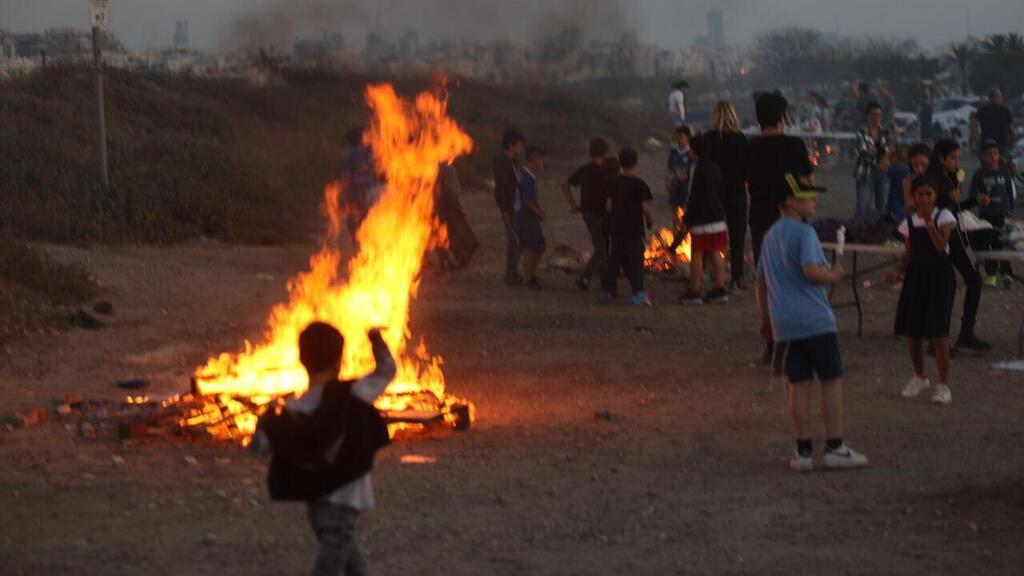
The chain effect: From thousands of sparks to a pollution cloud
“Over the years, the air pollutant concentrations measured on Lag B'Omer have been seven to 20 times higher than those measured on ordinary days,” according to Barnett-Itzhaki. A single bonfire may seem to have a negligible effect, but thousands of bonfires lead to emissions of hazardous substances and a pollution cloud that covers entire cities,” explains Dr. Zohar Barnett-Itzhaki, head of the environmental and social sustainability research group at Ruppin Academic Center and a graduate of the Mimshak program.
Unlike controlled industrial combustion, bonfires are a classic case of “open burning.” According to a World Health Organization report, in such burning, smoke and pollutants are released directly into the air rather than through chimneys. This makes the hazard especially severe, since emissions occur at ground level and near homes and streets.
Under these conditions, the mixture of materials — which in bonfires often includes organic waste, paper, cardboard and plastic — emits a wide range of pollutants, some of which have especially harmful effects on the climate and health.
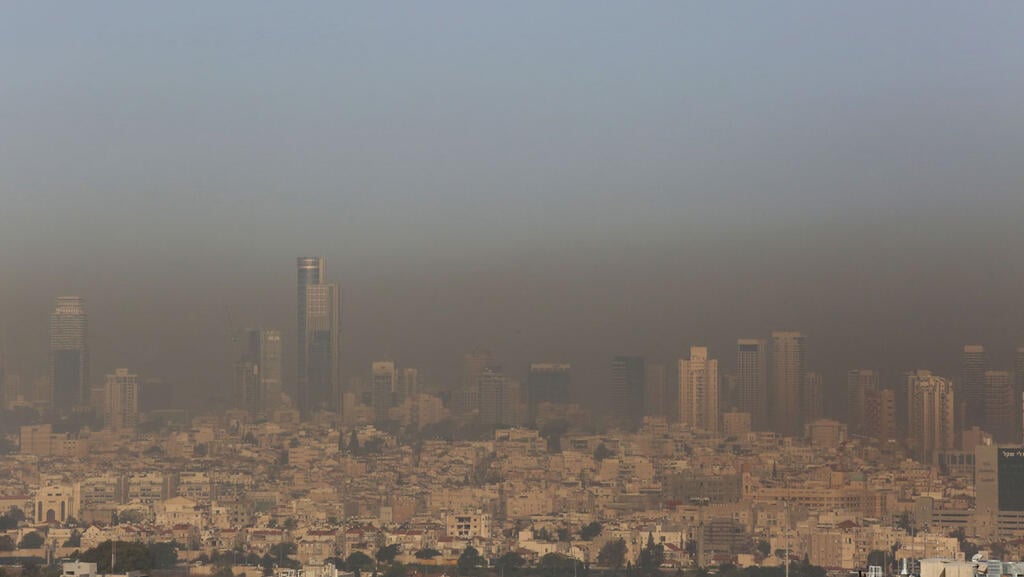
The Tel Aviv metropolitan area the morning after Lag B'Omer eve
(Photo: Tomeriko)
Exposure to these pollutants, whether short or long term, leads to a range of health problems, from skin and respiratory irritation to chronic respiratory diseases and other severe health outcomes. In fact, estimates point to about 270,000 deaths a year worldwide attributed to exposure to particles originating in open burning of waste.
“Over the years, the air pollutant concentrations measured on Lag BaOmer have been seven to 20 times higher than those measured on ordinary days,” according to Barnett-Itzhaki.
What particles are we really breathing?
The burning process in bonfires emits dangerous substances and respirable particles that penetrate deep into the respiratory tract. “Every burning process includes the emission of carbon dioxide and particles, but in incomplete and uncontrolled burning processes, carbon monoxide and nitrogen oxides are also emitted into the air,” Barnett-Itzhaki says.
According to Environmental Protection Ministry data, these particles are fine particles that pass through the respiratory tract. While on a regular day the small and dangerous particles account for about half of measured air pollution, during fires they can reach up to 86% of all particle pollution. According to WHO data, because of their tiny size, they are not stopped in the sinuses or throat, but penetrate the lungs and from there can pass directly into the bloodstream.
In the bloodstream, they can trigger a multisystem inflammatory response, explaining how pollution affects not only breathing but also the cardiovascular system.
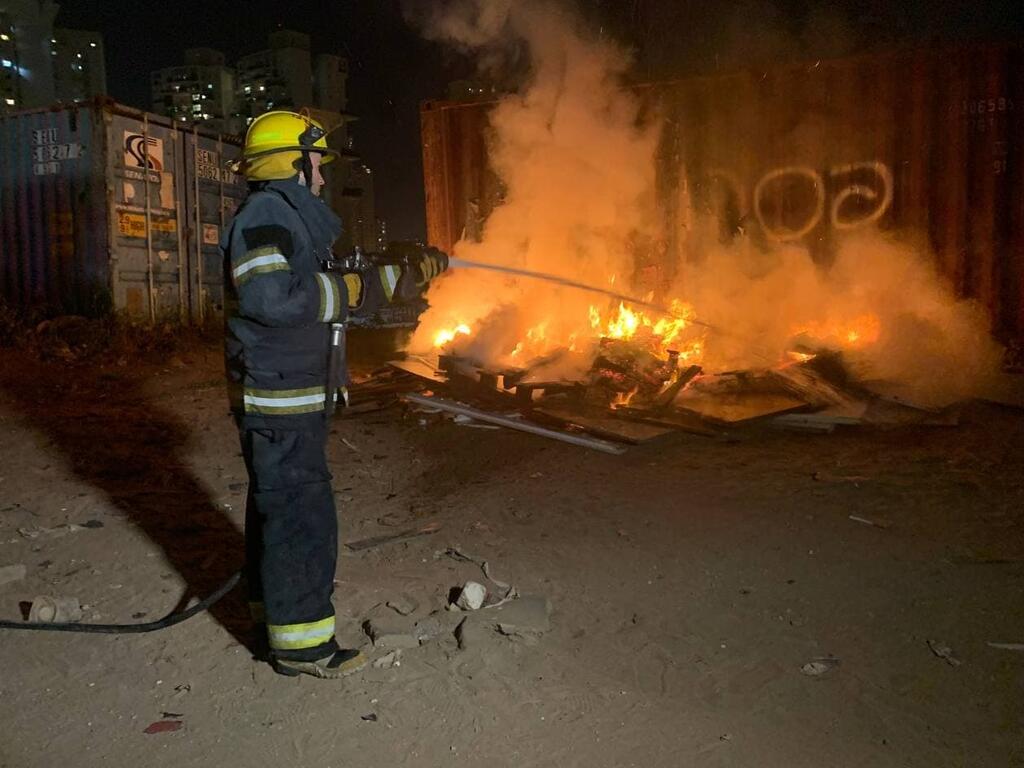
Firefighting rotation on Lag B'Omer in Bnei Brak
(Photo: Roy Rubinstein)
The situation worsens when materials that are not natural wood are thrown into the fire. The Environmental Protection Ministry warns that burning painted wood or industrial boards such as MDF, melamine and Formica — found in most modern furniture, cabinets and shelves in our homes — emits dangerous substances because of the adhesives and coatings they contain.
This exposure has an immediate health cost. According to the Health Ministry, children are the population most sensitive to the effects of these air pollutants. “Acute exposure to air pollutants can cause coughing, a feeling of suffocation, eye and respiratory irritation and worsening asthma. Chronic exposure to air pollutants is linked to a wide range of dangers, from worsening existing health conditions to various cancers and, in pregnant women, possible harm to the fetus,” Barnett-Itzhaki explains.
Beyond smoke: The plastic and waste problem
The holiday’s environmental impact does not stop in the air. The celebrations involve massive use of disposable utensils, creating double damage: when they are burned and when they are left in the field. The Environmental Protection Ministry notes that a plastic plate is used for only five minutes, but takes hundreds of years to break down.
When these utensils are thrown into the fire, the damage becomes immediate. Barnett-Itzhaki explains that “throwing plastic utensils into a bonfire leads to the emission of additional toxic and dangerous substances, such as benzene.” Such burning also releases hazardous compounds that harm the immune system and cause disease. These toxins settle on the ground and contaminate it for a long time.
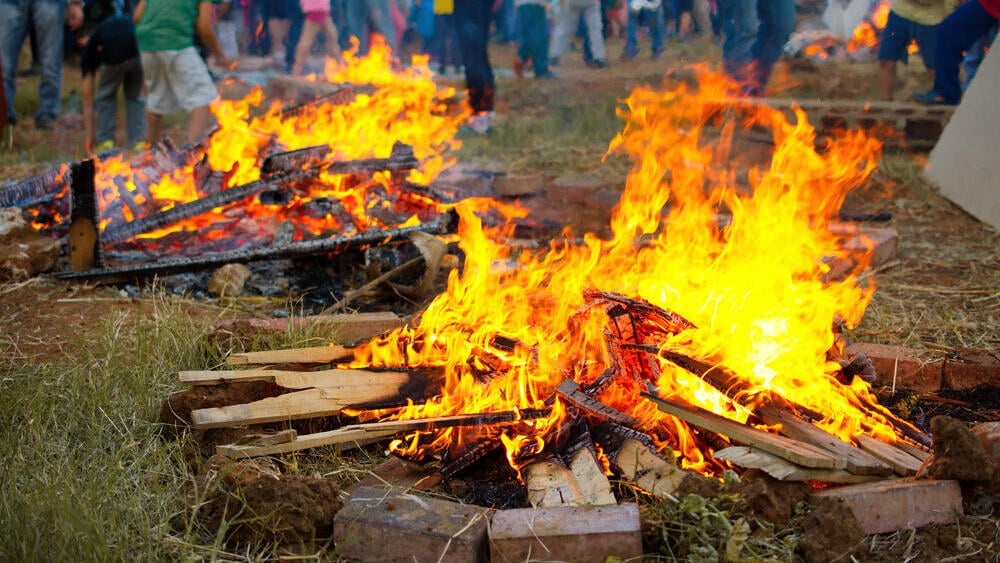
Lighting lots of small bonfires makes it worse
(Photo: Shutterstock)
Plastic left in the field also does not disappear. Barnett-Itzhaki stresses that “some of the plastic breaks down into small particles — microplastics — penetrates plants, animals and even the human body, and brings many health risks, including cancer.”
There is another way: The power of small change
The good news is that, in recent years, a downward trend in air pollution has been evident thanks to rising public awareness. So how can people celebrate while protecting the environment?
The best solution, according to both the Environmental Protection Ministry and Barnett-Itzhaki, is adopting alternative activities such as lantern walks or social gatherings without fire. If you still decide to light a bonfire, the most significant step is joining forces.
“The more we reduce the number of bonfires, the fewer hazardous substances will be emitted into the air,” Barnett-Itzhaki says, stressing that “it is important to reduce not only their number but also their size, while making sure to use only approved wood.”
Lag B'Omer can also be used as a lesson in sustainability, “especially because children see, smell and feel the effect of the bonfire. The environmental and health damage can be explained, while still celebrating through gatherings and stories,” Barnett-Itzhaki says.
In conclusion, when we choose to combine bonfires, give up disposable utensils or choose an alternative activity, we are not only protecting our lungs — we are also changing the national picture.
- Content distributed by Zavit, the news agency of the Israeli Society of Ecology and Environmental Sciences.