

Water temperatures in the Mediterranean are reaching record highs. Instead of offering a refreshing escape, waters off the coasts of Greece, Italy and Spain, among other countries, are now reaching temperatures of up to 28°Celsius (82.4°F) or higher.
With an average sea surface temperature of 26.9°Celsius (80.4° F), July 2025 was the hottest month on record in the Mediterranean, according to data from Copernicus, the European Union’s climate change service.

Warming driven by climate change, combined with stressors such as overfishing, pollution and habitat destruction, is seen as a major threat to both marine and coastal habitats.
“The consequences of warming are not only projections for the future, but very real damages we are witnessing now. The continuing rise in temperatures, sea level and ocean acidification cause severe risks for the environment in and around the Mediterranean Sea,” says Dr. Abed El Rahman Hassoun, Biogeochemical Oceanographer at the Helmholtz Centre for Ocean Research in Kiel, Germany.
Hassoun and Dr. Meryem Mojtahid, professor of Paleo-Oceanography at the University of Angers in France, led a research team that examined the effects of climate change on Mediterranean marine and coastal ecosystems. Their findings were published in the journal Scientific Reports.
The Mediterranean Sea – similar to the Baltic Sea or the Black Sea – is a semi-enclosed sea and connected to the global ocean only through the Strait of Gibraltar. As a result, the Mediterranean Sea is warming faster and acidifying more strongly than the open ocean, according to the findings.
Between 1982 and 2019, the surface seawater temperature already increased by 1.3°C, while the global increase was only 0.6°C. Therefore, the Intergovernmental Panel on Climate Change (IPCC) also refers to the Mediterranean Sea as a 'hotspot of climate change'.
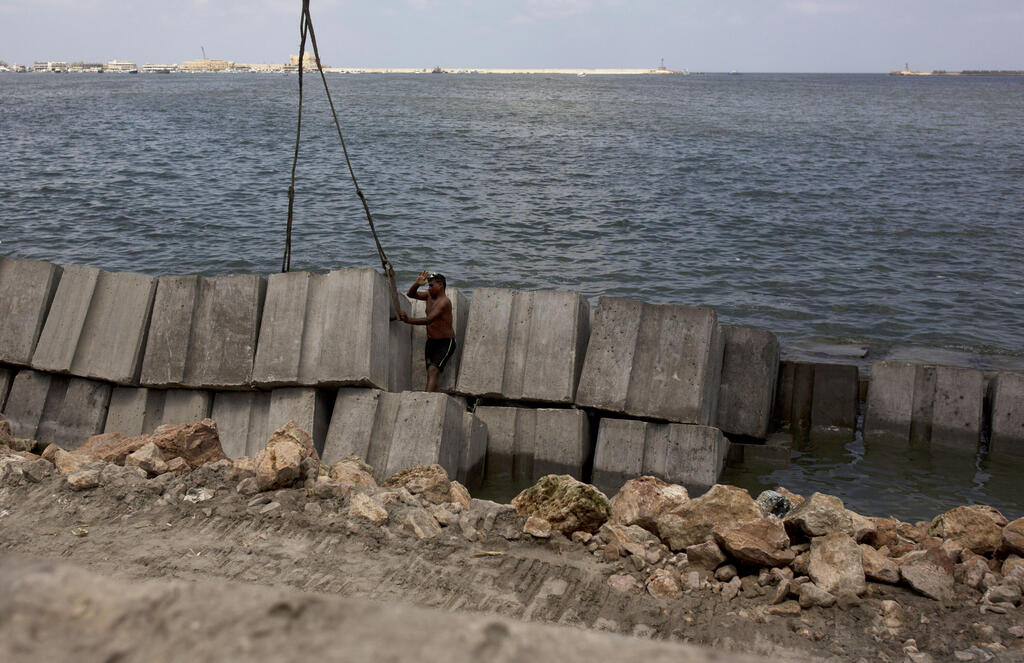
Construction of sea walls to counter Mediterranean Sea level rise in Alexandria, Egypt
(Photo: Maya Alleruzzo/AP)
Also, scientists consider it as a natural laboratory because it reacts faster and more strongly to climate pressures than the open ocean, while at the same time concentrating multiple drivers and stressors in a relatively small, well-observed system.
“What happens in the Mediterranean often foreshadows changes to be expected elsewhere, so the Mediterranean Sea acts like an early warning system for processes that will later affect the global ocean,” according to Hassoun.
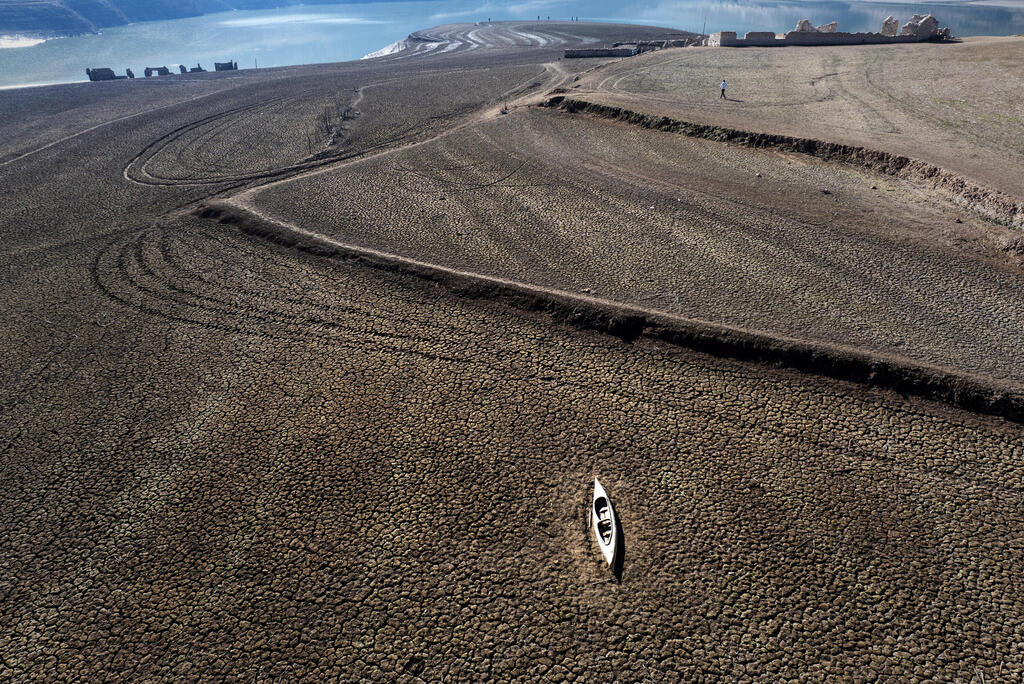
Drought-stricken region in Spain
(Photo: Emilio Morenatti/AP)
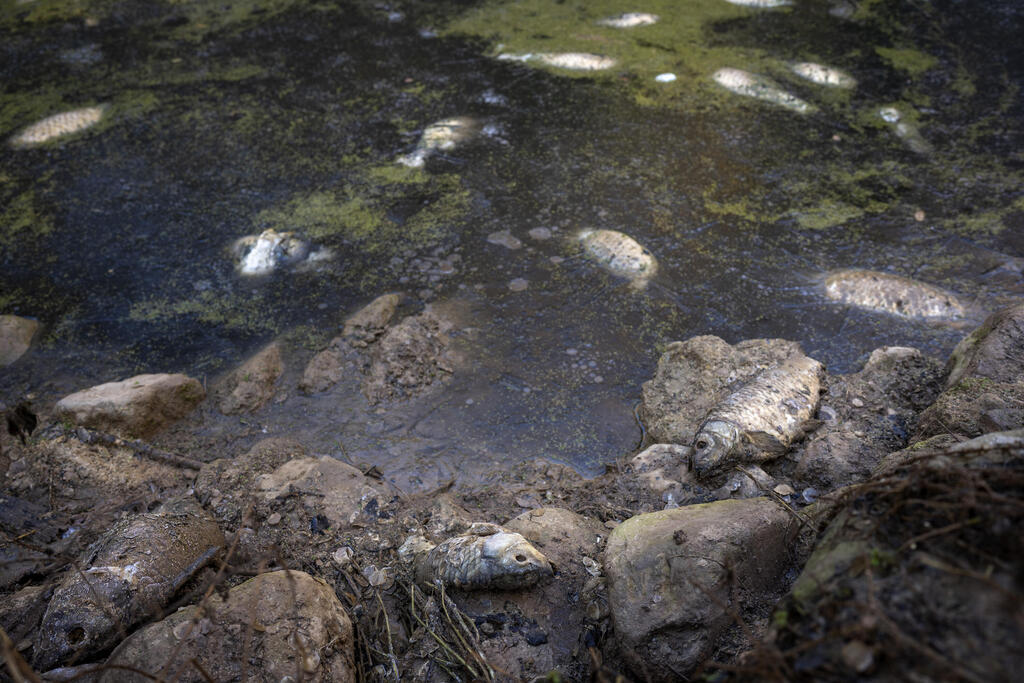
Algal bloom and fish die-off in Spain, in an image illustrating how climate change, invasive species and human activity are threatening what remains of the severely damaged ecosystems in the Mediterranean Sea
(Photo: Emilio Morenatti/AP)
If international climate protection targets are met in the coming years, some environmental changes could still be slowed. In a medium emissions scenario (RCP 4.5), emissions will stabilize over the next few years thanks to moderate climate policies. Even in this case, the Mediterranean Sea is expected to warm by an additional 0.6 °C to 1.3 °C (compared to current values) in 2050 and 2100, respectively.
In contrast, the high emissions scenario (RCP 8.5) with continuously rising emissions, additional warming would likely range between 2.7°C and 3.8°C by 2050 and 2100, respectively. Such warming, together with sea level rise and ocean acidification, would have significant disruptions on ecosystems: seagrass meadows would be lost, coral reefs might witness significant damages, and severe chain reactions would occur in food webs.
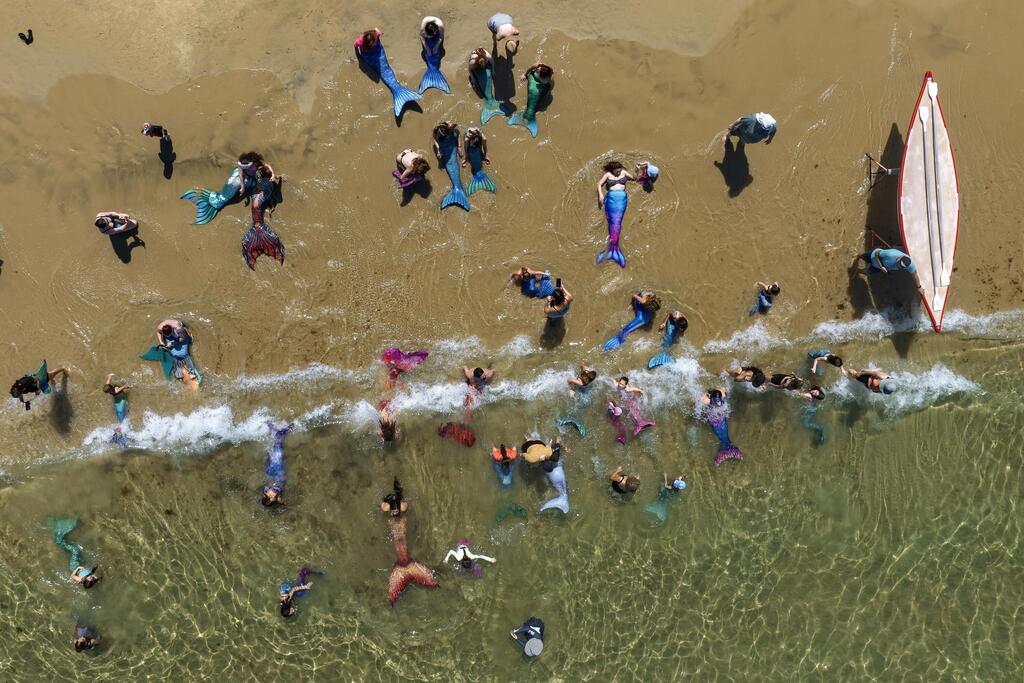
Beachgoers at the shores of Bat Yam, Israel
(Photo: Oded Balilty/AP)
“These scenarios show that we can still make a difference. Every tenth of a degree counts”, says study leader Hassoun. “Political decisions made now will determine whether ecosystems in the Mediterranean Sea collapse, partially or totally, or remain functional feeding the ecosystem services they provide."
"At the same time, our study also shows that even with moderate climate protection and an additional 0.8°C warming, we must expect some consequences. Thus, our focus should be on minimizing the impacts as low as possible," he added.
The researchers examined a wide range of marine ecosystems. Warming and acidification of the Mediterranean are altering entire communities. Plankton species are shifting, and toxic algal blooms and bacteria are occurring more frequently.
Fish stocks are under pressure from +0.8 °C as well: they could shrink by 30% to 40%, shift northwards, and make room for invasive species, such as the Pterois, prevalent in the Red Sea and Gulf of Eilat, which threatens biodiversity.

Debris found in the Calypso deep, at the bottom of the Mediterranean Sea
(Photo: Caladan Oceanic)
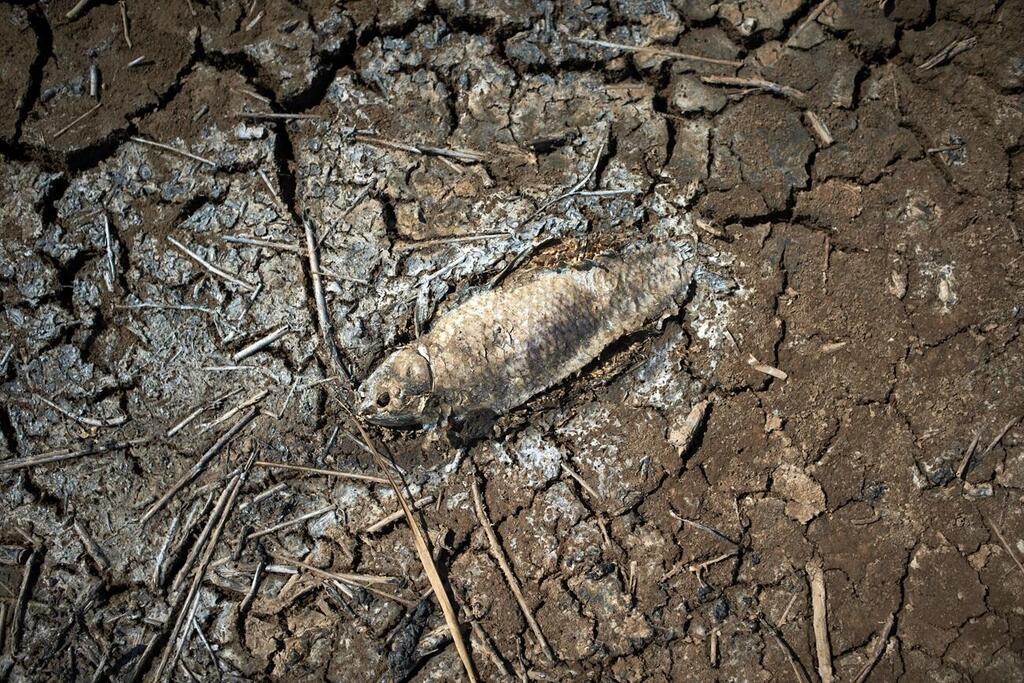
Effects of the drought in France, along the Mediterranean coast
(Photo: Alain Pitton/NurPhoto/Reuters)
Due to the combined effect of warming and sea-level rise, coastal ecosystems in the Mediterranean Sea are especially vulnerable to the impacts of climate change. The zone affected includes areas up to ten meters above sea level, such as dunes and rocky coasts. Rising sea levels increase coastal erosion and thereby threaten the nesting sites of sea turtles – more than 60 percent could be lost.
Even at an additional warming of just +0.8 °C, sandy beaches and dunes are particularly endangered, and rocky coasts also lose habitat and biodiversity, although they are somewhat more resilient. Wetlands, lagoons, deltas, salt marshes, and coastal aquifers are also affected and can experience considerable damage already at this rise.
At the same time, rising sea levels can lead to reduced precipitation and consequently water scarcity. “We found that Mediterranean ecosystems are remarkably diverse in how they respond to climate-related stress. Some are more resistant than others, but none are invincible”, says Mojtahid. “Now it’s time to turn knowledge into action”, adds Hassoun.