

Researchers have detected two hidden cavities behind the eastern face of Egypt’s Pyramid of Menkaure, one of the three main pyramids at Giza, in a discovery that may indicate the presence of a second, previously unknown entrance.
The finding, published in the journal NDT & E International, comes from the ScanPyramids project, a joint research effort by Cairo University and the Technical University of Munich. Using noninvasive scanning methods — including ground-penetrating radar, ultrasound and electrical resistance tomography — the team identified two air-filled spaces behind the pyramid’s polished granite façade.
Gallery
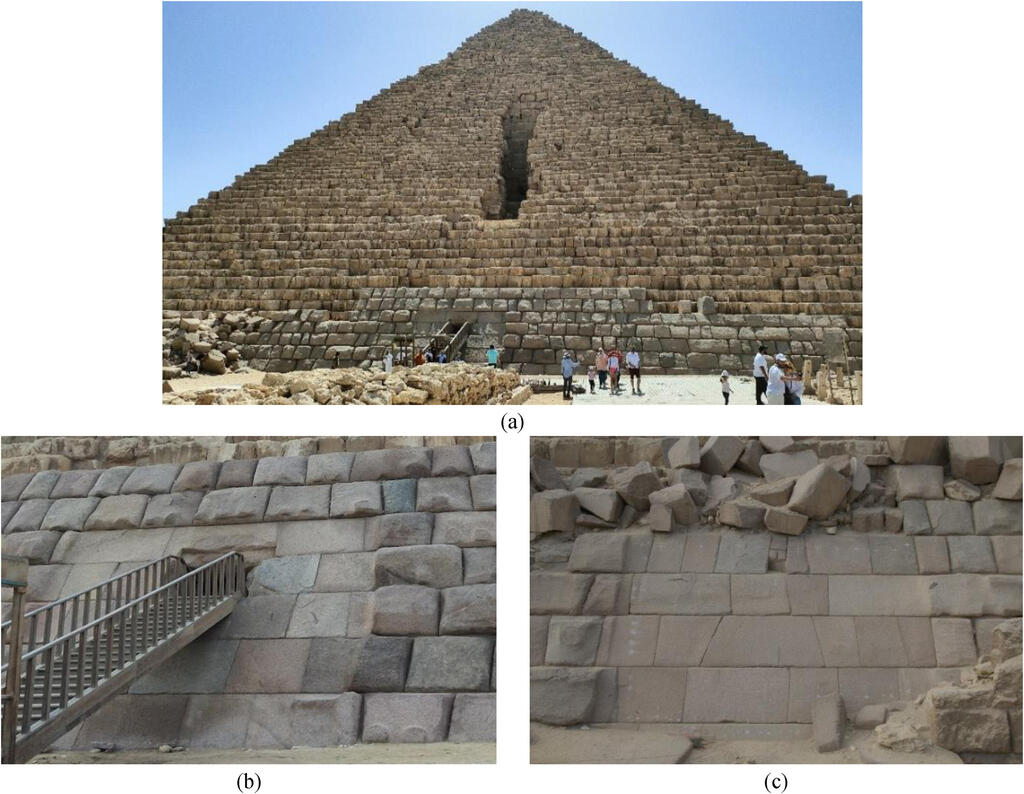
The northern entrance of the Pyramid of Menkaure (A), a close-up of the entrance opening (B), and the section where an additional anomaly indicating a possible hidden passage was detected (C)
(Photo: ScanPyramids project)
It is the first time structural anomalies have been detected on the pyramid’s eastern side, where a smooth granite surface about 4 meters high and 6 meters wide has long puzzled archaeologists. Those granite blocks are unusual: they appear only on that section and at the known entrance on the pyramid’s northern side, while most of the monument is made of limestone.
The newly detected cavities lie 1.4 meters and 1.13 meters behind the outer surface, measuring about 1 meter high by 1.5 meters wide and 0.9 meter high by 0.7 meter wide, respectively. The researchers determined their dimensions through a method known as image fusion, which combines multiple data sources into a single model.
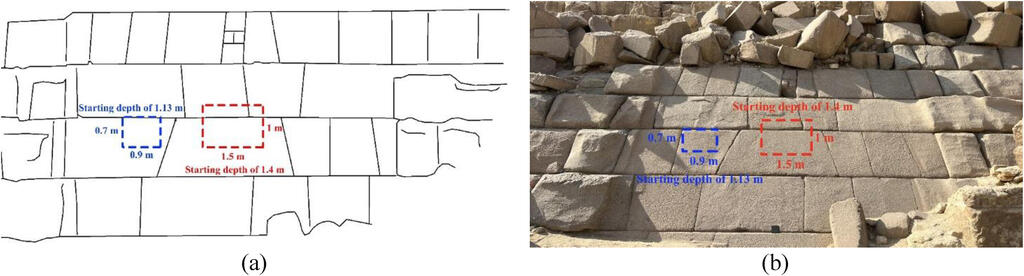
(Photo: ScanPyramids project)
“The testing methodology we developed allows us to draw very accurate conclusions about the pyramid’s internal structure without harming the invaluable monument,” said Prof. Christian Gross of the Technical University of Munich, an expert in non-destructive testing who took part in the research. “The hypothesis of an additional entrance to the pyramid has become quite plausible, and our findings bring us a significant step closer to confirming it.”
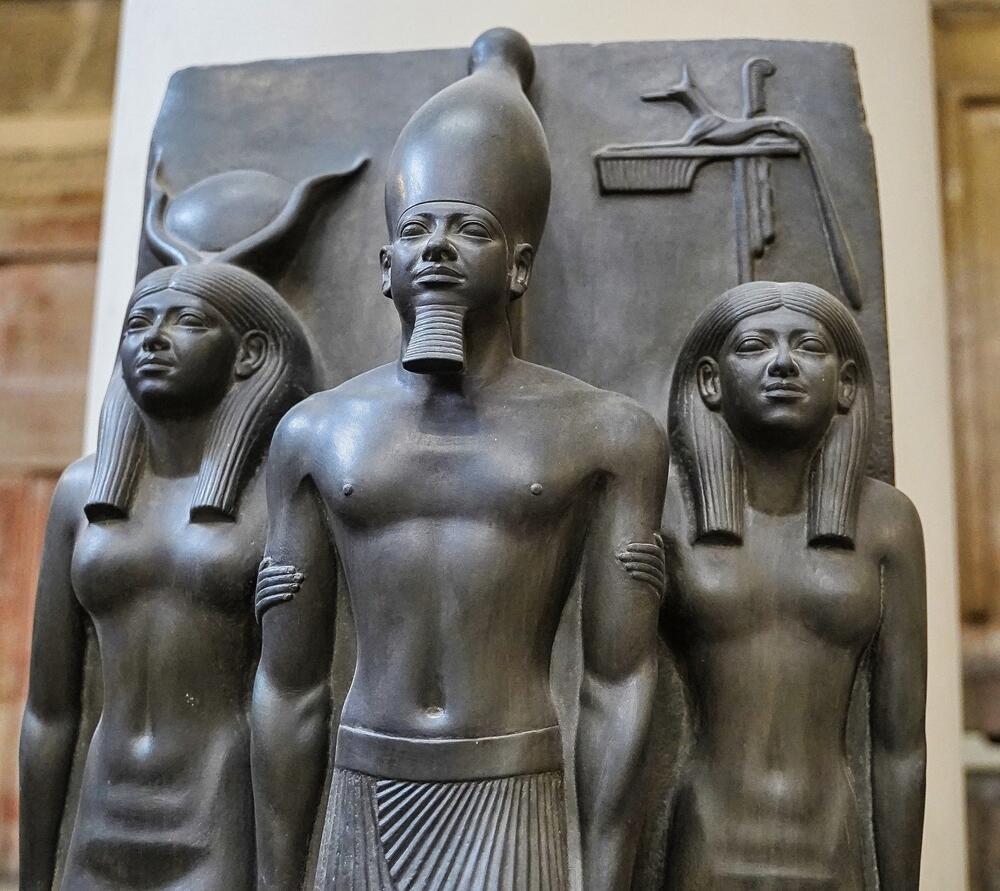
Pharaoh Menkaure (center)
(Photo: CK-TravelPhotos/Shutterstock)
The Pyramid of Menkaure, built during Egypt’s Fourth Dynasty around the mid-third millennium BCE, served as the tomb of Pharaoh Menkaure. In 2023, the same research project uncovered a hidden corridor inside the Great Pyramid of Giza, built for Pharaoh Khufu, also of the Fourth Dynasty.
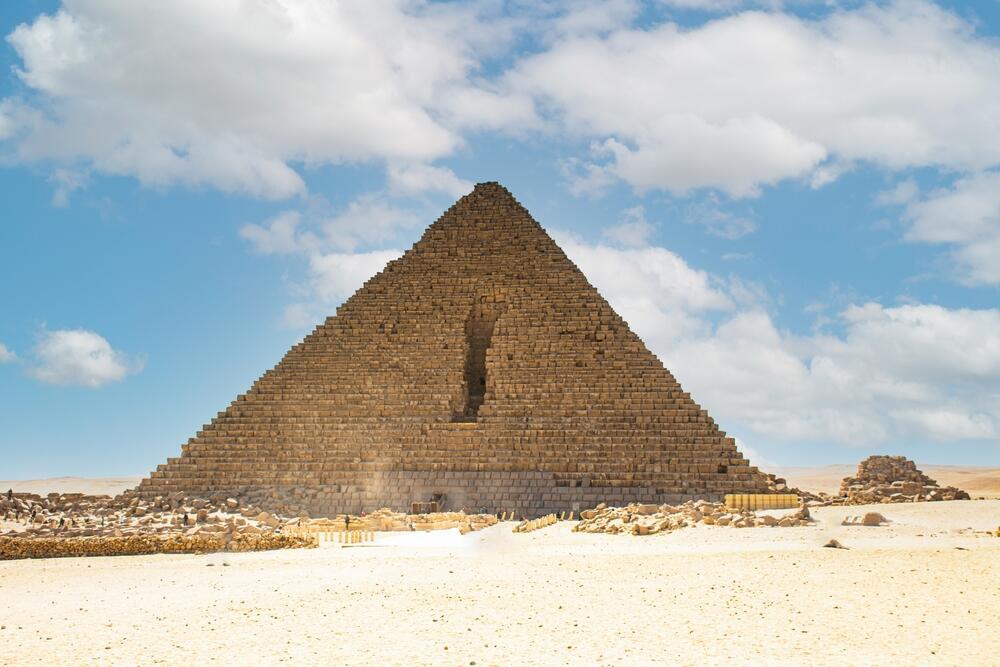
Pyramid of Menkaure
(Photo: Bembo De Niro/Shutterstock)
The latest discovery, researchers say, adds to growing evidence that the Giza complex still holds untold secrets more than 4,000 years after its construction.