

The water level of the Sea of Galilee has fallen to its lowest point since 1980, even though desalinated water continues to be pumped into the lake. On Tuesday, the level stood at minus 213.345 meters, 34.5 centimeters below the lower red line, the threshold that marks a critical shortage.
As first reported by Yedioth Ahronoth and Ynet, Israel’s Water Authority has activated the “reverse national carrier,” a unique system that pumps desalinated seawater from the Mediterranean into the freshwater lake. The flow currently stands at about 1,000 cubic meters per hour and is expected to increase in the coming weeks depending on the output of desalination plants.
The Sea of Galilee is in a dire state
(Photo: Avihu Shapira)


“We are seeing a drop of more than 2.5 meters per year, while in previous droughts the average was between 90 centimeters and 1.2 meters per year,” said Firas Talhami, director of the Kinneret and Northern Water Sources Division at the Water Authority. “This rate of decline is unprecedented and very worrying. We are monitoring closely as the reverse carrier begins operation, and our goal is to increase inflow to several thousand cubic meters per hour.”
Talhami said that during the current heat wave, the lake’s level continues to fall by half a centimeter per day despite the inflow of desalinated water. “To stabilize the level, we need to increase desalinated water flow by several hundred percent,” he said. “The lake’s water quality has not changed since the inflow began, and adding more desalinated water will only improve it.”

Idan Greenbaum, chairman of the Kinneret Cities Association, said, “Unfortunately, the lake has already dropped more than 30 centimeters below the lower red line. If this continues, we will have to rebuild the dam that was last erected over a decade ago to allow continued water flow to the southern Jordan River, which is nearly dry. If not, salinity in the lake could rise.”
If drought conditions persist, experts warn the consequences for agriculture, nature, and the public are only a matter of time.
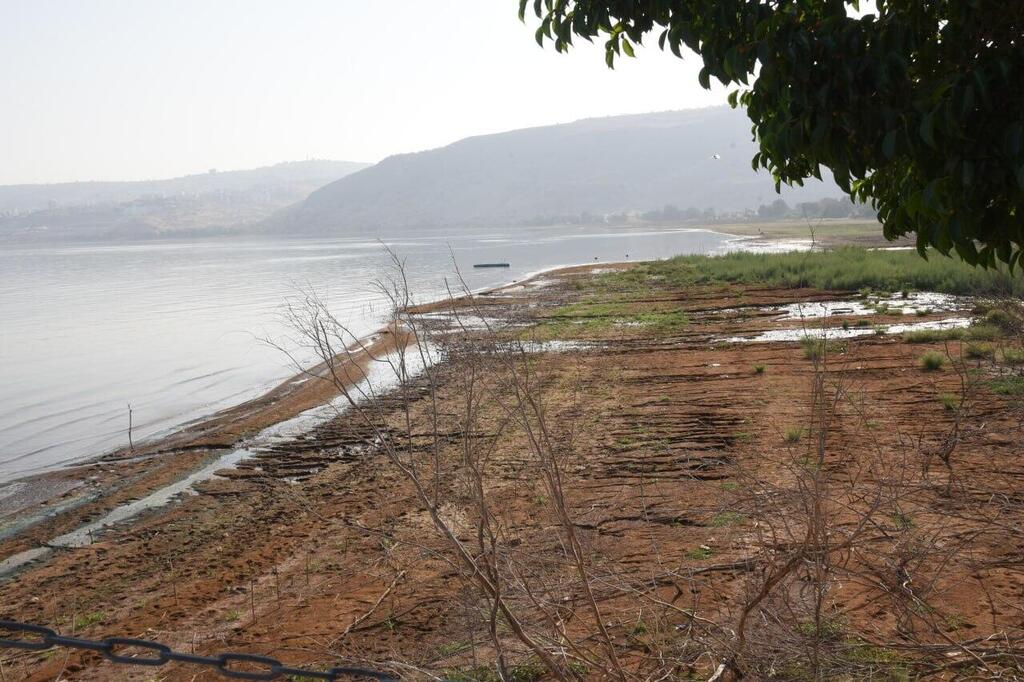
The water level has dropped sharply this year
(Photo: Avihu Shapira)
The environmental NGO Zalul, citing research by Dr. David Katz of the University of Haifa’s School of Environmental Sciences, has proposed two urgent measures: launching a national water conservation campaign and introducing a third-tier water pricing system that would charge 25 shekels per cubic meter for excessive household use, also known as a “drought tax.”
Dr. Katz, an environmental economist, acknowledged that the second proposal is politically sensitive. “People generally do not oppose awareness campaigns because no one pays a price for them,” he said. “But setting a third price tier is very controversial. It has been done before and was extremely unpopular. The public called it a drought tax, while the Water Authority called it a surcharge on excess consumption. Either way, people received unexpectedly high water bills and were furious.”

A boat on the Sea of Galilee
(Photo: Avihu Shapira)
According to Katz’s analysis, combining an awareness campaign with higher pricing for overuse could cut household water consumption by 20 percent, saving an estimated 180 million cubic meters annually, roughly the output of a large desalination plant. He said this could save Israeli consumers about 2.7 billion shekels a year.
“Campaigns can combine general public messages with targeted outreach to specific consumers,” Katz said. “These efforts should be paired with demand management tools to maximize their impact. If policymakers are worried about raising costs for everyone, the higher tier can apply only to excess use while lowering the basic rate for average consumers. But the base price should not drop too much or people will waste water.”
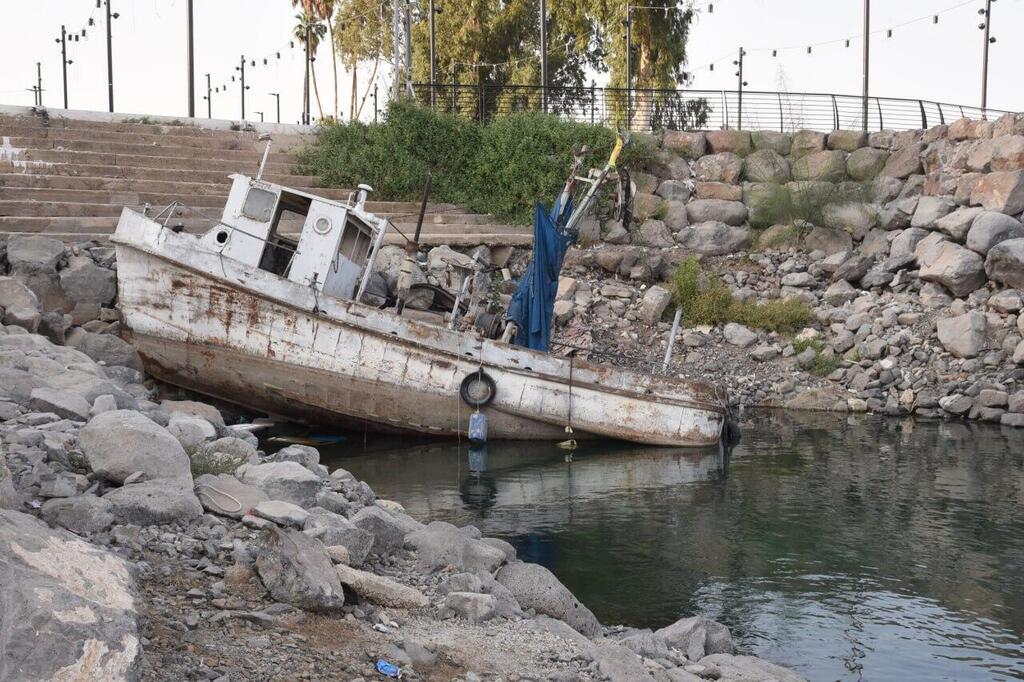
The Sea of Galilee is in a dire state
(Photo: Avihu Shapira)
Zalul CEO Mor Gilboa said, “Dr. Katz’s findings make it clear that Israel’s worsening water crisis can only be mitigated if the Water Authority takes these two steps immediately. By failing to act, the Authority keeps the public in the dark about the true state of the country’s water system instead of turning citizens into active partners in this national effort to save the Sea of Galilee, the rivers, and northern agriculture.”