

The naturally mummified remains of more than 100 Indigenous people buried in Siberia between the 14th and 19th centuries have been uncovered by a team of archaeologists. DNA analysis of the bodies suggests that residents of what is now the Sakha-Yakutia Republic in Russia’s Far East resisted Russian conquest and Christianization in ways rarely seen among Indigenous populations.
Among the discoveries was the remarkably preserved body of a Yakut shaman, believed to be the last of her kind, who died in her 30s more than 250 years ago. Genetic analysis of her remains revealed that her parents were second-degree relatives.
Gallery
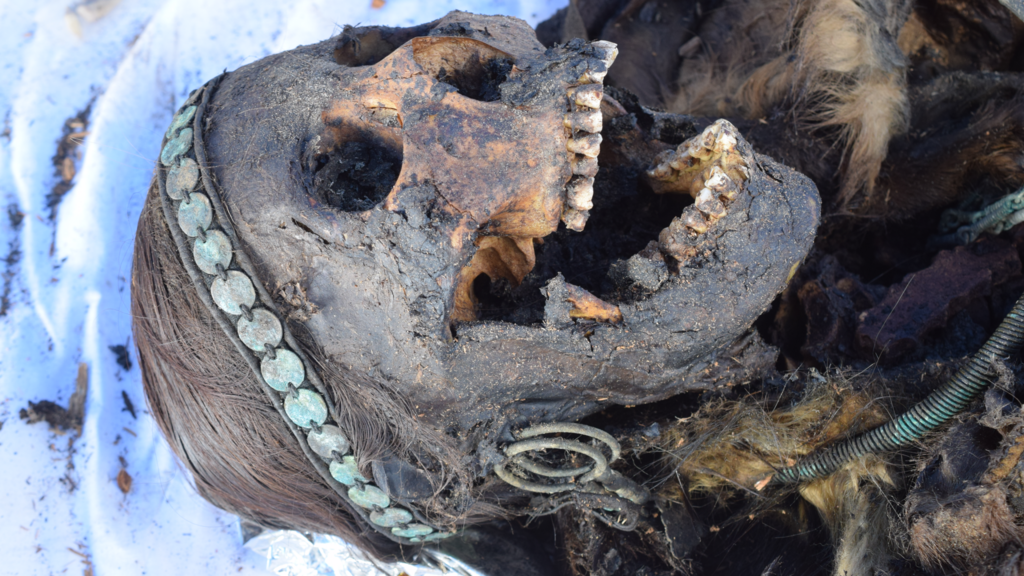
The mummified remains of the 18th-century shaman, whose body and those of more than 100 others were discovered in Sakha-Yakutia
(Photo: Patrice Gérard-CNRS)
“The parents were likely an uncle and niece or an aunt and nephew,” Dr. Ludovic Orlando of France’s National Center for Scientific Research told Live Science.
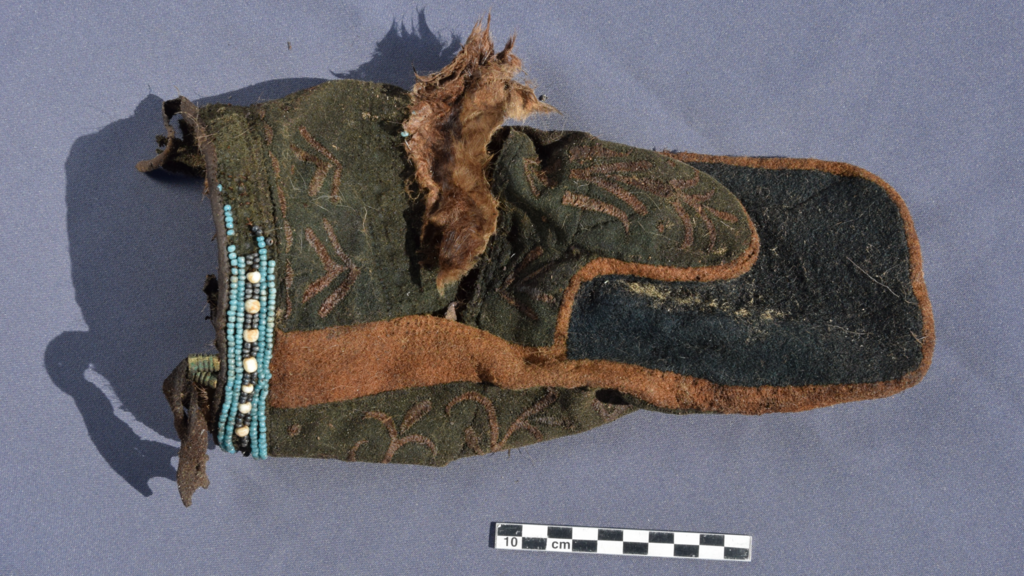
The Yakut shaman, who belonged to the most powerful tribe in the region, was buried in a coffin carved from a tree trunk and dressed in several layers of clothing, including a red wool dress, a traditional Yakut ushanka-style hat and thigh-high leather leg warmers. Nearby, archaeologists uncovered a pit containing the skeletons of three horses, one of which was fitted with accessories bearing designs that matched the shaman’s dress.
“Around the time the shaman was buried, Christianity was gaining ground,” Orlando said. “Some Yakut tribes may have resisted and clung to their traditions, including belief in shamanism.”
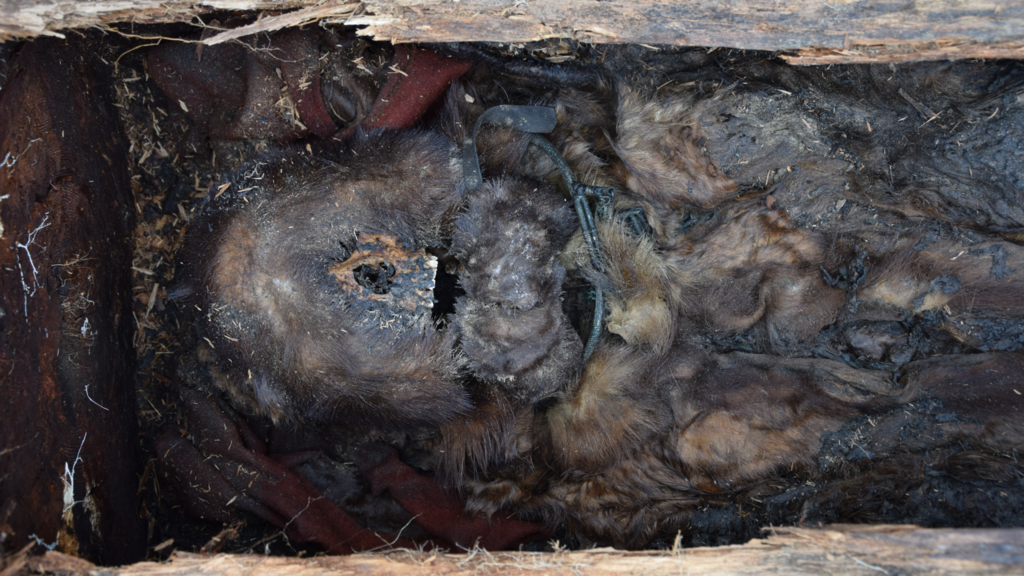
(Photo: Patrice Gérard-CNRS)
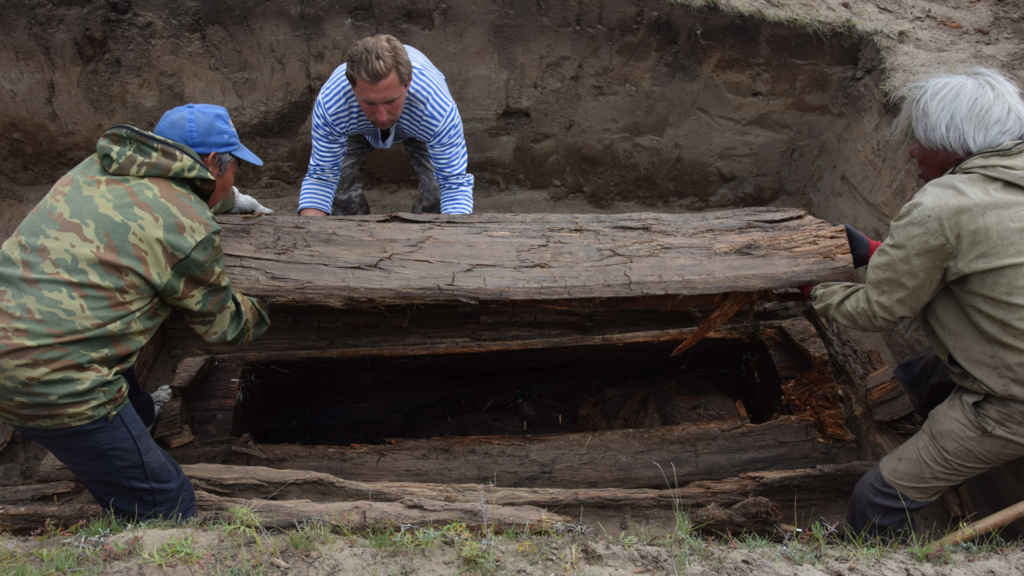
Opening the wooden coffin of the Yakut shaman
(Photo: Patrice Gérard-CNRS)
Nearly 16 years of archaeological excavation preceded the discovery. The findings were published in the journal Nature. In total, researchers documented 122 individuals from four sites in Sakha-Yakutia, one of the coldest regions on Earth. The remains span a long historical period, before, during and after the Russian Empire’s conquest of Siberia in 1632.
Researchers then analyzed the DNA of the Indigenous individuals to determine whether the Russian conquest altered their genetic makeup. They found that the genetic origins of modern Yakuts date back to the 12th and 13th centuries, confirming Yakut oral history. Unlike other colonial conquests, such as the Spanish conquest of the Americas, the study found no clear evidence of population collapse or genetic mixing between Russians and Yakuts.
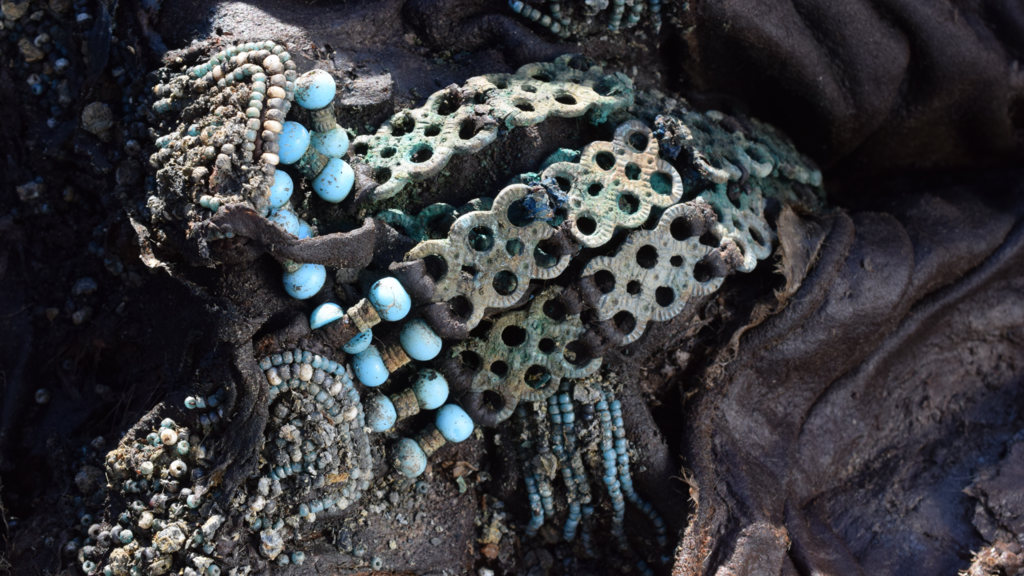
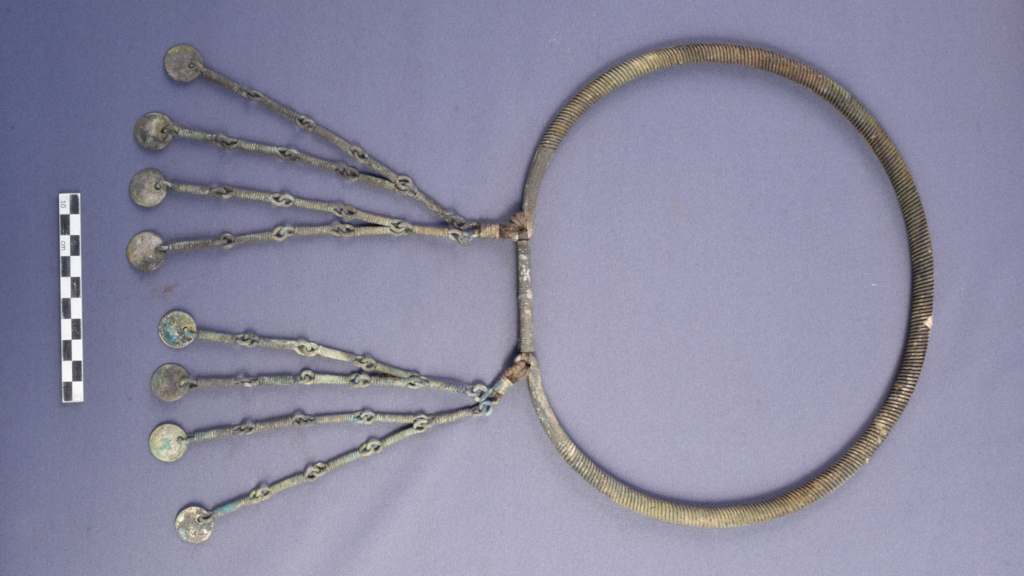
Jewelry from the grave of the Yakut shaman
(Photo: Patrice Gérard-CNRS)
“Our analyses show that the genetic heritage of the region’s inhabitants has remained stable from the 16th century to the present,” said Dr. Perle Guarino-Vignon of the Saint-Antoine Research Center in Paris. “It appears there was no conquest through demographic replacement, possibly due to the logistical challenges of settling such an extreme environment.”
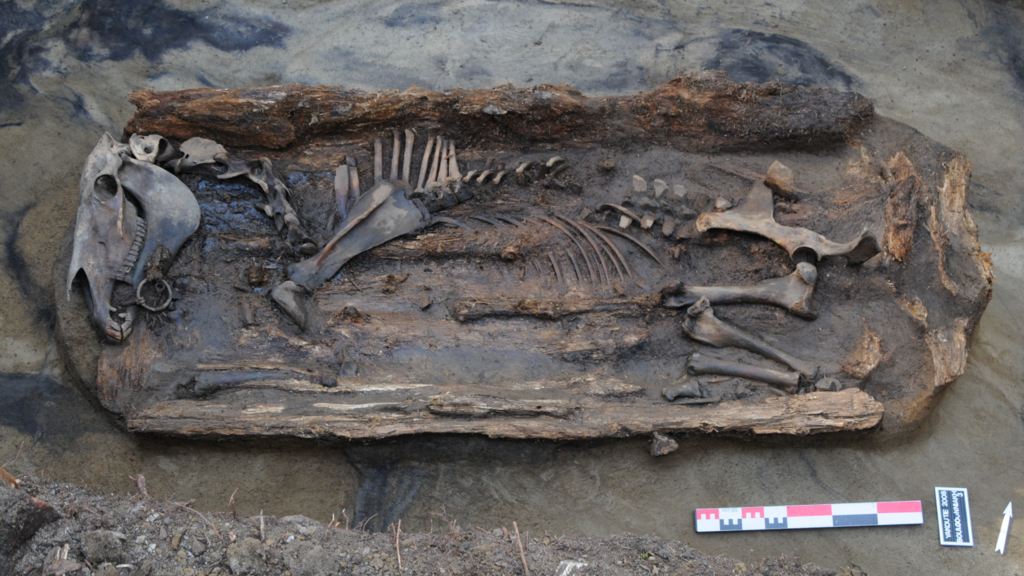
Horse remains discovered near the burial site of the Yakut shaman
(Photo: Patrice Gérard-CNRS)
A garment discovered in the grave of the Yakut shaman
(Photo: Patrice Gérard-CNRS)
(Photo: Patrice Gérard-CNRS)
The researchers also examined the oral microbiome of the Yakuts, the complex community of microorganisms living in the mouth, by analyzing the mummies’ teeth and dental plaque. Although the team expected changes over time due to the introduction of barley, rye and tobacco by Russian settlers, the analysis showed the Yakut oral microbiome remained relatively stable despite the conquest.
“The bodies were so well preserved that we could conduct postmortem examinations,” said Dr. Eric Crubézy of the National Center for Scientific Research. “The clothing and jewelry survived intact, offering a rare opportunity to compare biological and cultural data across centuries.”