

About 15,000 years ago, hunter-gatherer communities in the Levant began a gradual transformation. Instead of constantly moving from place to place, members of the Natufian culture increasingly settled for longer periods, built permanent structures and relied more heavily on the resources available close to home.
That shift also changed what they ate.
Gallery
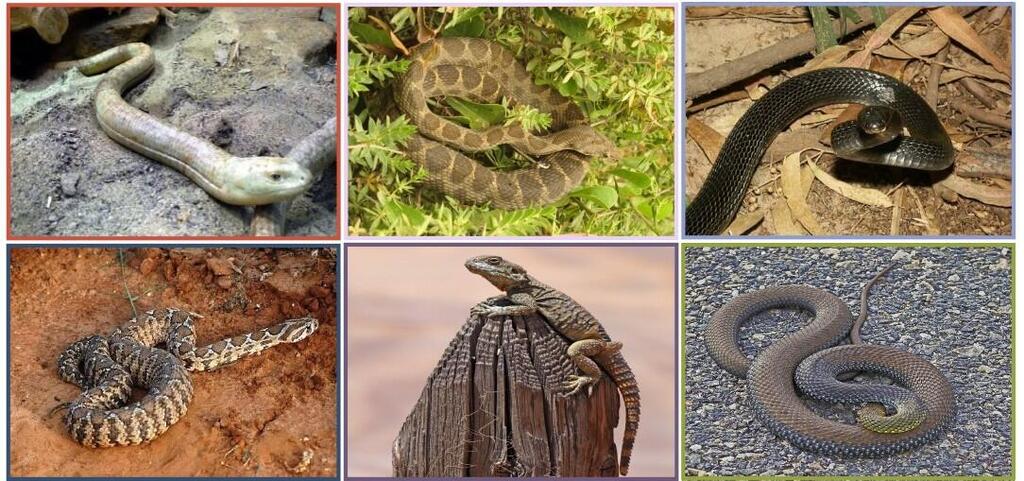
The main lizard and snake species consumed by humans at the prehistoric site. From top left, clockwise: the European glass lizard (credit: Tim Vickers); coin- marked snake (Avi Nahmias); large whip snake (Václav Gvoždík); the eastern Montpellier snake (Juan Lacruz); roughtail rock agama (Charles J. Sharp); and the common viper (Arbel Levy).
A study led by researchers at the University of Haifa found that Natufian communities living on Mount Carmel systematically hunted and ate snakes and lizards for roughly 3,000 years. Reptiles were not an occasional emergency food, the researchers found, but a recurring part of a subsistence strategy that became more important as settlement at the site grew more permanent.
“The transition to permanent settlement involved prolonged reliance on food resources in the immediate surroundings,” said Dr. Maayan Lev of the School of Archaeology and Maritime Cultures at the University of Haifa and the Institute of Prehistoric and Protohistoric Archaeology at Kiel University in Germany, who led the study.
“Snakes and lizards were exploited for thousands of years, showing that they were not a marginal or incidental food source, but rather part of a subsistence strategy adapted to extended periods of life in a single location.”
In the present study, Dr. Lev, Prof. Mina Weinstein-Evron, and Prof. Reuven Yeshurun of the School of Archaeology and Maritime Cultures and the Zinman Institute of Archaeology at the University of Haifa sought to determine whether snakes and lizards formed part of the Natufians’ diet over thousands of years of habitation, which species were exploited as food, and whether changes in their consumption were related to the degree of permanence and intensity of life at the site.
The study was conducted as part of a project led by Prof. Yeshurun and funded by the Israel Science Foundation on the earliest permanent settlement in human history.
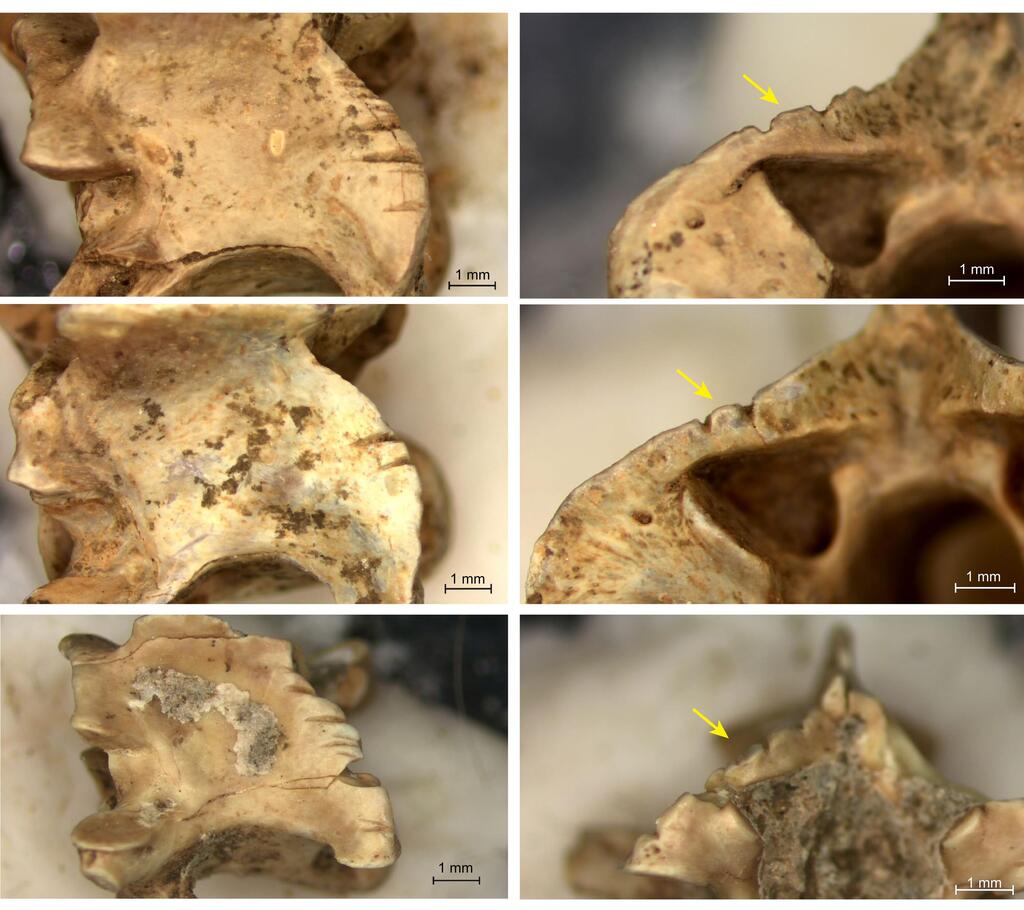
Cut-marks on snake vertebrae from the prehistoric site
(Photo: Dr. Maayan Lev)
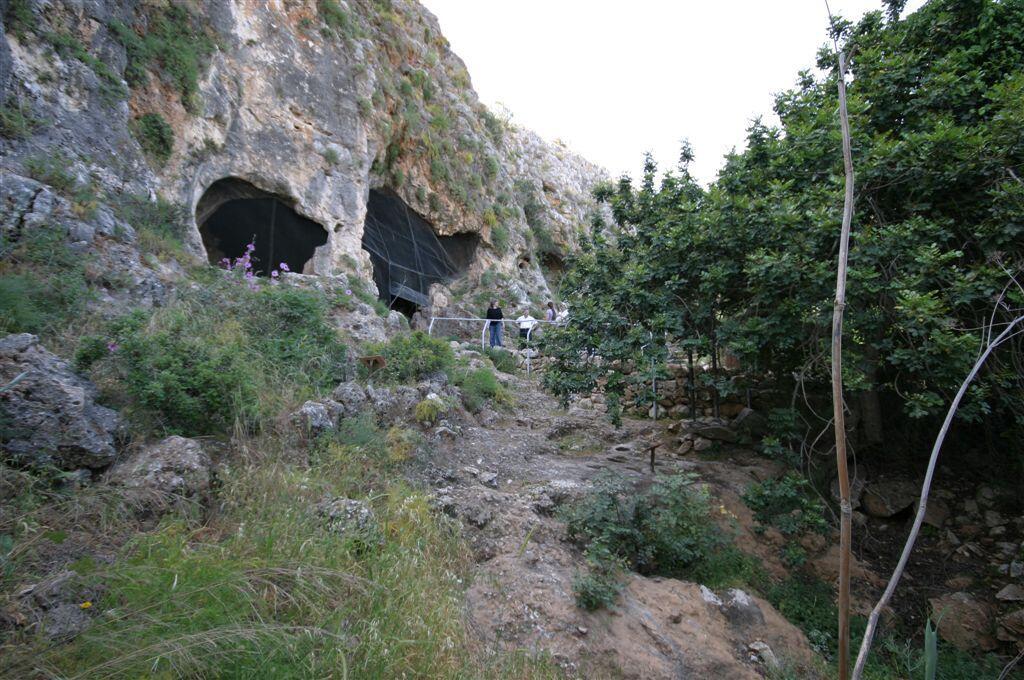
Entrance to el-Wad Cave and the center of the terrace in front of it, where remains of the Natufian settlement can be seen, including a retaining wall and rock-cut mortars
(Photo: R. Yeshurun/Wikipedia)
The researchers analyzed and documented thousands of reptile bones collected during excavations from 20 archaeological layers in el-Wad Terrace in the Nahal Me’arot Nature Reserve in the Carmel, which is managed by the Israel Nature and Parks Authority. The layers document Natufian settlement at the site between 15,000 and 12,000 years ago
Using microscopic examination of the bones, the researchers looked for cut marks, burning, digestion, and trampling marks in order to distinguish between reptiles that were used as food by the site’s inhabitants and those that were preyed upon by animals or died naturally at the site.
The researchers also compared the different stages of settlement, examined environmental changes, and compared the reptile finds from the site with finds from Natufian sites and earlier sites in the region.
To determine why certain species were selected as food, the researchers also assessed the feasibility of capturing each species according to body size, speed and agility, the risk involved in capturing it, its accessibility, and its hours of activity.
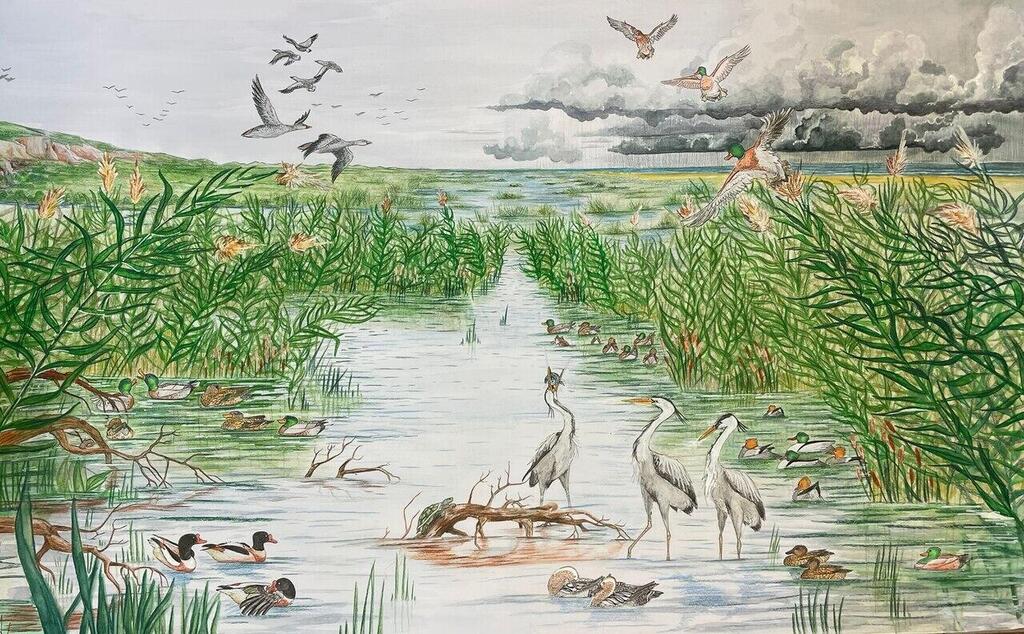
Artistic reconstruction of the Carmel coastal plain in winter during the Natufian period, looking south. El-Wad Cave lies at the foot of the Carmel cliff on the left, with the Mediterranean Sea on the right. The bird species shown were identified from bones found in the excavations
(Illustrations: Dariya Lokshin-Gnezdilov/Wikipedia)
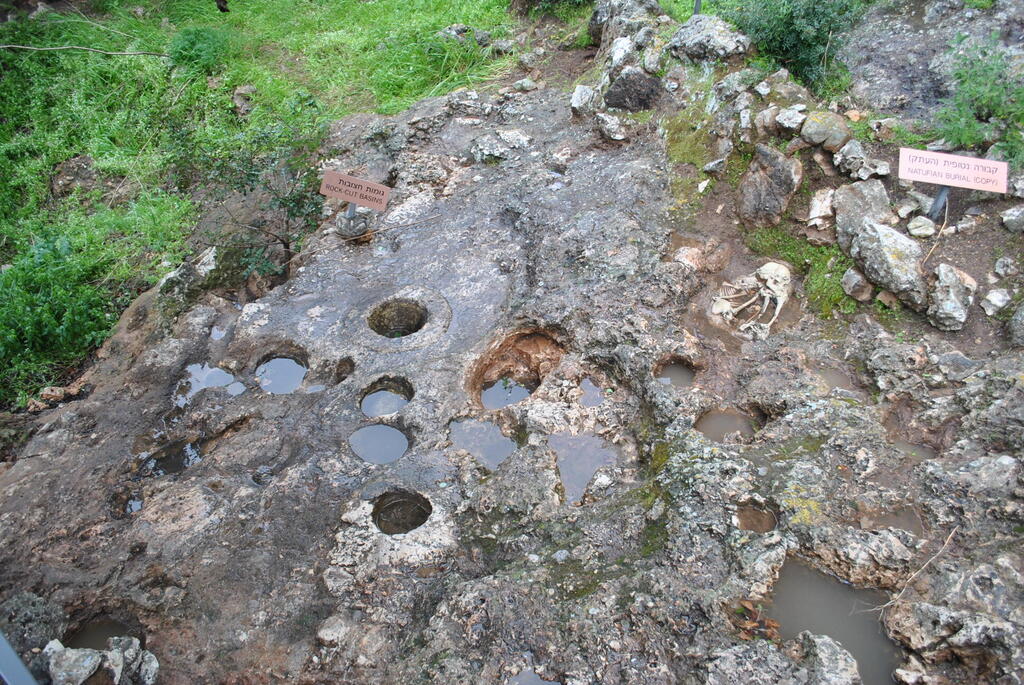
Remains from the Natufian culture at el-Wad Terrace: a retaining wall, rock-cut mortars and a replica burial
(Photo: R. Yeshurun/Wikipedia)
The study’s findings identified cut marks on 82 vertebrae of large snakes, in the same location on the vertebrae, providing direct evidence that the snakes were systematically prepared as food by humans. Some vertebrae bore several marks, indicating repeated cutting.
Numerous remains of snakes and lizards were found in all twenty archaeological layers examined, indicating that reptile consumption continued throughout thousands of years of settlement at the site. Three large species were the most common among the reptile remains found at the site: the European glass lizard, the large whip snake, and the eastern Montpellier snake.
The proportion of reptiles believed to have been used as food was higher during periods when habitation at the site was more permanent and intensive, and declined during periods when habitation was shorter and more seasonal.
The study also found that over time the Natufians focused on species that offered a relatively good balance between the amount of food that could be obtained from them and the effort and risk involved in capturing them.
The European glass lizard, for example, was large, relatively slow, and nonvenomous, whereas the viper, which was more dangerous to capture, appeared in smaller numbers.
“The study shows us for the first time that at the beginning of permanent settlement, snakes and lizards were a stable and reliable food source for ancient humans,” the researchers concluded.
“The fact that they repeatedly selected the same species indicates that the Natufians did not eat every reptile they happened to encounter, but instead practiced selective hunting over thousands of years. This underscores their deep familiarity with the animals and with the resources offered by their environment.”