


In the winter of 2022, Itay Bamberger, a deciduous orchard instructor at the Agriculture Ministry, stood in the middle of an orchard in Kfar Etzion. He spread an opaque net providing 100% shade over the trees and measured the temperature at dawn the next day. The thermometer showed a temperature 10 degrees lower than outside the net.
The simple physical measure came after he noticed that fruit trees growing in the shade of windbreak crops, such as cypress, tamarisk or pine trees, produced fruit even in especially warm years, while neighboring rows in the same plot remained almost completely bare.
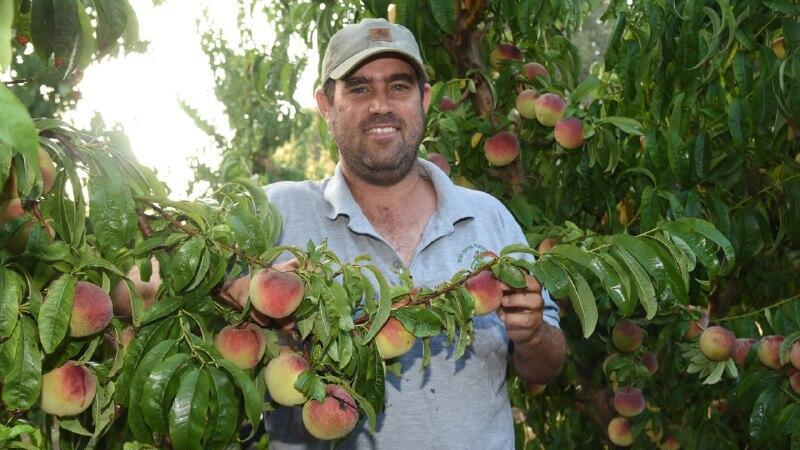
“Deciduous orchards need chill hours, and in recent years there have been increasingly warm winters, such as in 2021, 2024 and 2025,” Bamberger said, describing one of the worrying effects of the climate crisis that is clearly visible in Israel. “We noticed that some rows in orchards had good fruit, while others sometimes had no fruit at all. We tried to understand what was happening in the successful rows and realized they had been shaded, and that this was apparently very significant for deciduous fruit trees.”
Working with Dr. Michal Ackerman-Lebert of Northern R&D-MIGAL, the trial was expanded to 30 orchard plots across Israel, from the Golan Heights to the Shfela region. Researchers spread black shade nets with 90% coverage over peach, nectarine, apricot, cherry, plum and pear orchards and left them in place throughout the fall and winter months to reduce solar radiation.
The nets helped maintain lower temperatures around the trees and increased the accumulation of the chill hours essential for deciduous fruit trees to emerge properly from winter dormancy. Field data showed an increase of about 24% in accumulated chill hours and an average 82% jump in yields compared with control plots left uncovered. In some orchards, yields even doubled, from one ton to two tons per dunam.
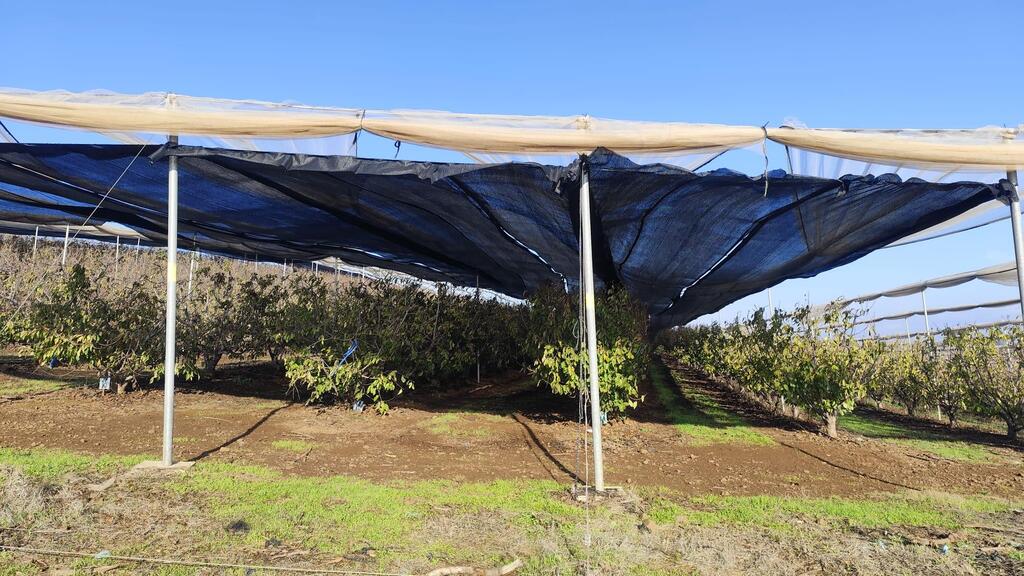
Cherry trees in the Golan Heights
(Photo: Avihu Shapira)
“The results from using the nets over the past three years are crazy,” Bamberger said. “I believe these impressive findings provide a significant tool for dealing with the climate crisis in Israel, and I assume people around the world will want to adopt it as well. If you ask me, this is exactly why our division, the extension service, exists — for things like this.”
The solution, which requires the nets to be installed and removed seasonally, costs between 4,000 and 5,000 shekels per dunam.
“Using the net is not particularly cheap, but compared with the results, the cost is fairly marginal,” Bamberger said. “The gains from using the nets, for example in cherry orchards, amounted to an additional 8,000 to 15,000 shekels a year. We remove the nets in the middle of winter, when we want to wake the trees up and get them to begin flowering and producing fruit.”
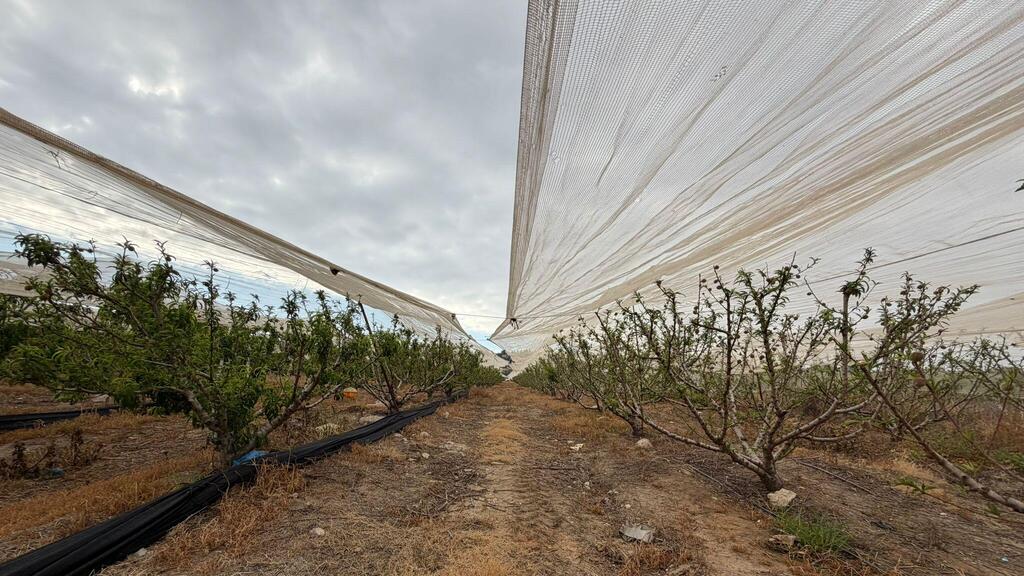
Peach orchard in Karmei Yosef
(Photo: Avihu Shapira)
Hagai Shnir, director of the Agriculture Ministry’s Extension Service, said the more challenging the climate conditions are for a particular variety and region, the greater the potential for the method to improve yields.
Against the backdrop of the continuing decline in the amount of winter chill accumulated in Israel, the method offers a relatively simple and low-cost tool that could help farmers maintain stable production even as climate conditions change.
“In an era of climate change, agriculture needs innovative solutions, but sometimes innovation begins with a simple observation in the field,” Shnir said.
“This achievement demonstrates the importance of the connection between extension services, research and farmers, and the ability of Israeli agriculture to continue adapting to a changing reality, strengthen local production and contribute to Israel’s food security,” he added.