

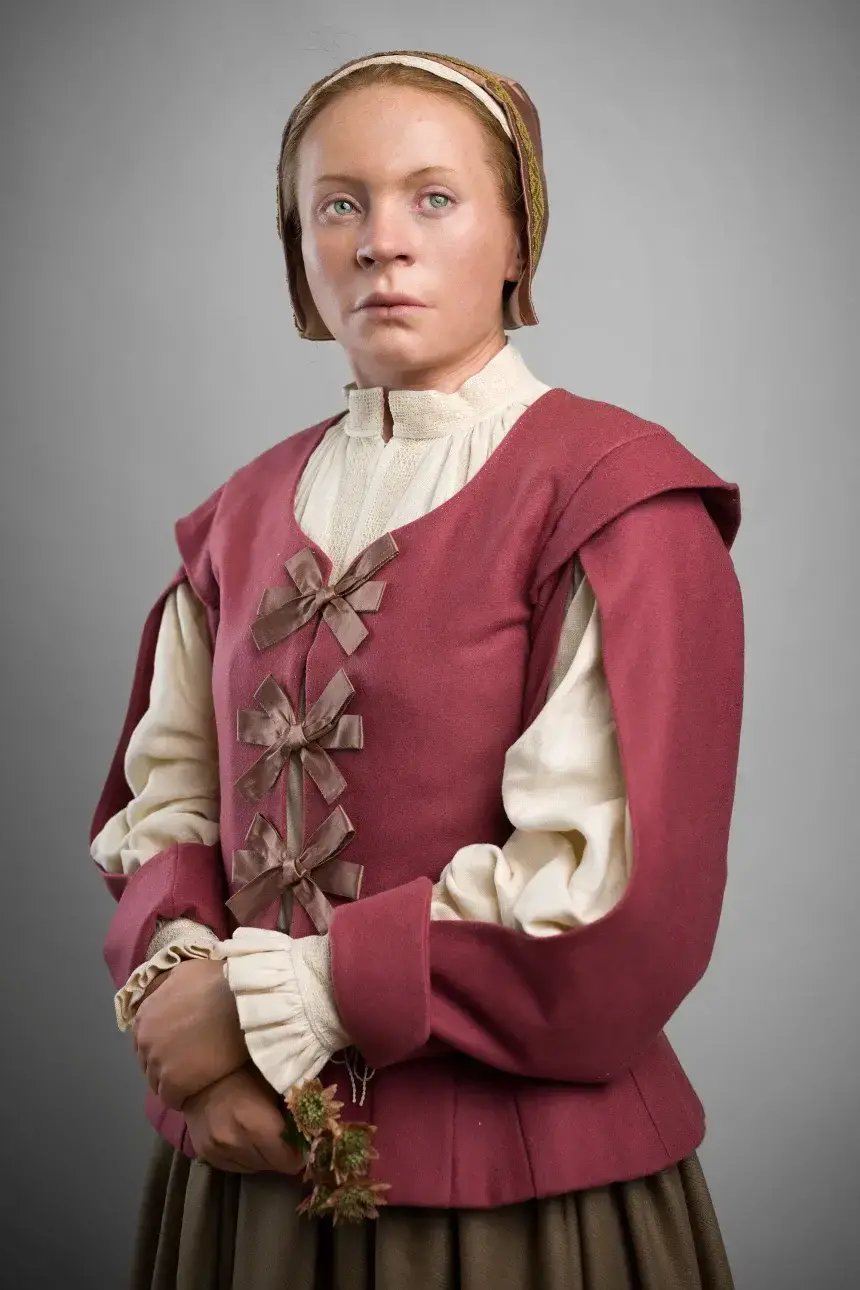
A young woman buried in northern Poland nearly 400 years ago with an iron sickle positioned across her neck and a padlock attached to her toe has yielded new clues about who she was and why her community may have feared her even after death.
Archaeologists discovered the grave in 2022 near the village of Pień in northern Poland. The woman, nicknamed Zosia by researchers, was buried in an unusual manner: the blade of the sickle was placed facing her throat, while a triangular padlock was fastened to the big toe of her left foot.
Such measures are believed to have been intended to prevent the dead from rising from the grave and harming the living. In 17th-century Europe, communities facing disease, famine and other disasters sometimes blamed the dead and adopted burial practices designed to ensure that bodies remained in their graves, CNN reported.
Now, in a study published in the Journal of Archaeological Science: Reports, researchers from the Department of Archaeology at Nicolaus Copernicus University in Toruń have conducted the first comprehensive scientific analysis of Zosia’s remains.
Using DNA testing, isotope analysis and examinations of both her skeleton and surviving burial textiles, the researchers sought to establish who she was, where she came from and why she was buried under such extraordinary precautions.
The findings indicate that Zosia was between 17 and 19 years old when she died. Researchers believe she may have come from a wealthy family. Near her head, they found fragments of silk containing threads made from pure gold and silver, an exceptionally luxurious material for the period.
The discovery is particularly striking because, according to the researchers, even burial garments belonging to members of Poland’s royal family from the same era, including King Sigismund III Vasa, have not yielded pure gold threads of this kind. No clear signs of injury or disease were identified that could explain Zosia’s death.
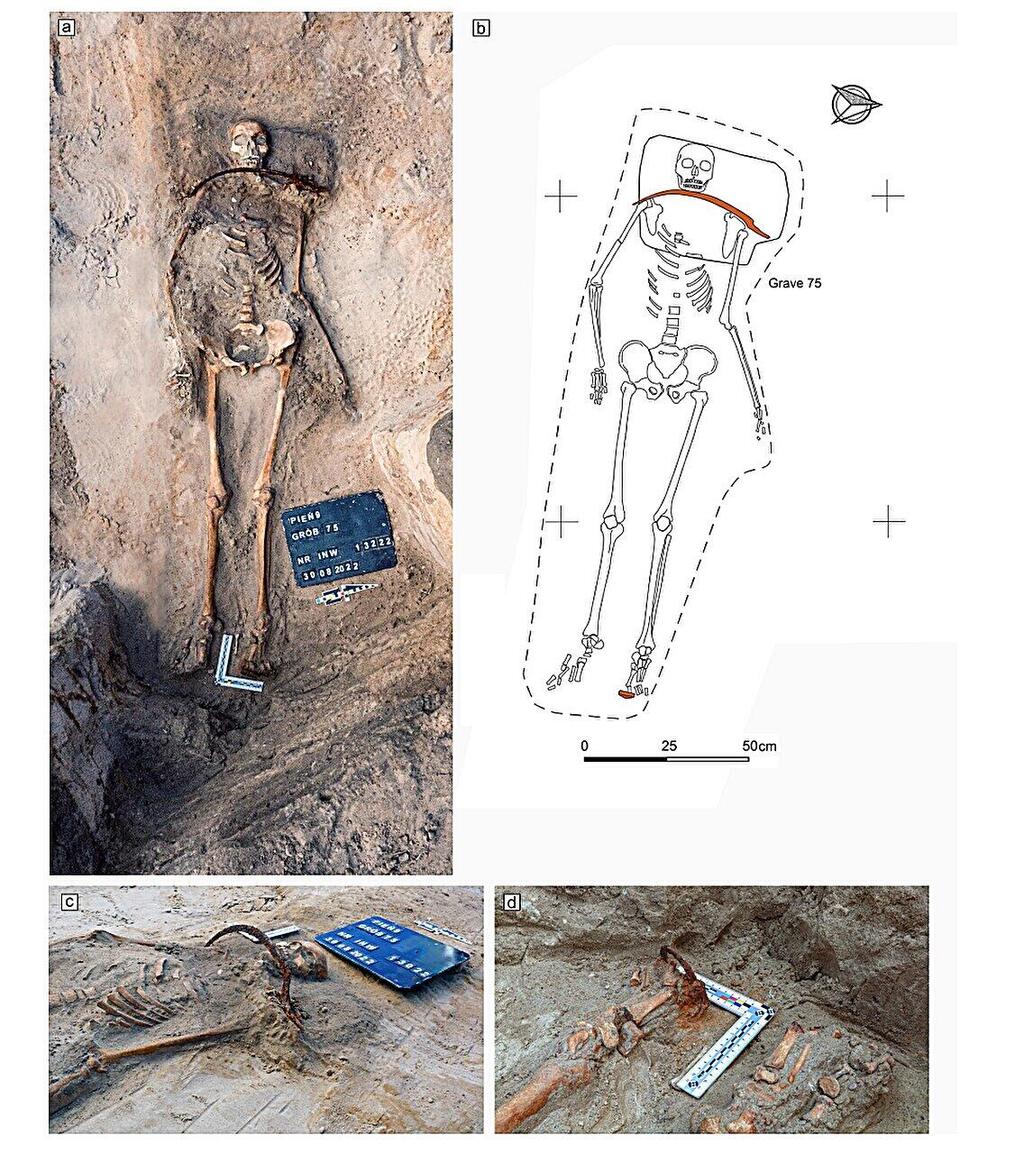
Grave 75, where the 17- to 19-year-old ‘vampire’ was buried
(Photo: Journal of Archaeological Science: Reports)
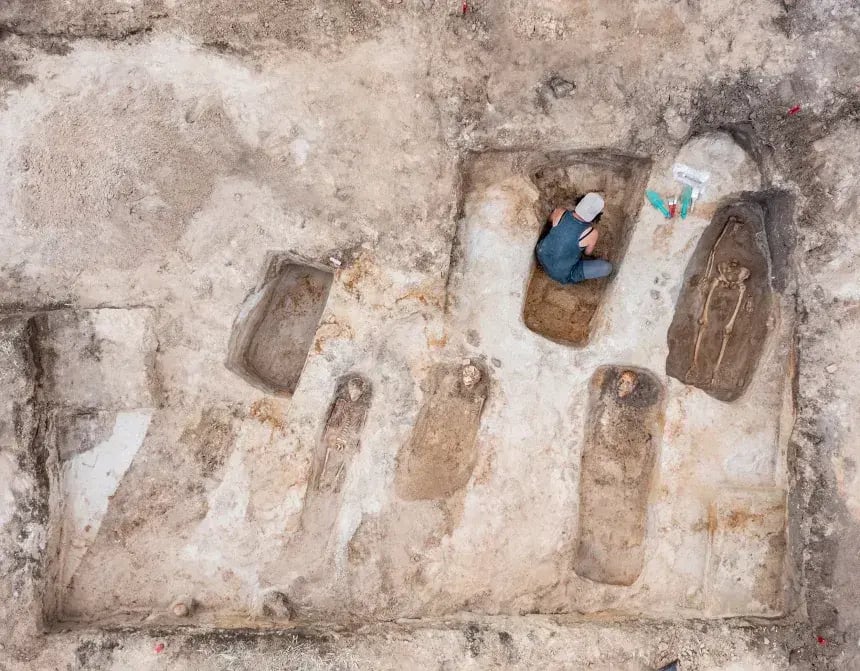
The cemetery near the village of Pień in northern Poland, where Zosia was buried
(Photo: TSE Ewolucja)
Chemical analysis of her teeth suggests that she probably grew up in the same general region where she was eventually buried. Her mitochondrial DNA, inherited through the maternal line, also raised the possibility of genetic links to northern European populations, including Scandinavia.
Researchers cautioned, however, that the evidence is not sufficient to determine her ancestry with certainty.
Zosia’s grave, designated Grave 75, is only one of a number of unusual burials uncovered at the cemetery, where archaeologists have so far identified 101 graves.
Among the discoveries was a child described as a possible ‘vampire’ burial who had been placed face down, as well as a skeleton positioned in a posture resembling crucifixion. Stones were found around the heads of some of the dead, while other graves contained sickles or padlocks.
The cemetery’s location may also be significant. It lies outside the village and away from a church, which researchers say could indicate that some of those buried there were regarded as socially marginal, deviant or potentially dangerous.
Another unusual feature is the absence of Catholic religious symbols. Researchers believe the site may instead have been a Protestant cemetery. Padlocks have also been found in Jewish cemeteries in Poland, but the authors of the study said they do not believe Zosia’s burial was Jewish.
For now, the central mystery remains unresolved: why did a seemingly affluent teenage woman inspire enough fear for her community to place a blade across her neck and physically lock her body in the grave?
Researchers hope further testing may provide an answer. Analysis of Zosia’s nuclear DNA could reveal additional details about her origins and life, potentially bringing scientists closer to understanding why those who buried her took such extreme measures to ensure she stayed dead.