


A rare hoard of 22 bronze coins, over 1,600 years old (4th century CE), was discovered in a small crevice prepared deep in an underground complex lying beneath the ruins of the ancient Lower Galilee settlement of Hukok.
The hidden treasure was uncovered in a joint archaeological dig by the Israel Antiquities Authority and the Zefat Academic College, as part of preparing the site for public visitation under the aegis of the KKL–JNF.
“It seems that the people stashing this hoard carefully planned its hiding place, hoping to return to it when the threatening troubles were over,” researchers Uri Berger from the Israel Antiquities Authority and Professor Yinon Shivtiel of Zefat Academic College said in a statement. “The coins were discovered in a pit, deliberately dug at the end of a narrow winding tunnel."
Gallery

The rare coin hoard discovered in the Galilee hiding complex
(Photo: Emil Aladjem, Israel Antiquities Authority)
The Hukok hiding complex, an underground network of tunnels and rooms to conceal Jewish people and practices from the eyes of the Roman army, was apparently first created and used by its Jewish residents during the Great Revolt (66 CE–70 CE), and then developed and improved in preparation for the Bar-Kochba Revolt (132 CE–136 CE).
Naturally, upon its discovery, the researchers expected it to be dated to the time of either of these rebellions, as is oft the case throughout the country – but to their great surprise, the visages of Emperors Constantius II and Constans I appeared on the coins.
Their reigns were during the time of a later revolt – the Gallus Revolt (351-352 CE), the lesser-known and last Jewish revolt under Roman rule.
(Photographer: Emil Aladjem, Israel Antiquities Authority)
“This shows that hundreds of years after these tunnels were dug out, they were reused,” according to the researchers. “The hoard provides – in all probability, unique evidence, that this hiding complex was used in one way or another during another crisis – during the Gallus Revolt – a rebellion for which we have only scant historical evidence of its existence.”
The Hukok hiding complex is one of the largest and most intricate of its kind in the entire Galilee. It comprises a series of underground spaces connected by narrow passages and winding tunnels.
The system was mostly excavated between 2019–2023 as part of an extensive community educational project executed in Hukok. As part of the project, beginning and graduate students from Zefat Academic College, volunteers from the Israel Cave Explorer Club, soldiers and area residents participated in its excavation.
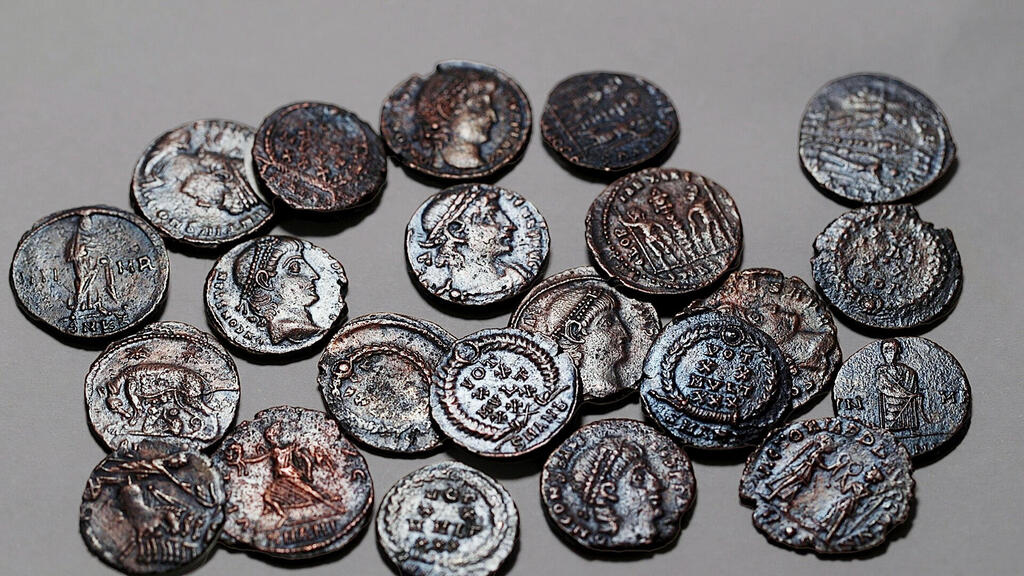
The rare hoard – 22 bronze coins over 1,600 years old. Photo:
(Photo: Emil Aladjem, Israel Antiquities Authority)
“Fortunately, it was the many volunteers excavating the hiding complex who actually uncovered this important treasure, and they enjoyed this great moment of the joy and the excitement of discovery,” said Dr. Einat Ambar-Armon, who directs the Israel Antiquities Authority Community Archaeological Educational Center in the Northern Region.
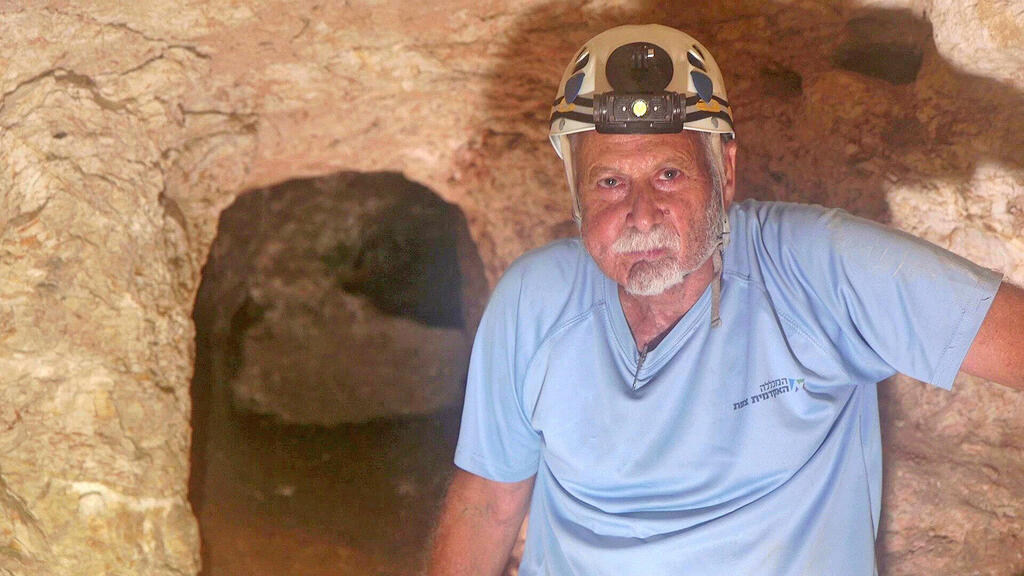
Prof. Yinon Shivtiel, Zefat Academic College
(Photo: Emil Aladjem, Israel Antiquities Authority)
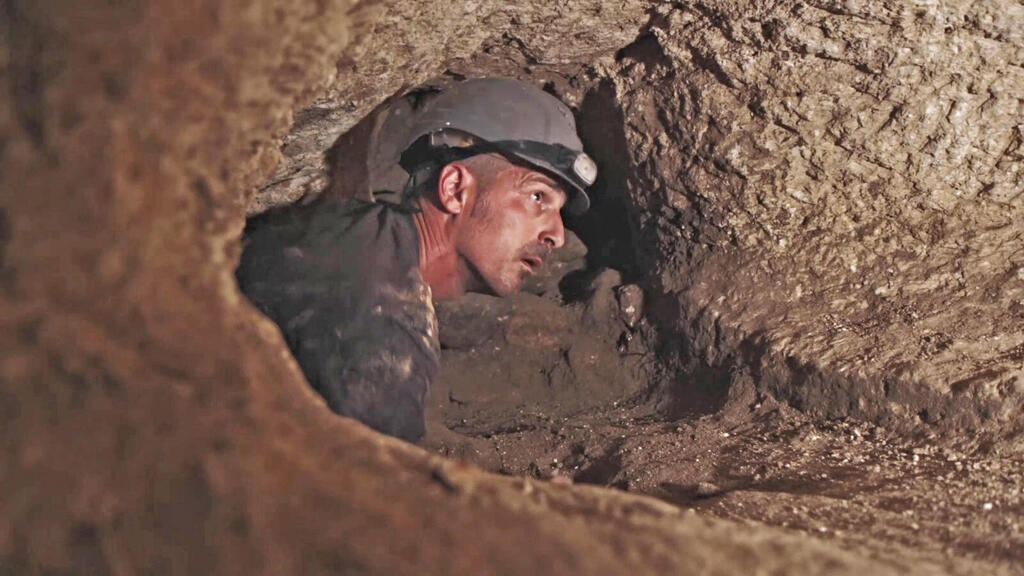
Archaeologist Uri Berger of the Israel Antiquities Authority, in the hiding complex at Hukok
(Photo: Emil Aladjem, Israel Antiquities Authority)
According to the researchers: “The coin hoard from the days of the Gallus Revolt, hidden deep in the Hukok hiding complex, joins other finds on the site that teach about the days of hardship and periods of crisis that the Jews of Hukok and the Galilee went through during the long Roman period in the Land of Israel.
"Happily, we know that shortly after this final revolt – apparently at the end of this tragic period of hardship, a magnificent synagogue with magnificent mosaics was built on the top of the hill, and the settlement here began an era of long-lasting prosperity."
According to Israel's Minister of Heritage Rabbi Amichai Eliyahu: “The discovery of the rare hoard of coins in the Hukok hiding complex is a living testimony to the determination of the Jews of the Galilee and their ongoing struggle to maintain their identity and traditional Jewish lifestyle even in difficult times under the Roman rule.
"Finds of this type connect us directly to the lives of our ancestors, and remind us of the depth of our historical roots here."
Eli Escusido, director of the Israel Antiquities Authority added: “The Israel Antiquities Authority considers the Hukok site, considering all its discoveries, as a flagship project, which will be a magnet for tourists from Israel and the world.
"In recent years, the Israel Antiquities Authority and KKL have conducted extensive excavation and conservation operations here, in cooperation with the local community. We are working together so that the entire public can enjoy the hidden treasures of this site."
Director of Keren KKL–JNF Northern Region, Sheli Ben Iishai, said: “In light of the excavation findings and the great potential inherent in the Hukok site, KKL is advancing a detailed development plan to transform Hukok into a unique site, well-organized and capable of receiving the public at large from Israel and the world over to experience archaeological tourism at its best.
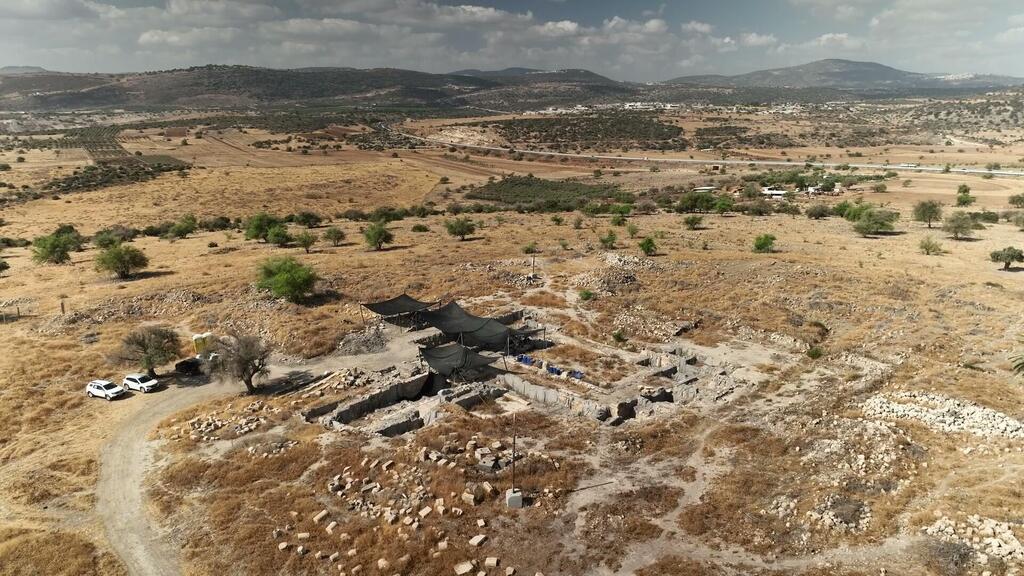
The Hukok hiding complex excavation, where the coin hoard was found
(Photo: Emil Aladjem, Israel Antiquities Authority)
"The Hukok site is a model for the successful integration of nature, tourism and archaeology, in cooperation with the Israel Antiquities Authority and the Jordan Valley Regional Council."
The discovery will be presented for the first time on Thursday at the “Between Josephus and Eusebius” conference at Kinneret Academic College.
A first scientific publication of the hoard will appear in an upcoming issue of the Israel Numismatic Society's INR–Israel Numismatic Research Journal.