

Researchers have digitally reconstructed the face of a man who was decapitated after his death about 1,900 years ago and subsequently buried near a Roman military fort at Inveresk, close to Edinburgh, Scotland.
Using advanced scientific techniques, the researchers sought to determine his genetic makeup, geographical origins and life history. The man traveled hundreds of kilometers from his birthplace in southern Britain to the Firth of Forth, an estuary in southeastern Scotland. He is believed to have been in his early 50s when he died, sometime between A.D. 140 and 165. He had lived a difficult, physically demanding life, and his appearance would have reflected his age, with wrinkles around his brown eyes and dark hair that had begun to turn gray.
The facial reconstruction process of the man buried near a Roman fort in Scotland
(Illustration: Dr. Chris Rynn)


Analysis of his skeleton revealed several injuries sustained during his lifetime. Fractures to his nose had healed, while movement in his right arm was restricted, most likely because of septic arthritis. His occupation remains unknown, but one thing appears relatively clear: He was unlikely to have been a soldier at the time of his death because he would have been unable to wield a sword. Nevertheless, he may have used a weapon with his other hand or served in a support role in the Roman army that did not require fighting on the front lines. Significant wear on his front teeth also suggests that he compensated for his limited mobility by gripping objects between his teeth.
Gallery
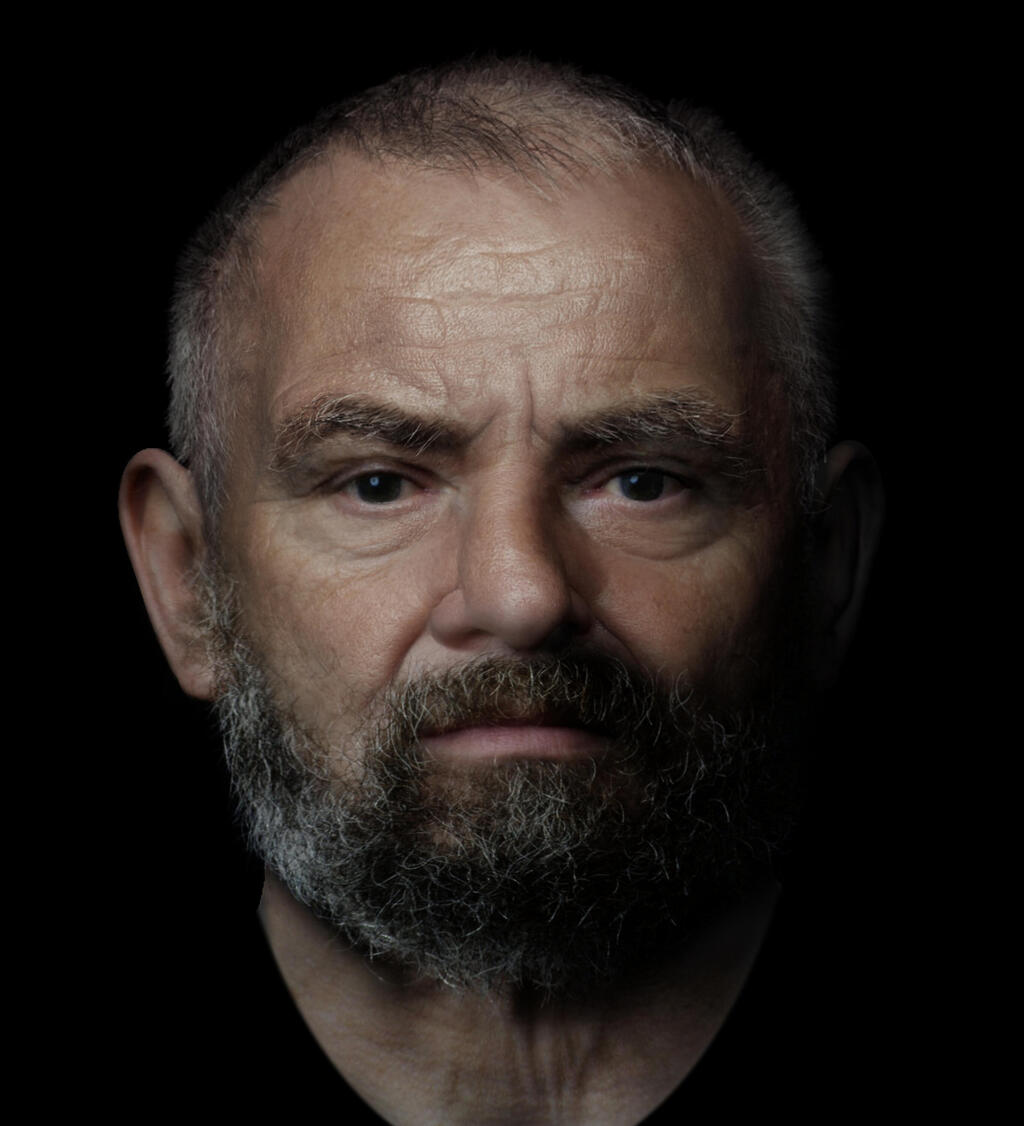
The face of a man buried in the second century outside the Roman fort at Inveresk, near present-day Edinburgh; Isotope analysis indicates that he grew up in southern Britain
(Illustration: Dr. Chris Rynn)
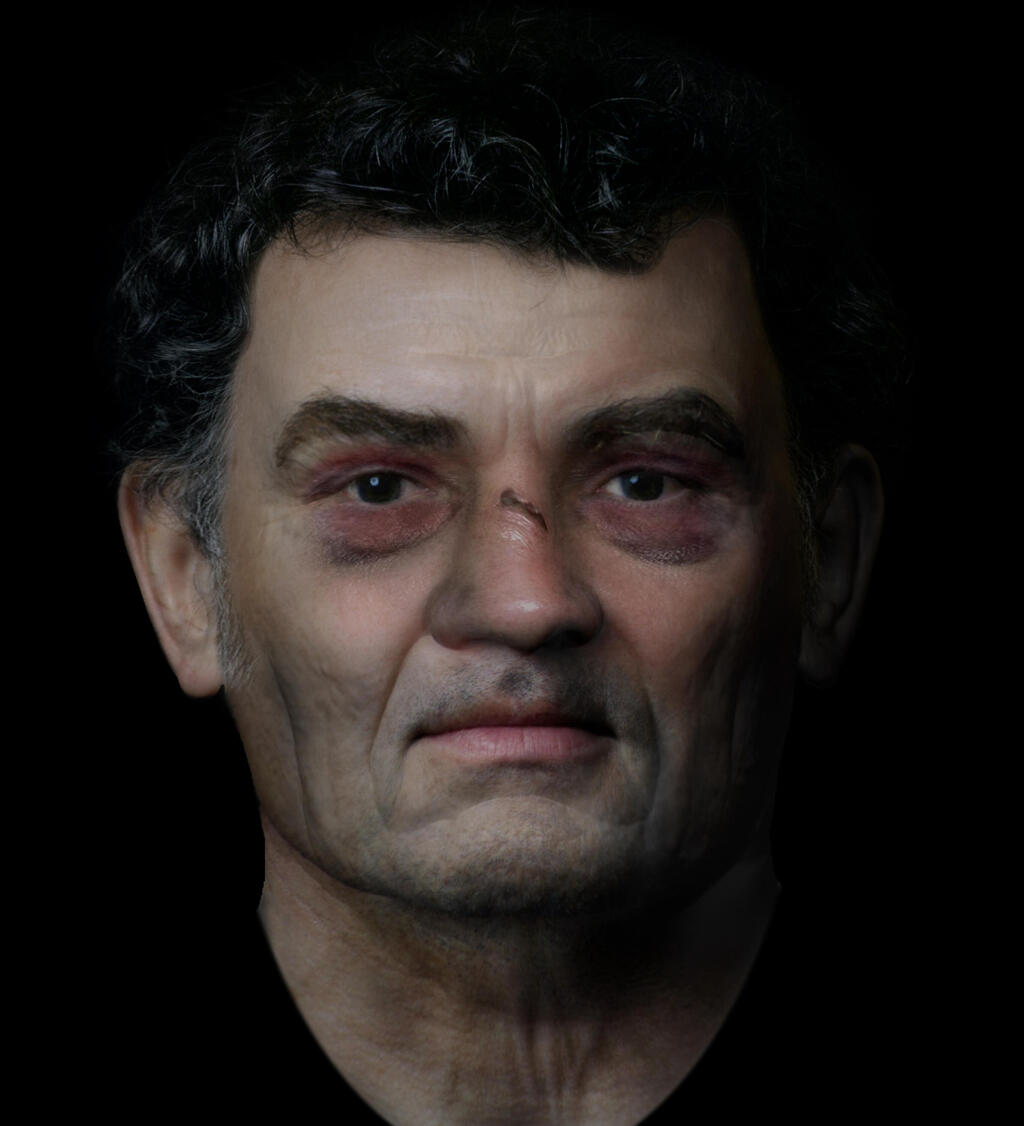
Reconstruction of the face of the man buried near the Roman fort at Inveresk in Scotland
(Illustration: Dr. Chris Rynn)
The man was among a series of unusual burials discovered near the Roman fort at Inveresk, an ancient village in East Lothian on Scotland's east coast. Graves dating to the period of Roman rule in Scotland are rarely discovered, and these findings are particularly unusual: Four of the six adult men buried at the site had been decapitated after death.
The practice is known from other parts of Britain, but the Inveresk burials are the first examples of their kind discovered in Scotland and among the earliest known in Britain as a whole. Postmortem decapitation was not uncommon, although its purpose remains difficult to determine, and the reasons for the practice likely varied over time.
The graves at Inveresk represent an exceptionally rare archaeological discovery from the period of Roman rule in Scotland. A multidisciplinary approach to analyzing human remains allows researchers to understand both the physical characteristics and the life stories of those buried there. It also offers insights into where these men came from, what they did on the Roman frontier and what ultimately happened to them.
The recent facial reconstruction was created by Dr. Chris Rynn, a prominent British forensic anthropologist and facial reconstruction artist who recently reconstructed the face of a man who lived in the Andes about 3,000 years ago. His work combines advanced scientific techniques with artistic interpretation, creating a connection to the past.
The resulting images offer a vivid portrait of the man, suggesting what he may have looked like and who he might have been.
"I have worked with the finds from Roman Inveresk for years, but this facial reconstruction finally gives me a sense of what one of its inhabitants looked like," said Dr. Fraser Hunter, principal curator of prehistoric and Roman archaeology at National Museums Scotland.
"Archaeology tells us about people who had hopes and fears just like us, and it is a privilege to present a vision of this resident of Inveresk using contemporary scientific techniques. We cannot know how exactly he looked, but we think his family and friends would have spotted the likeness."
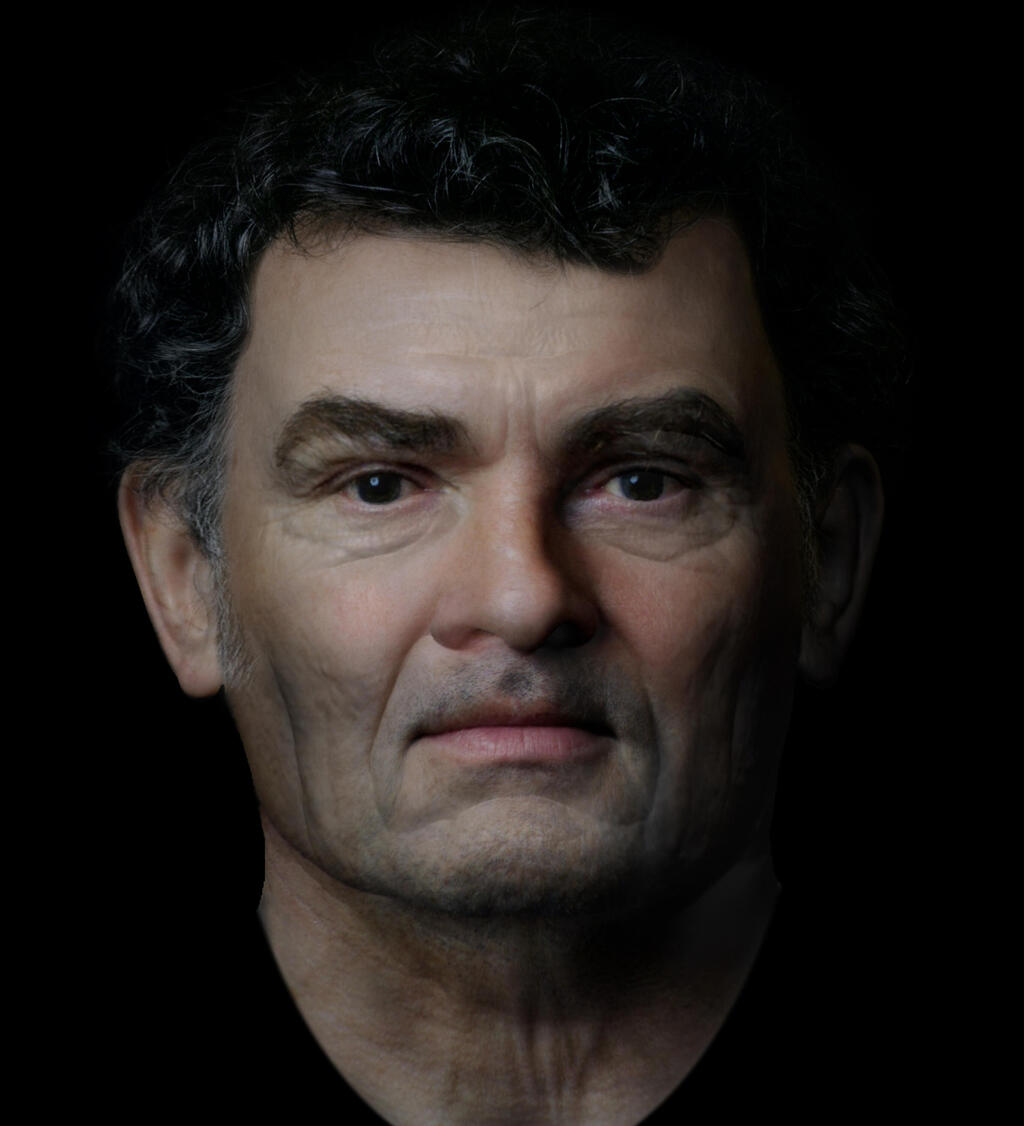
The facial reconstruction is based on the shape of the man's skull; he is shown here without a beard, based on what was customary at the time
(Illustration: Dr. Chris Rynn)
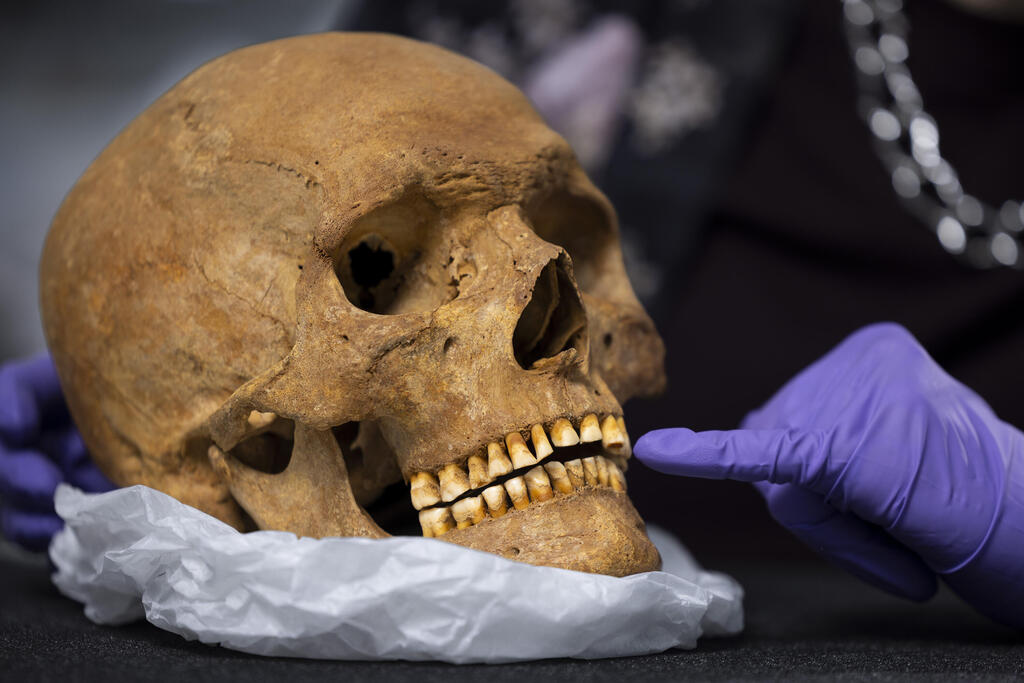
The skull of the man buried outside the Roman fort at Inveresk in Scotland
(Photo: Duncan McGlynn)
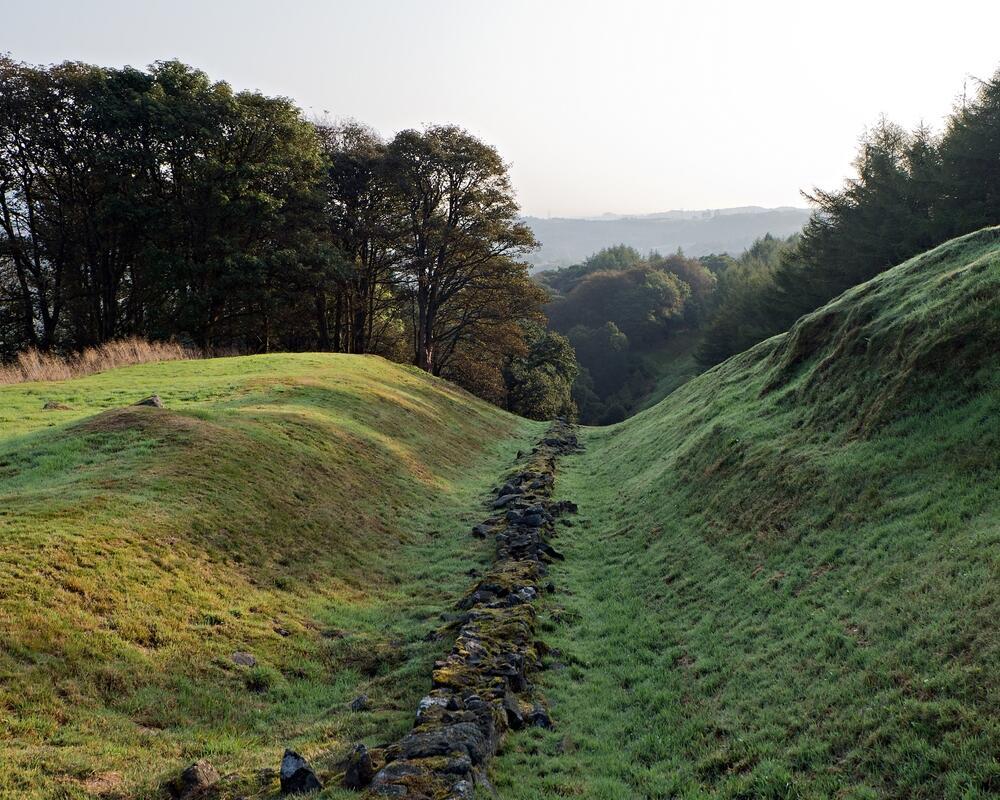
Remains of the Antonine Wall in Scotland
(Photo: David McElroy/Shutterstock)
The man's skull will be displayed alongside a digital reconstruction of his face at an exhibition titled "Roman Scotland: Life on the Edge of the Empire," scheduled to run from November 14, 2026, through April 18, 2027.
The exhibition will explore what life was like on the frontier, from Roman soldiers to the families and communities living around military bases, as well as local inhabitants whose lives and lands were threatened by the Roman invasion and who were forced to find ways to cope with that threat.
The facial reconstruction was based on an osteoarchaeological assessment conducted at National Museums Scotland, earlier isotope analysis by researchers at Durham University, and ancient DNA testing carried out by teams from the University of York's Department of Archaeology and Harvard Medical School. Rynn combined these findings to create an approximation of the man's appearance.
The Roman fort at Inveresk was built around A.D. 140 and served as a command and supply center for Roman forts along the Antonine Wall, which stretched along the shortest route between Scotland's western and eastern coasts. The fort was constructed as part of an ultimately unsuccessful effort to establish Roman control over southern Scotland. Roman rule in Britain came to an end in the early fifth century.