

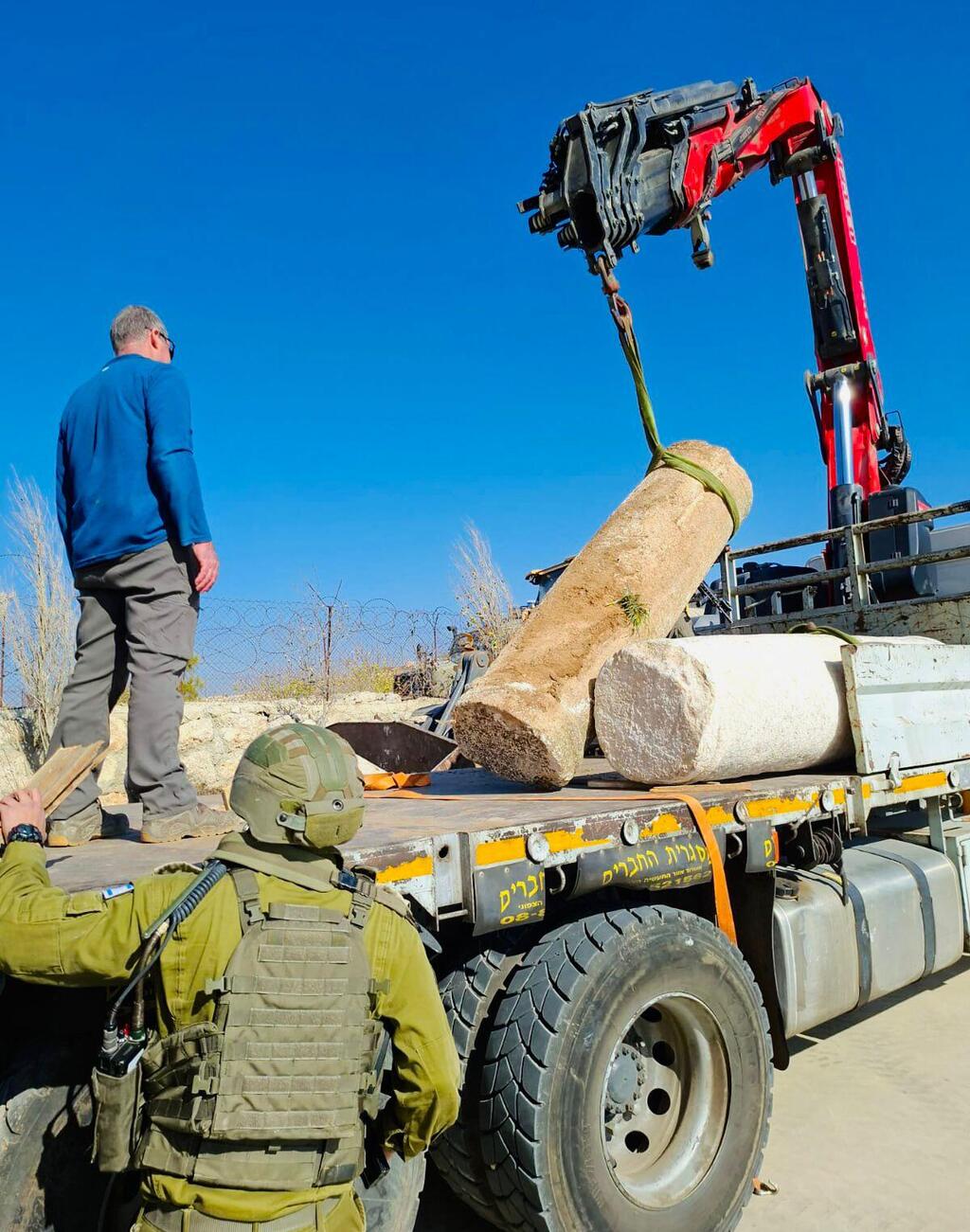
In a targeted operation by the Civil Administration — carried out by its Inspection Unit under the guidance of the Archaeology Branch — archaeological artifacts were recovered today from the declared Burj Lasanan site in Area B, after Palestinians built a villa over the site and damaged its ancient remains.
Among the recovered items were rare artifacts looted from the nearby Crusader fortress: old coins and ancient stones, capitals and stone columns from the Byzantine period, which had been used as decorative items inside the villa. A metal detector was also seized at the site. The artifacts were transferred to study and public display at the Good Samaritan archaeological museum, which is run by the Civil Administration’s Archaeology Branch.
The Burj Lasanan site crowns a hill overlooking Wadi Harmiyeh in the northern Benyamin region. It is considered one of the region’s most significant archaeological sites. The area was inhabited continuously from the Iron Age through the Middle Ages. Over the years, surveys revealed remains of a Crusader fortress, fragments of a Byzantine‑era church architecture, burial caves, a ritual bath (mikveh) and agricultural installations from the early Roman period.
According to the Civil Administration, all artifacts found at the site reflect a rich, multi‑period sequence. The main structure atop the hill likely represents the settlement’s final monumental phase, dating to the Crusader era.
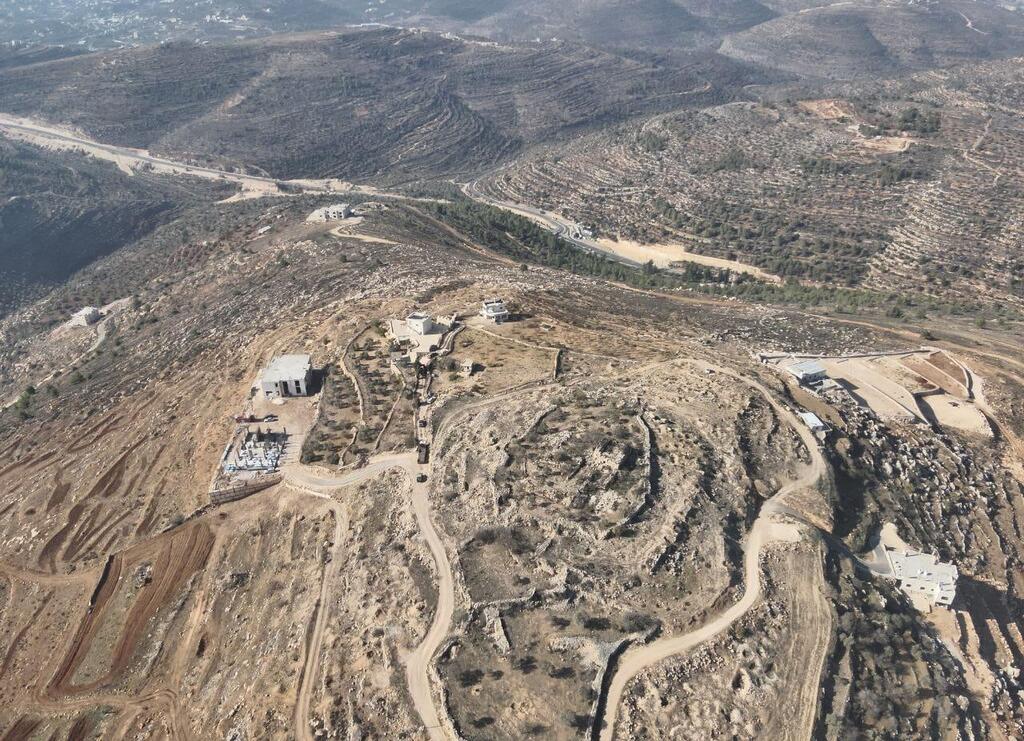
Burj Lasanan site crowns a hill overlooking Wadi Harmiyeh in the northern Benyamin region
(Photo: Spokesperson, Foreign Ministry)
Following a directive at the political level, inspectors from the Archaeology Branch tracked the looting activity and identified those responsible for the damage. The unauthorized villa caused direct harm to ancient remains and disrupted the site’s delicate historical continuity. The day’s operation is part of an ongoing effort led by the Archaeology Branch to protect heritage sites, prevent antiquities theft and preserve the area’s archaeological and historical assets.
“Protecting ancient sites is central to our work and our responsibility to safeguard the region’s history. Any damage to an ancient site harms not only the artifacts themselves but also our ability to understand and document the historical narrative that the site represents," said 'A', head of the Enforcement, Investigation and Intelligence Division (EIID) at the Archaeology Branch. "We will continue tirelessly — using all means at our disposal — to eradicate the destructive phenomenon of antiquities theft and protect national heritage and the history of the area.”