

IDF soldiers serving in the Gaza Strip are increasingly encountering stray dogs that approach military positions in search of food, as officials warn that dogs crossing from Gaza into Israeli border communities could pose risks to residents, agriculture and livestock. Soldiers have been reporting dogs being shot or poisoned in Gaza.
Dr. Ofer Kolsky, acting director of the Eshkol-Western Negev veterinary service, told ynet that the dogs are also reaching communities near the Gaza border.
Gallery
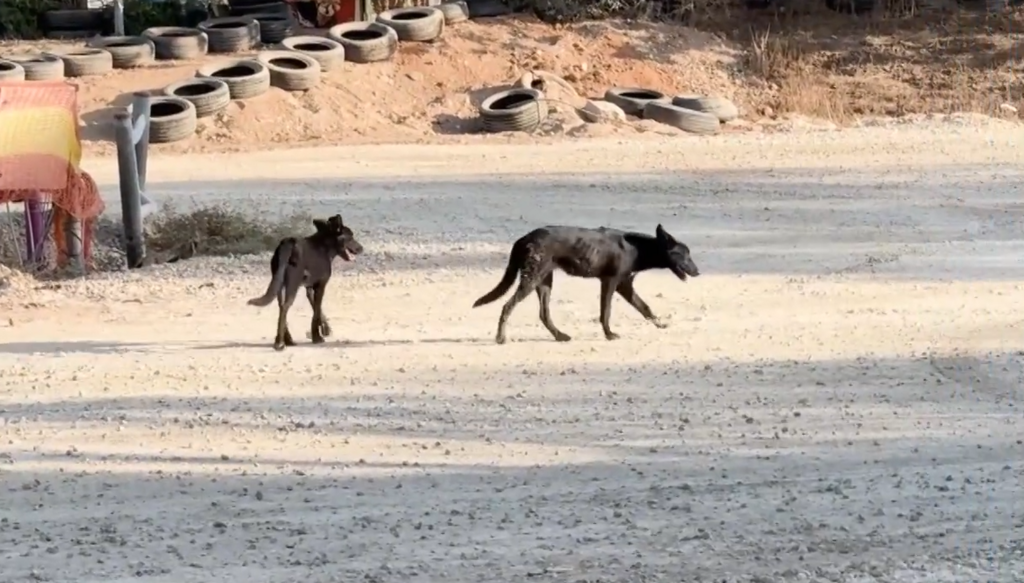
Stray dogs are seen near the Gaza border amid warnings they are crossing into Israeli communities and threatening livestock
“We encounter dozens of dogs crossing the fence on a daily basis,” Kolsky said. “Once they are not exposed at a young enough age to a warm human environment, they do not undergo proper socialization, and they essentially gather and become packs, perhaps even in a wolf-like manner — and then they can be very dangerous.”
Kolsky said dogs coming from Gaza pose a real risk to agriculture and animals in the area. He cited attacks at dairy farms and kibbutzim in which calves and local dogs were harmed.
“Two months ago, we were called to Kibbutz Alumim, to their dairy farm, because of an attack on calves,” he said. “Two weeks ago, we were exposed to very difficult images from Kibbutz Holit of a pack of dogs that attacked a local dog. They simply tore it to pieces.”
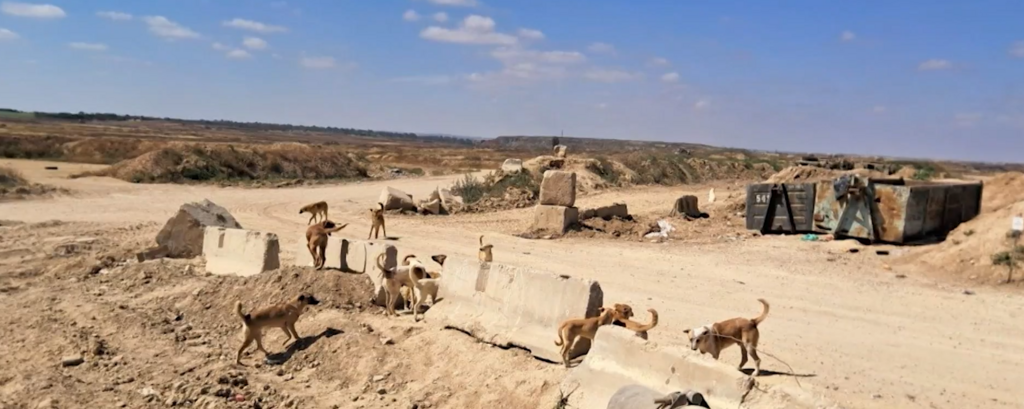
Officials are also warning of health risks, especially the potential spread of rabies. “At the moment, we have not yet encountered it from the direction of Gaza, but it is only a matter of time,” Kolsky said, adding that there is a real danger of a future outbreak if the phenomenon is not addressed.
Kolsky said people who encounter stray dogs should avoid contact. “When you encounter a stray dog, you should not try to provoke it,” he said. “Try to move away carefully. Do not run. Dogs will always catch anyone who runs.”
He also warned against feeding the dogs or trying to adopt puppies that come from the area.
Asked how the crossings could be prevented, Kolsky said it was a broad systemic challenge.
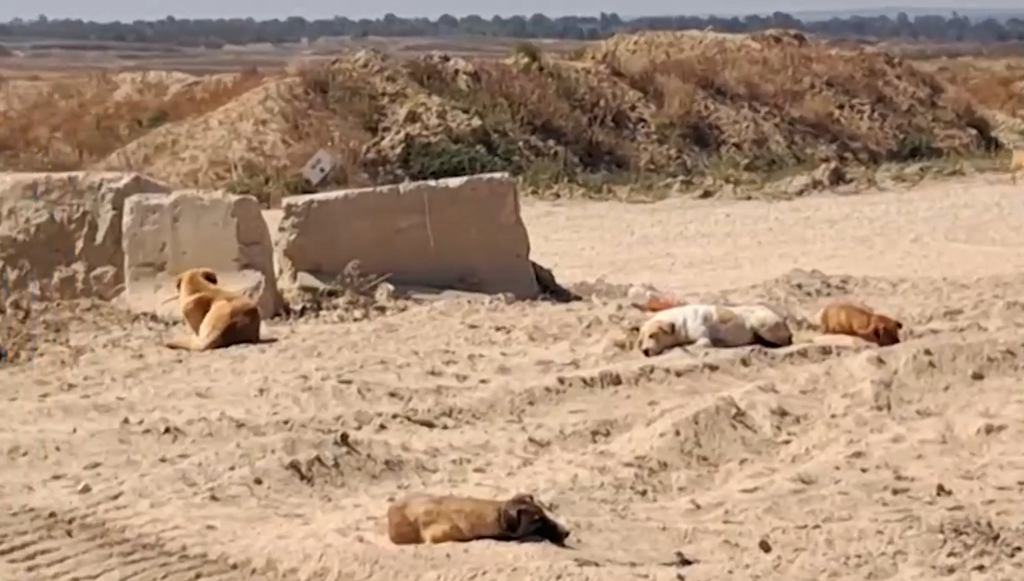
“There are no magic solutions here,” he said. “You close the border and make sure it stays closed.”
Kolsky said the problem persists despite the military presence because soldiers have other priorities.
“When there are breaches in the fence, the soldiers pay less attention to stopping dogs and are more occupied with stopping terrorists,” he said. “Most of our soldiers have a heart. When they see dogs, they do not treat them as a threat. We were all raised to think that dogs are man’s best friend, and therefore they ultimately allow them to enter.”
He said the dogs reproduce and cross into Israel faster than authorities can trap them. “Trapping is done one dog at a time, and as long as they have so much food, their reproduction rate and ability to cross the fence are greater than our trapping rate,” Kolsky said.
He called for broader action by the state and the military. “The State of Israel as a state must get involved in this issue,” he said. “And the IDF must be part of it, of course. The IDF also has to manage to put up this barrier.”