

Human history has been marked by plagues, wars and disasters. But according to Prof. Michael McCormick, a medieval historian at Harvard University, the single worst year to be alive was 536 CE.
It may sound surprising. Not 1349, when the Black Death wiped out nearly half of Europe’s population. Not 1918, when the Spanish flu killed tens of millions of people, most of them young, during World War I. Rather, McCormick points to 536 as the most devastating year.
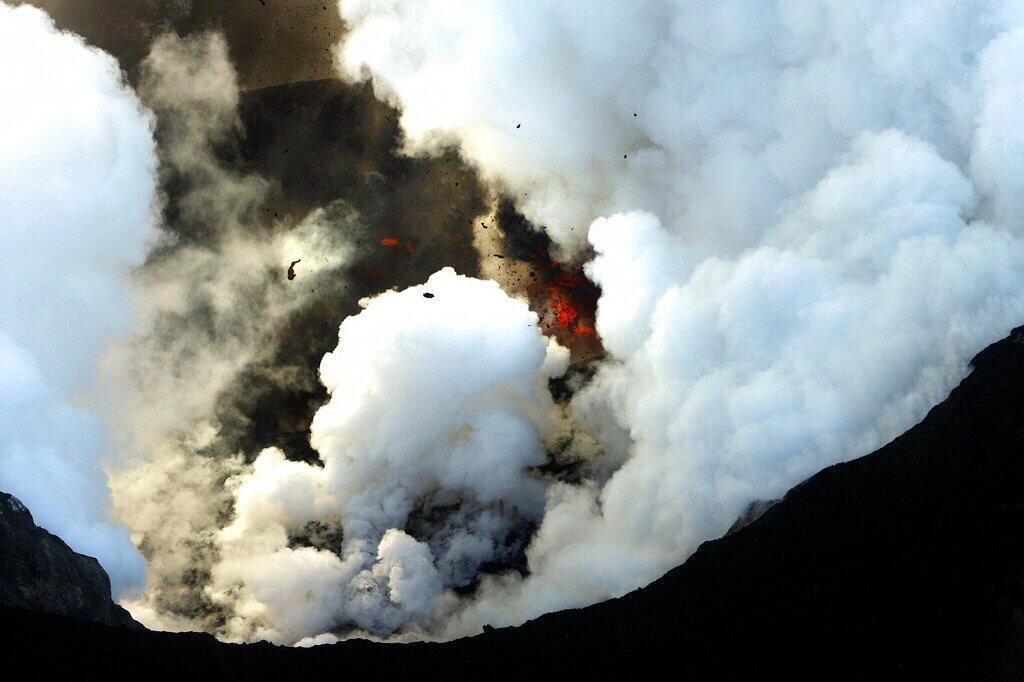
That year brought what has been called the “volcanic winter,” triggered by an eruption in Iceland — the “land of fire and ice.” For 18 months, mysterious clouds of ash darkened the skies over Europe, the Middle East and parts of Asia, dimming both day and night.
The eruption spewed massive amounts of volcanic particles into the stratosphere, forming a veil that blocked much of the sun’s rays. Byzantine historian Procopius of Caesarea wrote that the sun’s light was faint, “like the moon,” as if in a permanent eclipse. Temperatures plunged, harvests failed and famine spread.
Summer temperatures in Europe dropped by about 2.5 degrees Celsius below average, making 536 the coldest year of the coldest decade in 2,300 years. Heavy summer snow fell in China. Droughts, frosts and crop failures hit much of the Northern Hemisphere. In Ireland, bread shortages persisted from 536 to 539. A few years later, in 541, the bubonic plague broke out in Egypt and spread rapidly across the Eastern Roman Empire.
For decades, scholars debated the source of the eruption. Early theories pointed to North America. In the 1990s, tree-ring studies suggested unusually cold summers around 540. In 2018, Harvard researchers reported evidence from Greenland ice cores pointing to an Icelandic eruption in early 536.
That eruption, followed by others in 539 and 540, triggered several years of climatic disruption. Many historians see this as the start of the Late Antique Little Ice Age, which lasted until about 660. Even the Mayan civilization, thousands of miles away, was affected.
These natural shocks came only 60 years after the fall of the Western Roman Empire, when aqueducts, bathhouses and roads were already in decline. Malnutrition and weakened immunity worsened the toll. Many scholars believe this set the stage for the Justinian plague, which killed millions between 541 and 544 and wiped out as much as half the Byzantine Empire’s population.
Some researchers link the upheavals to cultural changes, such as large deposits of gold buried in Scandinavia, possibly as offerings to appease the gods and restore the sun.
Europe eventually recovered. Lead concentrations in ice cores — evidence of renewed mining and trade — began rising again around 640 and peaked two decades later.
Rethinking the 'worst year'
But was 536 really as catastrophic as often portrayed?
Dr. Lee Mordechai, a historian of the Byzantine Empire at the Hebrew University of Jerusalem, has studied the sources. He notes that while the volcanic haze was real, contemporary texts did not describe the disaster in catastrophic terms. Some mentioned it briefly, while many ignored it.
“The scientific evidence shows cooling caused by a volcanic eruption,” Mordechai said. “But in the written record, it was noteworthy rather than catastrophic.”
(Photo: Brynjar Gauti/AP)
Mordechai argues that the modern fascination with 536 says more about our present concerns than about the past. In the 1980s, at the height of Cold War nuclear fears, NASA researchers linked the eruption to the potential effects of nuclear war. In the 1990s, when fears of asteroid collisions grew, some suggested 536 was caused by a celestial impact. In the 2010s, as climate change drew more attention, the event was reinterpreted as an early case of long-term climate disruption.
Since 2018, the story has gone viral online, often reduced to a soundbite about “the worst year in history.” For Mordechai, the shifting interpretations highlight how academic research and public imagination influence each other.
Volcanoes and history
Prof. Beverly Goodman-Chernov, a geoarchaeologist at the University of Haifa who studies natural disasters, notes that volcanic eruptions have shaped history before. She points to the Laki eruption in Iceland in 1783, which killed a quarter of Iceland’s population, disrupted weather across Europe and may have worsened famine conditions that fueled the French Revolution.
Goodman-Chernov warns that volcanic events can still have far-reaching effects. She notes the eruption of Mount Pinatubo in the Philippines in 1991, which some researchers linked to unusually heavy rains in Israel that year. She also cites recent activity in the Greek islands of Santorini and Amorgos, as well as Mount Etna in Italy, as potential regional risks.
“Events like 536 remind us that volcanic eruptions can affect even distant places,” she said.