

Four suspected antiquities robbers were caught “in the act” Sunday afternoon digging inside an ancient Roman‑era burial cave near the Nabi Shu’aib/Chitin archaeological site in the Arbel Ridge area, on the outskirts of the Jordan Valley near the Sea of Galilee.
The Israel Antiquities Authority (IAA) said the suspects were conducting an illegal excavation that caused significant damage to the cave and its archaeological remains.
Gallery
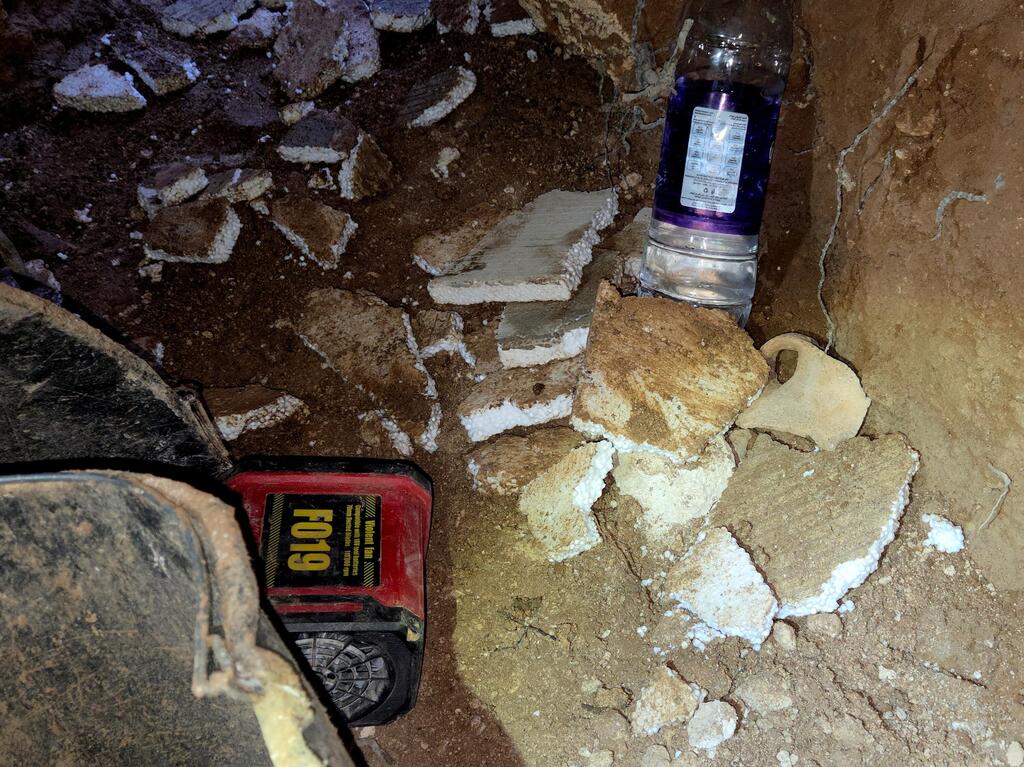
A fragment of an ancient pottery vessel and tools used by the suspected antiquities robbers in the cave
(Photo: Nir Distelfeld/Antiquities Authority’s anti‑theft unit)
The four were arrested in a joint operation by inspectors from the Antiquities Authority’s anti‑theft unit and the Lower Galilee Border Police. They were taken for questioning at the Tiberias police station. During questioning, the suspects said they had come to the site to hunt partridges and pick mushrooms, but admitted using digging tools inside the burial cave.
The Chitin area is known as a historically significant archaeological complex. To the east in Roman and Byzantine times lay the Talmudic town of Chitiya, a large Jewish settlement in the third century CE. To the west was another settlement called al‑Ma’azer, whose ancient name is unknown.
Chitiya is mentioned in rabbinic sources as the home of Rabbi Yaakov of Kfar Chitiya and as the residence of Resh Lakish, a notorious bandit who became one of the leading scholars of the second generation of amoraim in the Land of Israel. Based on the town’s name, its inhabitants likely farmed wheat.
The sites in the area have been surveyed previously by Prof. Uzi Leibner of the Hebrew University, uncovering pottery from Hellenistic, Roman and Byzantine periods.
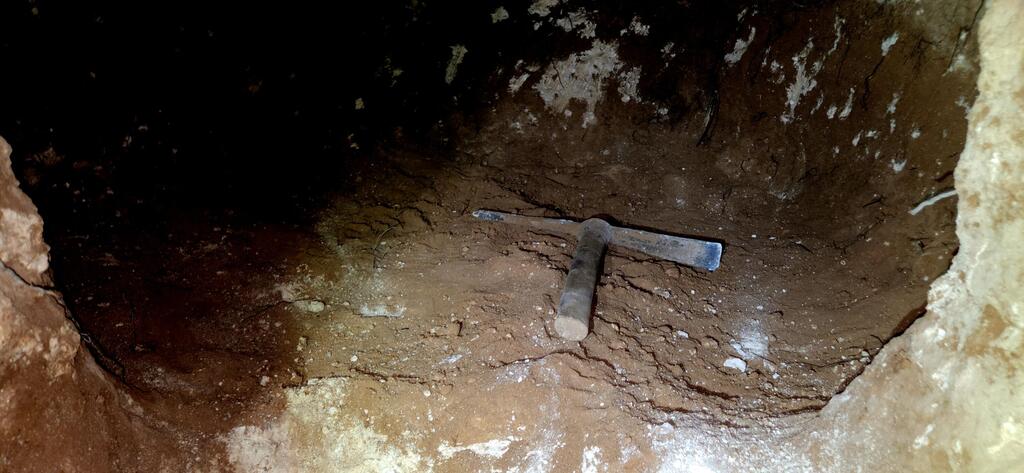
A pickaxe allegedly used by the suspects to damage the historic site
(Photo: Nir Distelfeld/Antiquities Authority’s anti‑theft unit)
“Any damage to an archaeological site is direct damage to our ability to learn from the past and pass it on to future generations," Nir Distelfeld, inspector of the Antiquities Authority’s anti‑theft unit in the north, said in a statement.
"Burial caves and ancient sites are one‑time sources of knowledge, and it is heartbreaking to see the destruction caused for the sake of money. Responsibility for protecting our archaeological heritage rests with all of us, and the Antiquities Authority works determinedly, together with law enforcement, to protect the public’s cultural assets and bring the guilty to justice.”
Heritage Minister Rabbi Amichai Eliyahu said Chitin has been recognized in historical sources and research as a place where Jewish life continued for generations. “When such sites are harmed — and especially when done deliberately — our right to preserve the material evidence of Jewish heritage here is damaged,” he said.
“This is an injury to memory, identity and the ability to transmit the story of this place to future generations. The Heritage Ministry will continue to act, together with the Antiquities Authority and law enforcement, to protect heritage sites and preserve them for the public and for generations to come.”
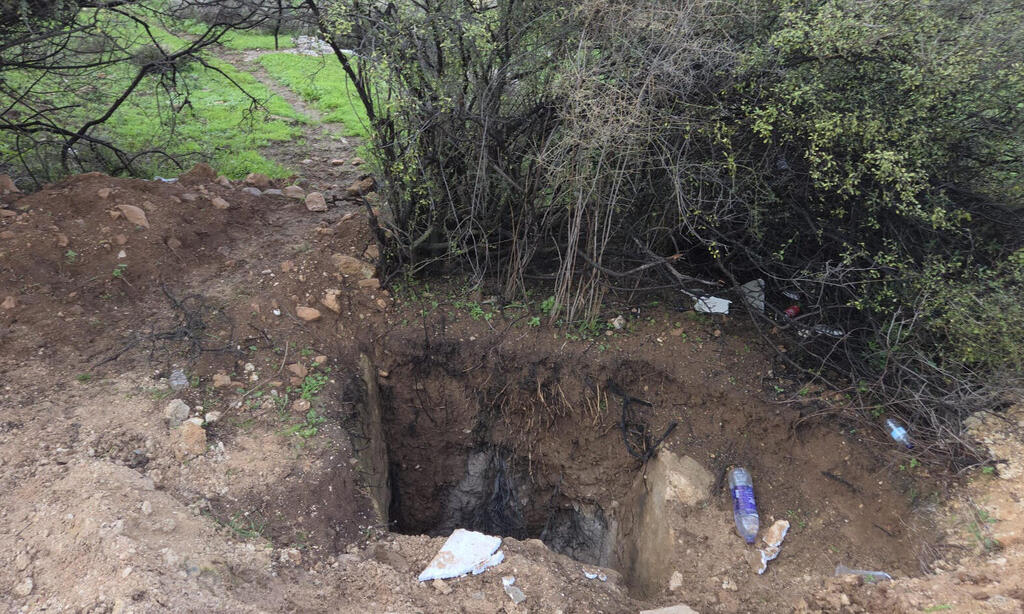
The entrance to the burial cave
(Photo: Nir Distelfeld/Antiquities Authority’s anti‑theft unit)
The suspects were released on personal bail at the end of the investigation. When the case file is completed, the material will be forwarded to the Antiquities Authority’s legal department for consideration of an indictment.
Who was Resh Lakish?
Resh Lakish — also known as Shimon ben Lakish — lived in the region where the theft occurred about 1,750 years ago and was one of the greatest amoraic sages of the Land of Israel in the second generation. He became renowned for his sharp intellect, depth of thought, integrity and humility; he was said to “uproot mountains and grind them together” because of his analytical prowess.
In his youth, he led a life of wandering and headed a band of robbers; another tradition says he made a living as a gladiator. Rabbi Yochanan ben Nappaha took him under his wing, gave him his sister in marriage and influenced him to repent and devote himself to Torah study.
Resh Lakish became a prolific teacher and was close to Rabbi Yochanan, whom he would challenge rigorously in study, posing up to 24 difficult questions on every topic until the law was fully developed and clarified. He did not shy away from debating even greater sages, including Rabbi Yochanan and Rabbi Yehuda HaNasi. According to rabbinic tradition, Resh Lakish died as a result of a halachic dispute with Rabbi Yochanan.