

Israel Electric Corporation is turning to 3D printing to solve a problem that has become increasingly urgent during war and global supply disruptions: how to keep power plants running when a critical spare part is no longer readily available from overseas.
The company is developing the ability to manufacture complex engineering components locally, with the aim of reducing dependence on foreign suppliers, shortening delivery times and improving the availability of Israel’s power plants.
Gallery
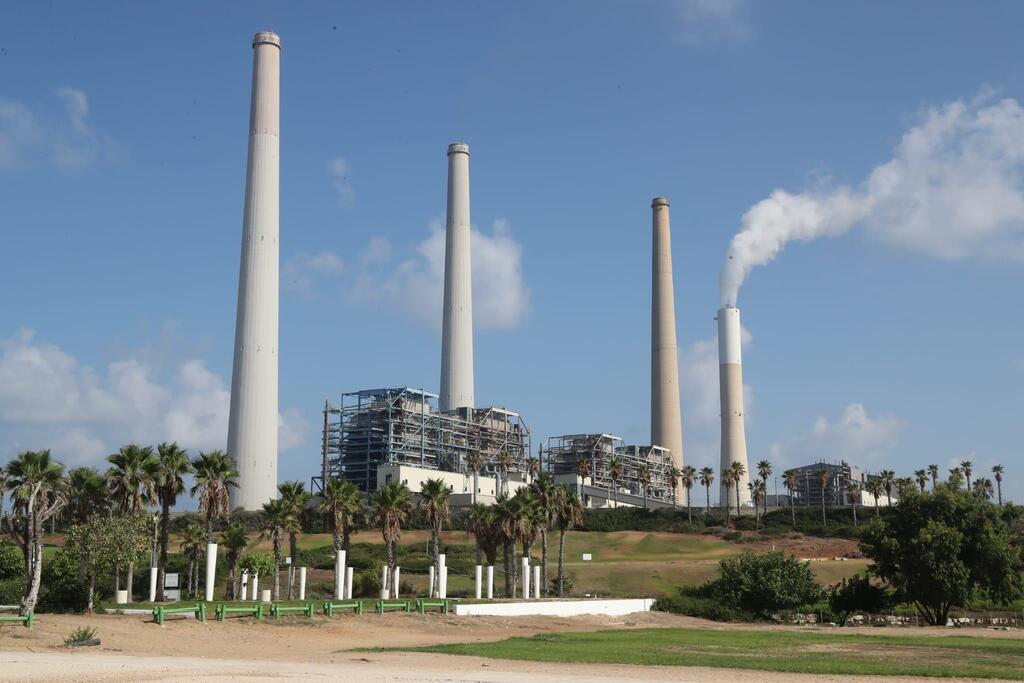
Israel Electric Corporation develops local manufacturing capability for critical power plant components
“Developing domestic printing capabilities for complex engineering components is a strategic goal for the IEC which will strengthen Israel's energy independence,” said Yossi Rofe, IEC deputy CEO and vice president of generation and energy.
The challenge is particularly acute because power plants remain in service for decades, often long after some of their original components have become scarce or obsolete. When a critical part fails, operators can find themselves dependent on overseas manufacturers that may take years to deliver a replacement, or may no longer produce it at all.
IEC says a single component ordered from abroad can cost millions of dollars and take years to arrive. Producing the same type of part locally through 3D printing, using metal powder or metal wire, could reduce the cost to tens of thousands of shekels and cut the turnaround time to weeks.
“This initiative will strengthen the operational continuity of the power plants,” Rofe said, adding that it relies on “harnessing the Israeli technological ecosystem alongside the engineering knowledge and experience of IEC employees.”
Israel Electric Corporation
One of the main hurdles is the move from polymer printing to metal.
IEC is now working with Israeli technology companies to develop the ability to manufacture steam-piping components from a special steel alloy designed to withstand extreme pressure and temperatures over long periods without deforming or degrading.
Globally, according to the company, 3D printing using this type of alloy is still largely in the research and development stage and has not yet reached the maturity needed for commercial production of large industrial components.
IEC began building its 3D-printing capabilities several years ago with the acquisition of polymer printers for research and prototyping. Since then, the operation has expanded, and the company now runs several polymer printers at its Orot Rabin, Haifa and Rutenberg sites.
These systems can use advanced materials resistant to acids, oils and high temperatures.
At the Rutenberg power plant in Ashkelon, IEC also operates a printer based on liquid-injection technology, allowing it to manufacture components with complex internal cavities using water-soluble support material.
Each component produced through 3D printing undergoes a detailed engineering process before it can be considered for use.
Printing direction, build strategy, heating conditions and thermal management inside the printing chamber must all be defined precisely in order to achieve the required mechanical and functional properties.
That level of precision is especially important for components installed in critical systems, where a failure could damage equipment and affect the reliability and availability of the electricity supply.
As IEC accumulates more knowledge and experience in developing printing parameters for advanced steels and alloys, it plans to gradually expand further into metal-component manufacturing.
Rofe said the cooperation between the company’s engineers and Israel’s technology sector is already producing results.
“Evidence of the success of this integration is the fact that we are currently in the process of registering a patent for a unique engineering component, originating from an initiative by one of the division's employees,” he said.
For IEC, the broader goal is not simply to adopt a new manufacturing technology, but to build a local supply capability for parts that may be difficult, slow or expensive to obtain abroad, particularly during emergencies when keeping generating units operational becomes even more critical.