


Pale Weasel's-snout (Hueblia calycina), a tiny plant considered extremely rare in Israel, has been documented again after 19 years without a confirmed sighting in the country. The plant was discovered at the archaeological site of Tel Almit in the Judean Hills by Shaked Bachbut, a ranger and ecological coordinator at the Prat Stream Nature Reserve.
Bachbut said he noticed a small purple dot during a routine trail inspection with fellow ranger Iris Arnovitch. “I went back and looked at the tiny flower, about 4 centimeters tall. I didn’t recognize it. There was another specimen next to it. I photographed them and continued with the patrol. Like with any plant I don’t know, I later sat down at my computer and began identifying it. That’s when I realized it was Hueblia calycina, a very rare species that is critically endangered.”
Gallery
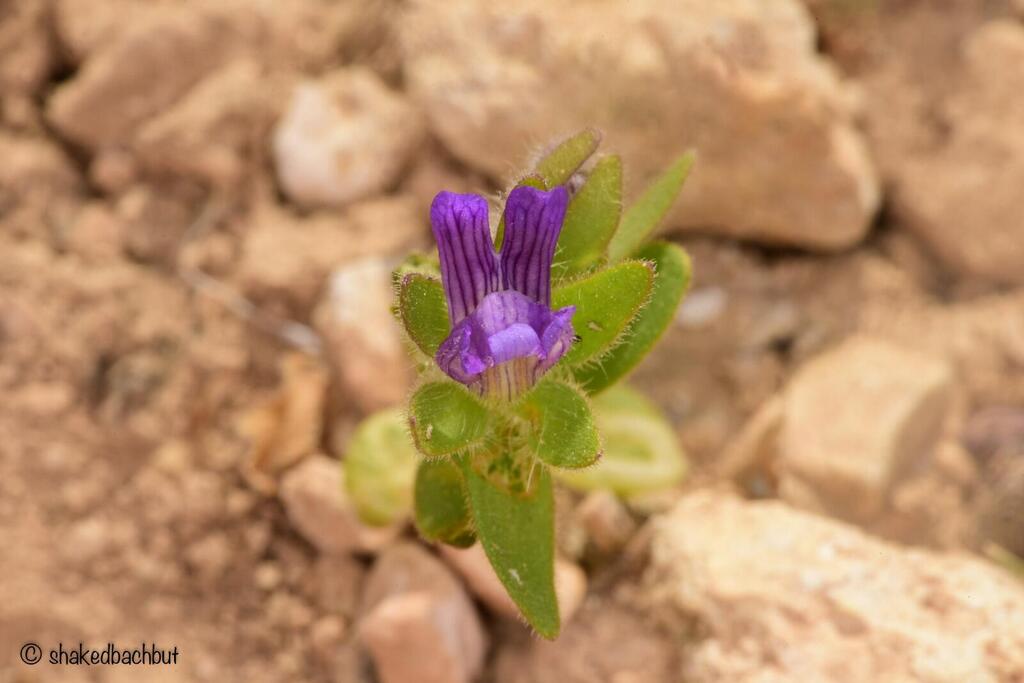
Hueblia calycina. Last seen in Israel in 2007
(Photo: Shaked Bachbut, Nature and Parks Authority)
He added, “I sent the photo to the Nature and Parks Authority’s botany group, and it immediately caused a stir. That’s also how I learned these are the only two known specimens in Israel, and that the plant hasn’t been seen here in 19 years. It’s always exciting to find a rare species, whether it’s a plant or a dragonfly. Alongside the excitement, I move on to the next discovery.”
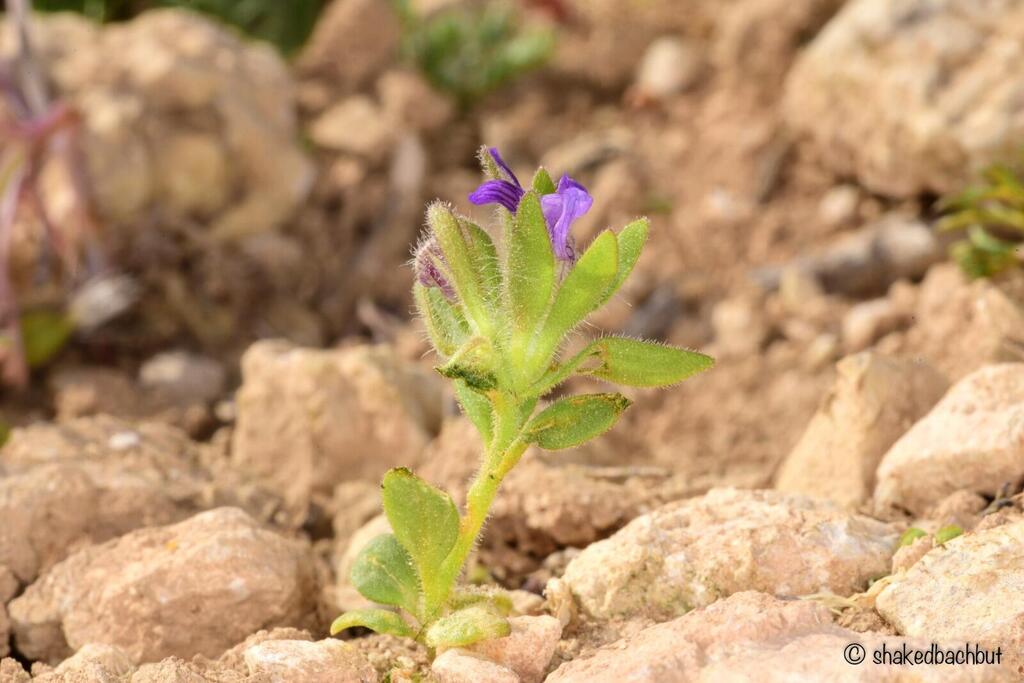
Rare plant
(Photo: Shaked Bachbut, Nature and Parks Authority)
The following day, Bachbut returned to survey the area with Dr. Ori Fragman-Sapir, the scientific director of the Jerusalem Botanical Gardens and an adviser to the Nature and Parks Authority on endangered plants, but no additional specimens were found.
Dr. Fragman-Sapir said the plant is small and inconspicuous. It is covered with glands that secrete an unpalatable substance to deter herbivores, and it produces a few delicate purple flowers at the tip of its stem.
The flower resembles a small snapdragon, he says. It remains closed, and only strong bees can pry open its “lips” to drink the nectar and pollinate it. “According to the Red Data Book: Endangered Plants of Israel and the Red Plants website, the species is critically endangered and has only been collected twice before in the Judean Hills,” he said.
"In 1940, it was found by botanist Michael Zohary on Mount Scopus and documented in the Hebrew University’s national herbarium. In April 2007, it was discovered by Oz Golan, Shir Vered and colleagues near Aristoblih on Mount Hebron, where it has not been found again despite extensive searches.”
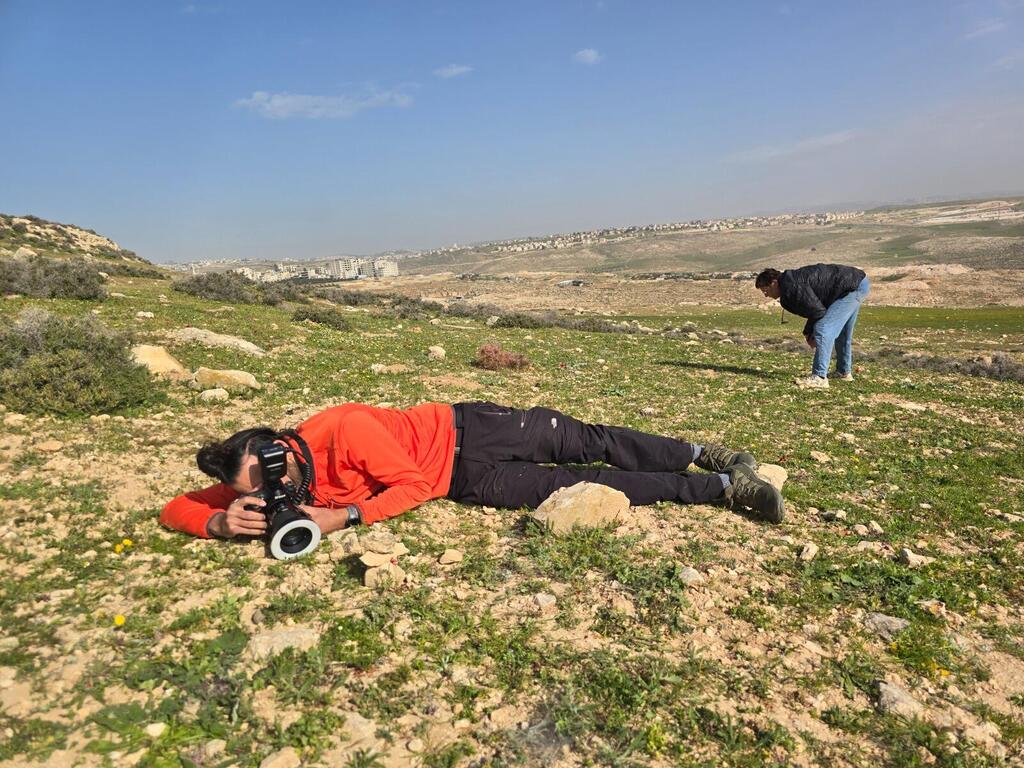
Shaked Bachbut documents the rare Hueblia calycina
(Photo: Dr. Ori Fragman-Sapir)
Fragman-Sapir added that while no additional plants were located, seeds may still remain in the soil and could germinate in the coming years. Efforts are expected soon to collect seeds from the existing plants and propagate them in a seed bank. Some will eventually be reintroduced into the wild, while others will serve as a backup for the rare species.
The site where the plant was discovered is not within a designated nature reserve.