

A multicultural civilization that flourished in the southwestern Amazon between 600 B.C. and A.D. 850 was home to millions of people. The Aquiry civilization, which at the time stretched across some 183,000 square kilometers, built large centers for political and ceremonial purposes while creating mysterious geometric structures across the landscape.
An aerial survey of the region identified the remains of more than 400 well-preserved sites featuring monumental ceremonial architecture, along with several later settlement sites. After extrapolating the findings across the civilization’s entire territory, the researchers who uncovered the structures arrived at a conservative estimate of more than 20,000 ancient ceremonial centers. The largest known site covers 500,000 square meters.
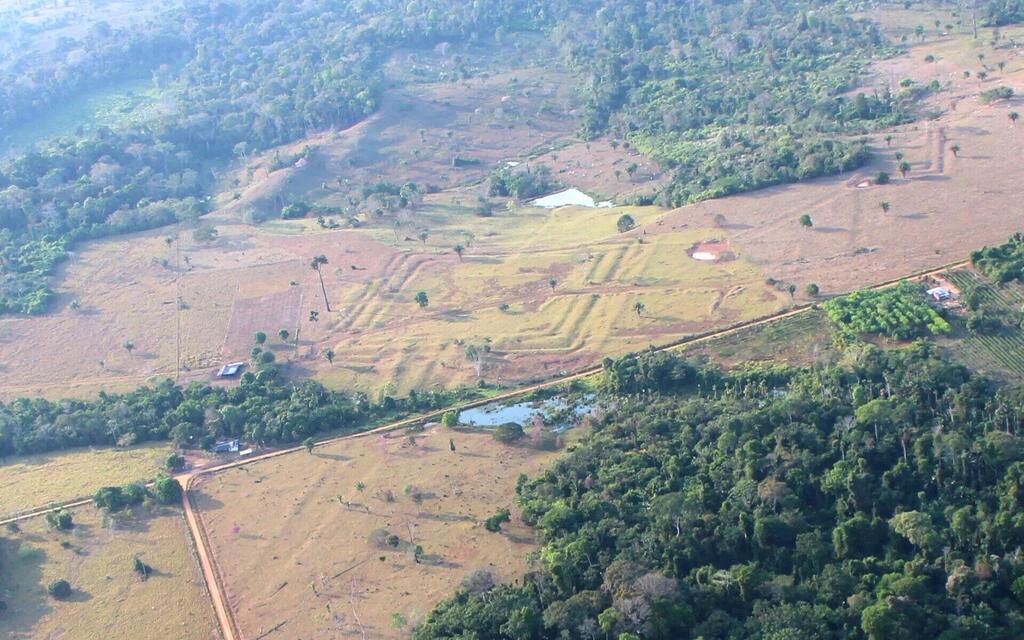
Extensive surveys and radiocarbon dating showed that Aquiry territory — accounting for less than 3% of the greater Amazon — was home to between 1.25 million and 3 million people at the beginning of the first millennium A.D.
The finding challenges previous estimates for the population of the wider Amazon region, which ranged from 1 million to 10 million people. The Amazon’s total population may have numbered in the tens of millions.
Professor Martti Pärssinen, an archaeologist at the University of Helsinki who led the study published in the journal Nature, said the findings fundamentally reshape current understanding of the Amazon region’s past.
The Aquiry people left their mark on the Amazonian landscape. They burned bamboo forests to clear land for fields of corn, squash and manioc, also known as cassava or yuca — a starchy root native to South America — as well as for the construction of monumental ceremonial centers and the roads leading to them.
Pärssinen said the study indicates that human activity had a far greater impact on the Amazonian environment than previously believed.
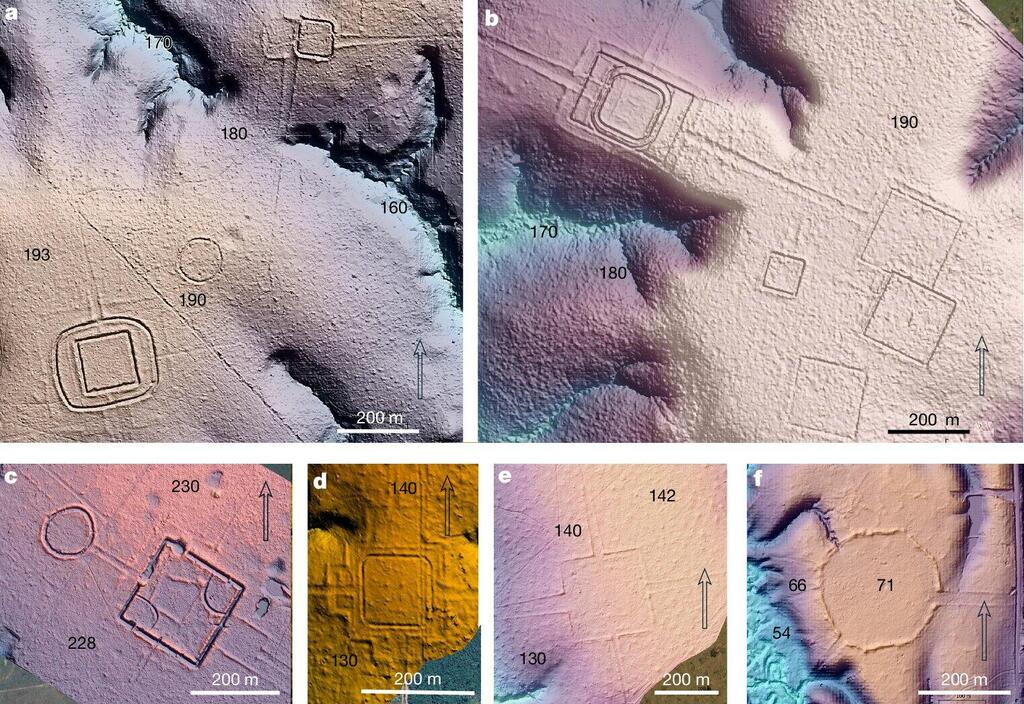
Earthworks identified in an aerial survey of the Amazon and attributed to the Aquiry civilization
(Photo: Nature (2026))
Several protein-rich tree species in the region — including the Brazil nut tree, the peach palm, known for its edible palm heart, and various other fruit-bearing trees — have been shown to reflect long-term human interaction with the environment.
The Aquiry people also helped spread culturally significant trees at the expense of other species.
Pärssinen said the findings have direct implications for understanding the region’s biocultural history. He added that the civilization also influenced carbon production and the Amazon’s carbon balance in ancient times, factors that should be better incorporated into future climate models.
The study was conducted using an airborne laser-scanning technology known as LiDAR. The technology maps landforms beneath vegetation and revealed thousands of traces of the ancient civilization in previously unexplored parts of the world’s largest rainforest.
The laser survey covered an area of about 4,500 square kilometers.
Professor Juha Hyyppä of the Finnish Geospatial Research Institute at the National Land Survey of Finland, who was responsible for the study’s technical implementation, said the team flew along straight routes about 450 kilometers long, mapping a strip roughly one kilometer wide every 10 kilometers. He said the method allowed researchers to cover as large a continuous area as possible.
The features identified included large geometric shapes and straight roads.
Risto Kalliola, a professor emeritus at the University of Turku, said their varying dimensions, shapes, construction methods and locations reflect the region’s distinctive geographical and cultural characteristics.
According to local oral traditions, the centers were built in part to foster relations among communities and with significant beings from another world. At the same time, they served as gathering places and venues for political decision-making.
Ceremonies included ritual dancing, music, feasts, athletic competitions and ball games.
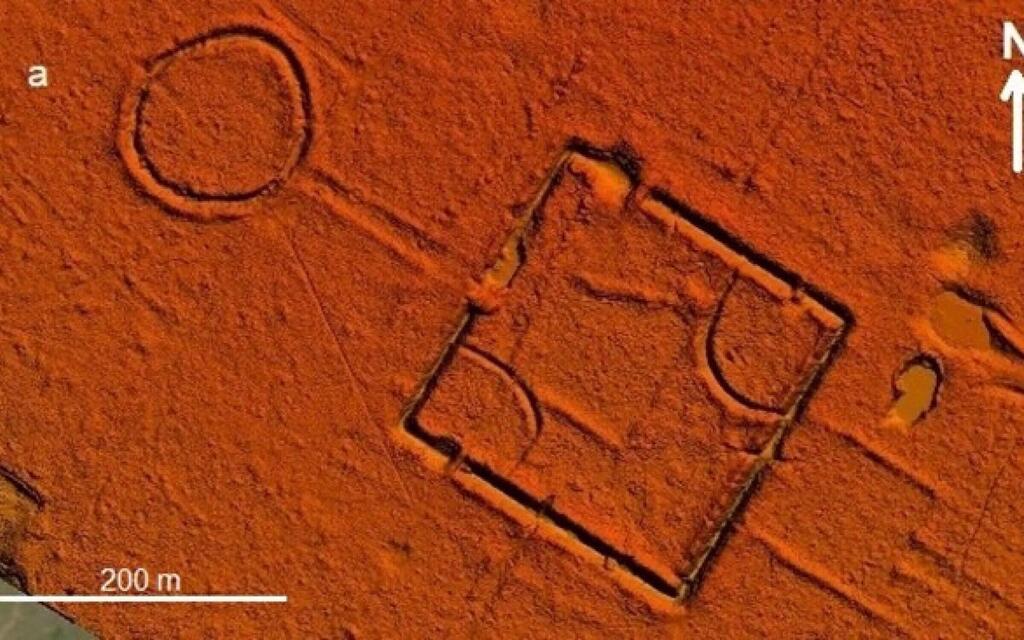
One example of structures dating to the Aquiry civilization in the Amazon
(Photo: M. Pärssinen & F. de Novaes)
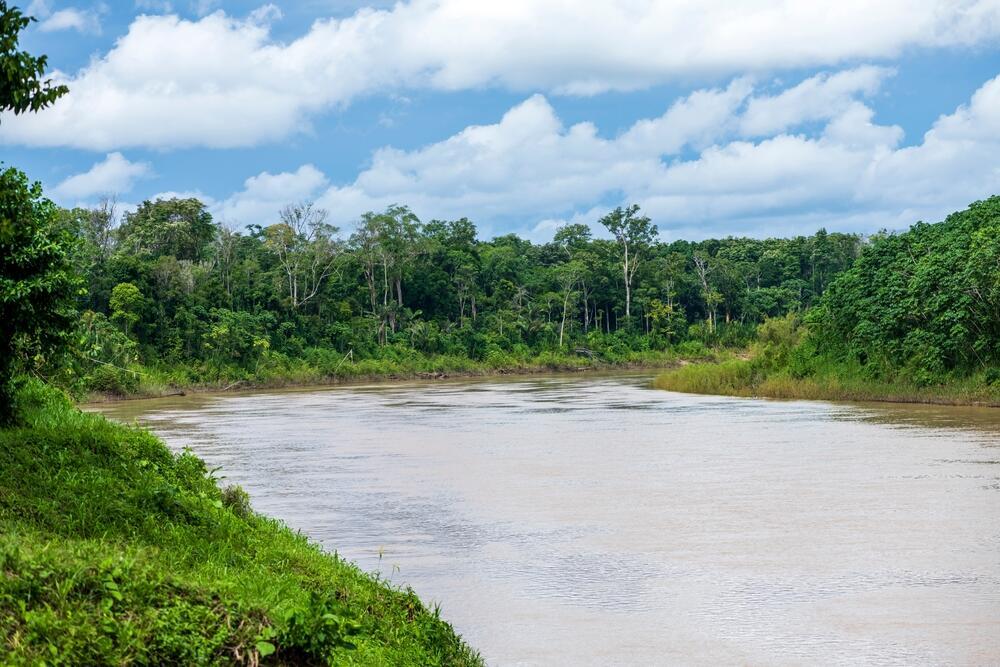
A river flowing through the state of Acre in the Brazilian Amazon
(Photo: Cacio Murilo/Shutterstock)
Relatively little is still known about the Aquiry civilization. Its territory was roughly equivalent in size to modern-day Syria.
Monumental geometric earthworks, known as Amazonian geoglyphs, reveal the civilization’s scale. The name Aquiry was coined by Indigenous peoples and derives from the Acre River, which flows from Peru and Bolivia through the modern-day Brazilian states of Acre and Amazonas.
Aquiry means "river of caimans" in a language spoken by the Indigenous Arawak people.
Professor Pirjo Kristiina Virtanen, who studies Indigenous populations at the University of Helsinki, said the civilization was not a single kingdom but rather a network of many different communities.
Similar geoglyphs dating from 200 B.C. to A.D. 500 have been found in Peru, where they are known as the Nazca Lines and include designs depicting animals, humans and plants.
The Nazca people formed an interconnected regional society of precolonial farmers who managed to survive in an extremely dry desert region along the Pacific coast. They lived, however, about 1,700 kilometers from the Aquiry civilization.
Pärssinen said the Nazca geoglyphs represented a different phenomenon and were probably not connected to the Aquiry culture. He added that the geometric forms and motifs are nevertheless best appreciated from the air.
The presence of geoglyphs in the southwestern Amazon is prompting a reassessment of precolonial cultures and urban development, while also raising questions about the fate of the Aquiry civilization.
It remains unknown what caused the civilization’s apparently rapid collapse around A.D. 850 — roughly the same period in which the Maya civilization in Central America and other cultures in the Andes also underwent relatively sudden declines.