

An international team of researchers has reconstructed the face of a man who lived in what is now Ecuador more than 3,000 years ago, offering a new perspective on a pair of ancient skulls that have fueled one of anthropology's longest-running debates about the origins of the first inhabitants of the Americas.
The reconstruction is based on a skull known as Punin-2, discovered by a farmer in the 1970s in a valley near the town of Punín, in Chimborazo province in Ecuador's central Andes. It closely resembles another skull, Punin-1, unearthed at the same site in 1923 during an expedition by the American Museum of Natural History.
Gallery
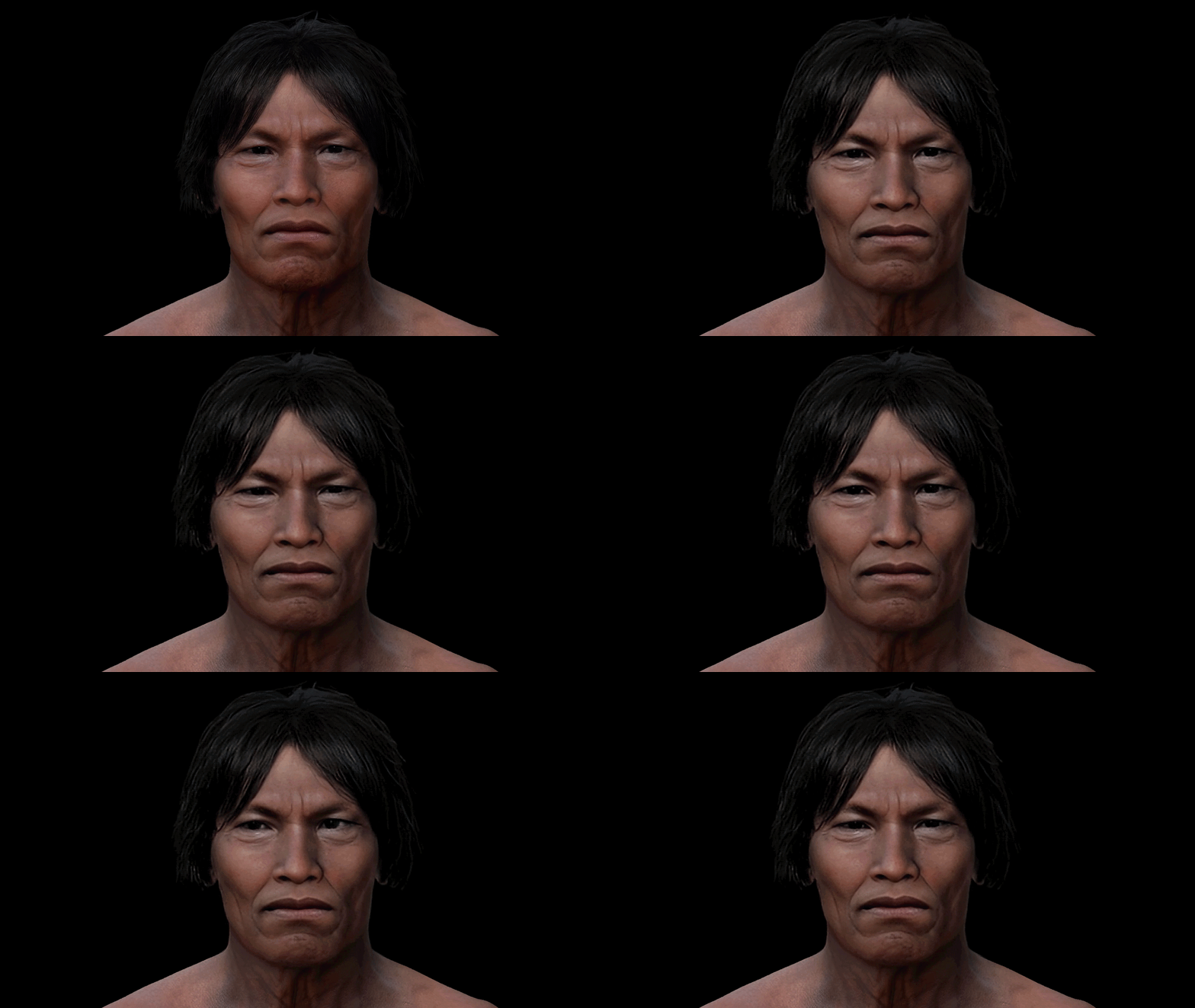
The skull of a man who lived in what is now Ecuador more than 3,000 years ago is digitally brought back to life
(Photo: Dr. Christopher Rynn)
The first discovery sparked a scientific controversy that continued for decades. Some researchers believed the skull displayed unusually archaic features, particularly its prominent brow ridge, raising questions about the identity and ancestry of the person to whom it belonged.
In 1925, scientists proposed that Punin-1 might indicate an Oceanian origin, potentially suggesting ancient contact between populations in South America and people from Australia or the Pacific Islands. Other theories went further, questioning whether the skulls might belong to an extinct human relative, such as Homo erectus or Neanderthals.
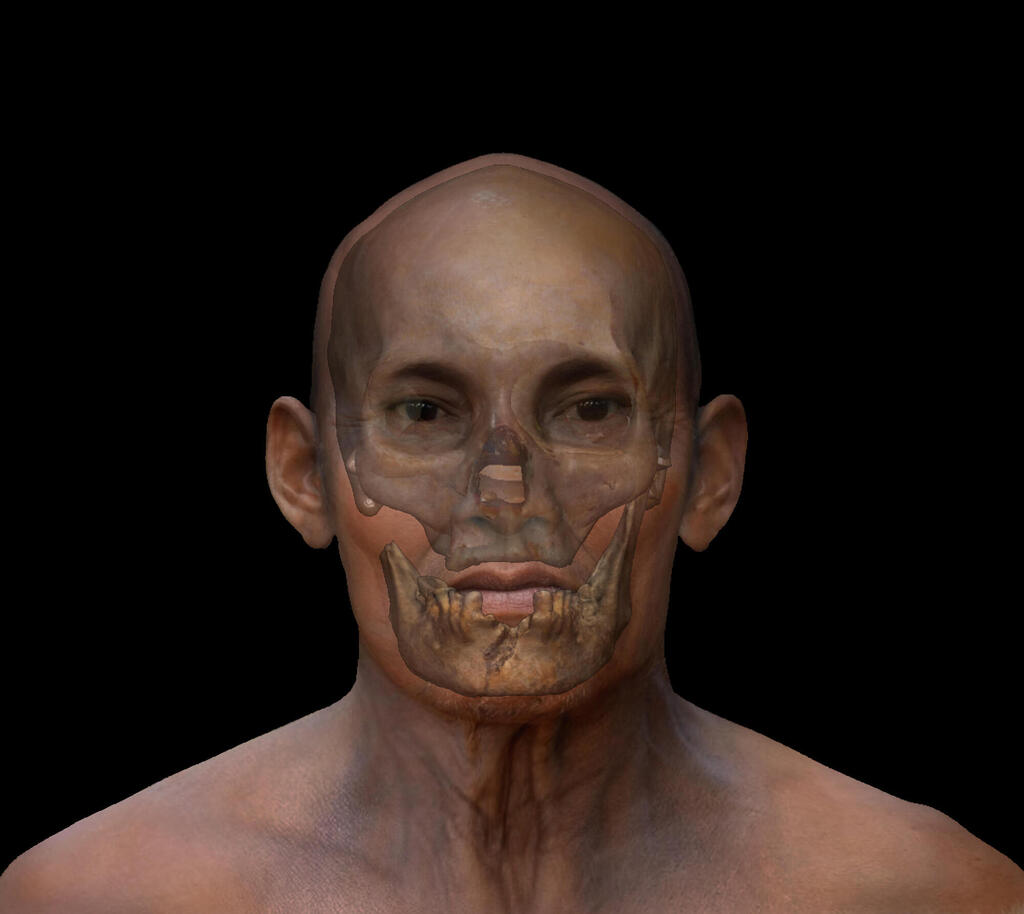
The facial reconstruction superimposed on the Punin-2 skull on which it was based
(Photo: Dr. Christopher Rynn)
The man's hairstyle was not preserved, so researchers consulted local residents when reconstructing it
(Photo: Dr. Christopher Rynn)
Those ideas were partly driven by the geological circumstances of the discoveries. The skulls were found in sediment associated with fossils of extinct Ice Age animals, including mastodons and giant sloths. Researchers initially considered the possibility that the human remains were as old as the surrounding fossils, which dated to the Pleistocene epoch, extending from roughly 2.6 million to 11,700 years ago.
Later geological studies, however, challenged those assumptions. Researchers concluded that erosion and ground movement had mixed the considerably younger human remains with much older animal fossils. More recent anthropological and skeletal examinations suggest that the Punin-2 individual was a hunter-gatherer who lived in the Chimborazo region approximately 3,000 to 4,000 years ago and died in his 50s.
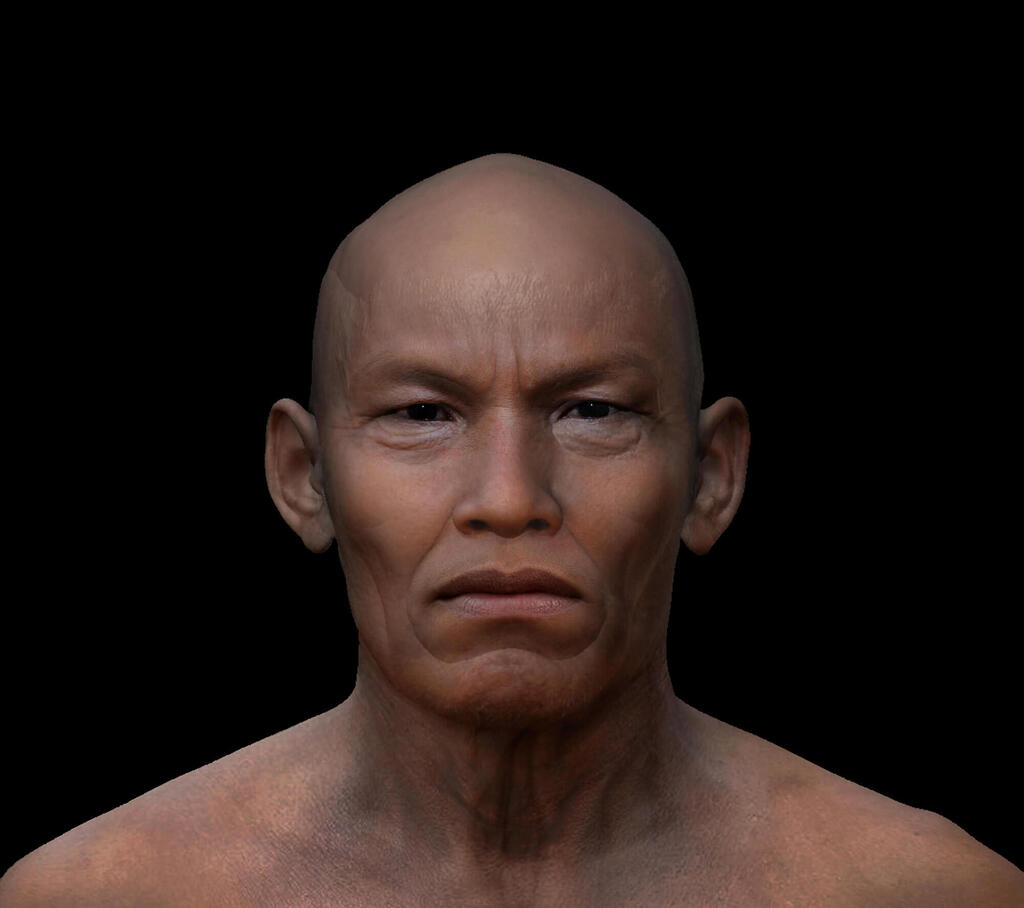
Now, forensic anthropologist Dr. Christopher Rynn, who specializes in skull and facial anatomy, has used digital reconstruction techniques to create a portrait of the man. According to Rynn, the results support the conclusion that Punin-2 belonged to an Indigenous American whose ancestors were connected to populations living in northern Siberia and East Asia during the last Ice Age.
"From the front, Punin-2 resembles the skull of an East Asian person, but from the side, not at all," Rynn told Live Science.
The reconstruction project is part of an international effort led by sculptor Héctor Flores Franco of Chimborazo University in Ecuador. Rynn and his colleagues are also seeking funding to reconstruct Punin-1 and conduct ancient DNA analysis on both skulls, which could provide stronger evidence about the individuals' ancestry. "The analysis will reveal their true genetic lineage," Rynn said.
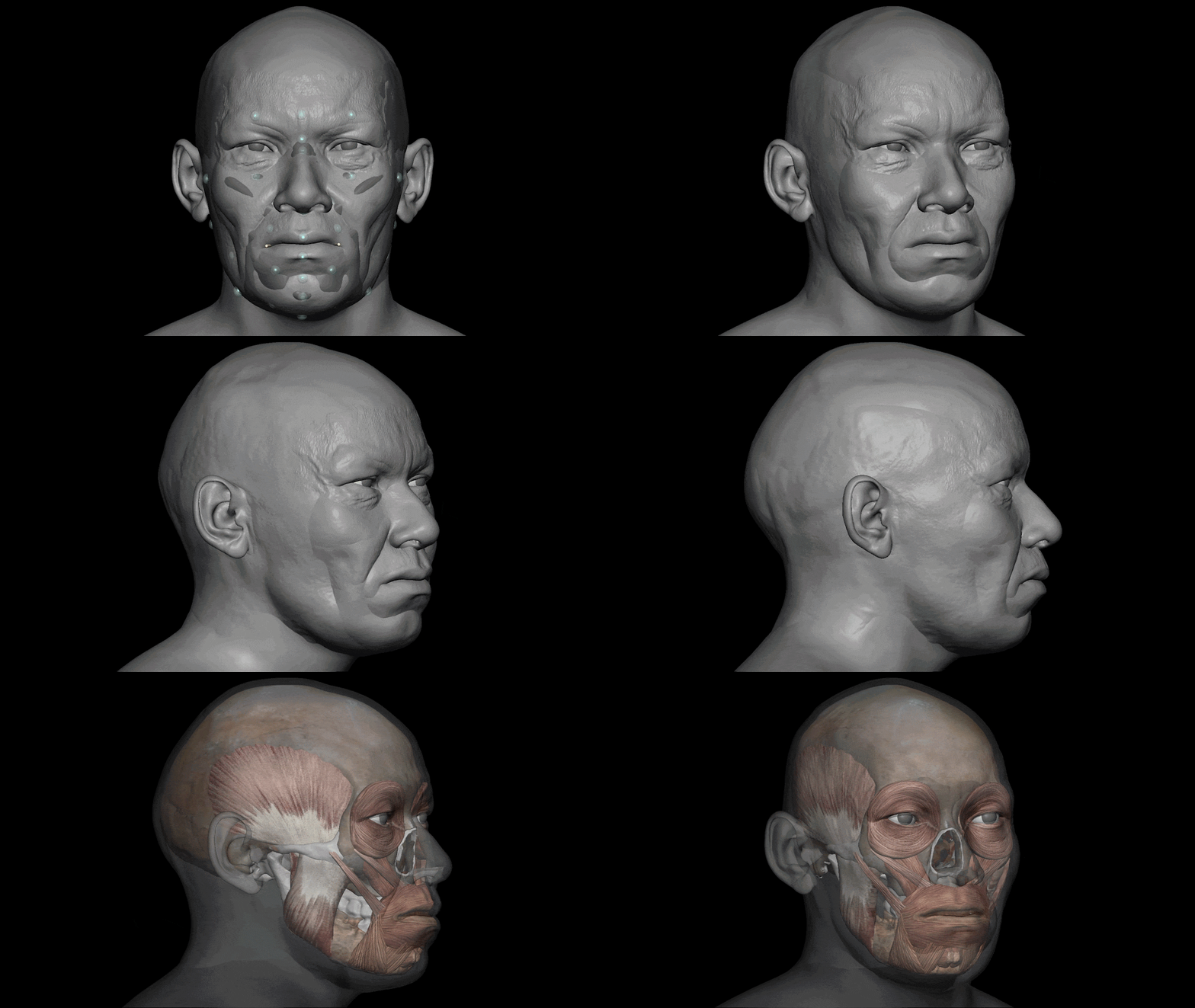
A digital reconstruction showing the muscles and soft tissues of a hunter-gatherer who lived more than 3,000 years ago
(Photo: Dr. Christopher Rynn)
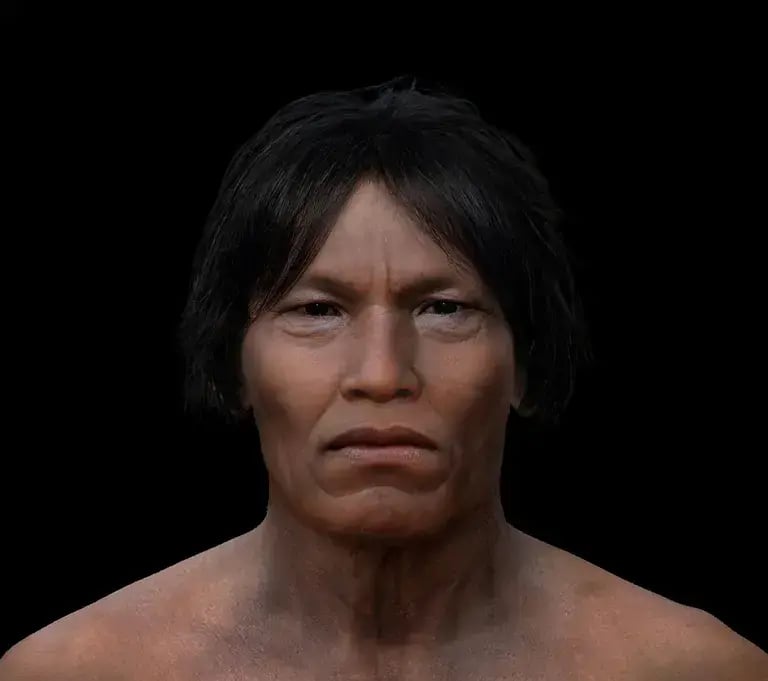
The reconstructed face of Punin-2, an Indigenous American man believed to have died in his 50s more than 3,000 years ago
(Photo: Dr. Christopher Rynn)
To avoid allowing existing theories to influence his work, Rynn deliberately learned as little as possible about the skull's origins before beginning the facial reconstruction. His initial work focused on its anatomical structure rather than assumptions about the individual's ethnic or geographical background.
However, some elements of the reconstruction required consultation with residents of Chimborazo, particularly the man's hairstyle, for which no physical evidence had survived. The researchers chose straight black hair parted in the middle, a style associated with certain Indigenous groups in the region.
"The hairstyle is very specific," Rynn explained. "If it isn't faithful to the original, it will look like someone who belonged to a different tribe."
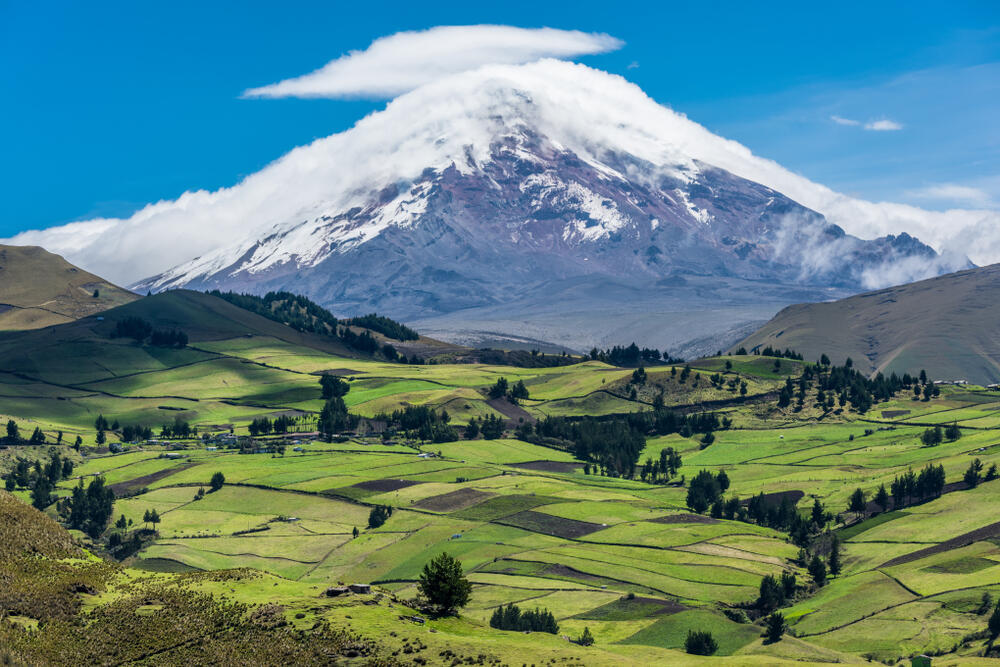
The area where the Punin-1 and Punin-2 skulls were discovered, with Mount Chimborazo in the background
(Photo: Gert Olsson/Shutterstock)
The position of the eyes also underwent adjustments. Some early versions depicted eyes that protruded too far, resembling features Rynn associated with East Asian skulls. After consulting local residents, he positioned them deeper within the eye sockets. The finished reconstruction presents a face he considers characteristic of an Indigenous American.
Rynn combined digital modeling with partial physical reconstructions using wax, drawing on techniques developed at the University of Manchester in the 1970s. Often referred to as the Manchester Method, the approach incorporates several techniques originating in different parts of the world, according to Rynn.
The process involves rebuilding facial muscles and soft tissues over the skull, using anatomical databases to estimate tissue thickness in different areas. Rynn has previously applied similar techniques to ancient human remains, including a Neanderthal who lived approximately 50,000 years ago.
Facial reconstructions have been produced from hundreds of ancient human remains, allowing archaeologists and anthropologists to present individuals who might otherwise be known only through their bones. Beyond their scientific applications, the reconstructions can help modern audiences establish a more personal connection with people who lived thousands of years ago.
The new portrait was shown to several residents of Chimborazo whom Rynn believes may be descendants of the ancient man. "This is a portrait of their actual ancestor," he said. "They seemed to like it."
While the reconstruction provides a possible glimpse of what Punin-2 looked like, the debate over his precise ancestry remains unresolved. Researchers hope that future genetic analysis of the two skulls will establish whether their conclusions about the ancient inhabitants of Ecuador's Andes are correct.