

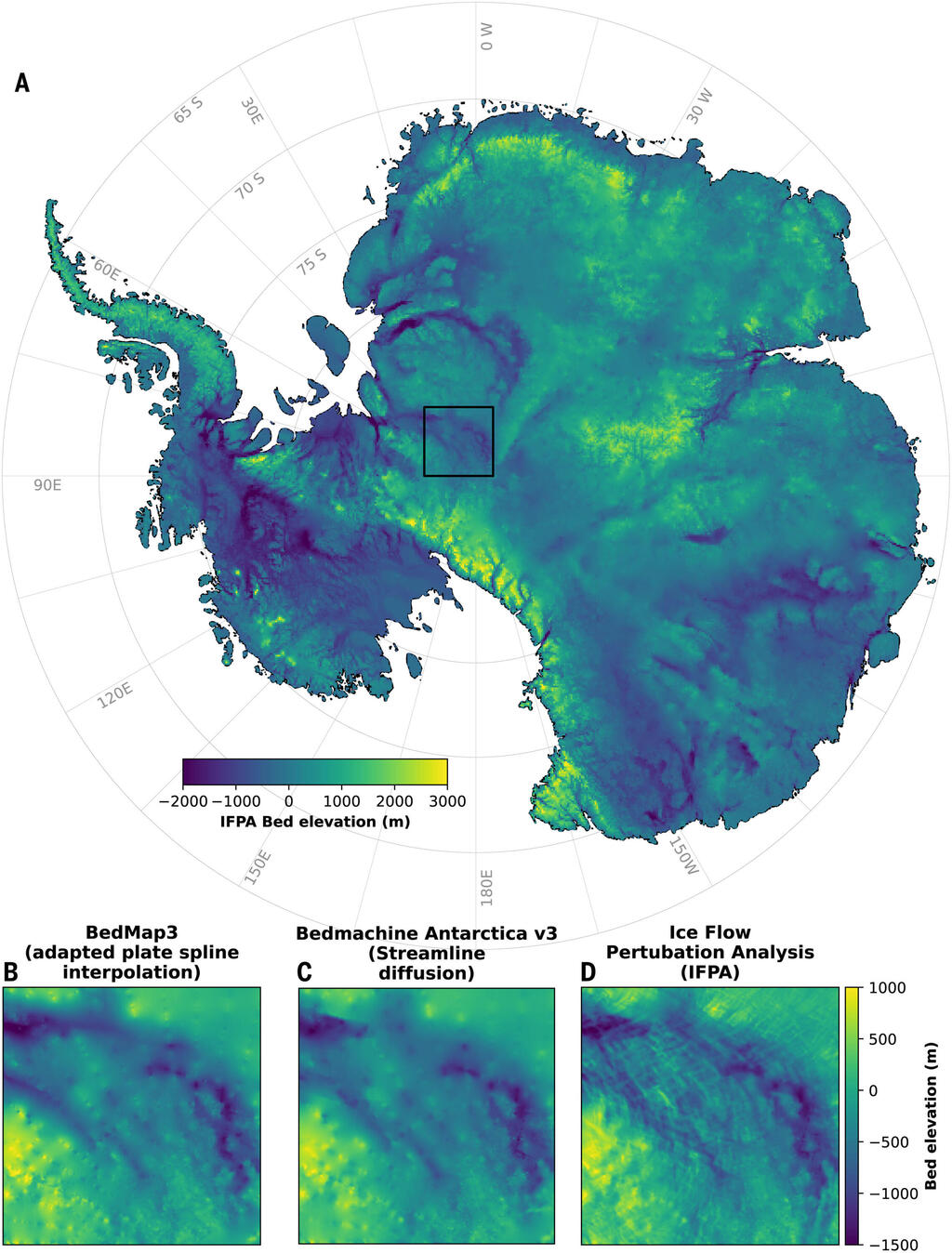
Using high-resolution satellite data, ice thickness measurements and ice-flow physics, scientists have mapped Antarctica’s hidden subglacial rocky landscape — one of the least mapped regions on Earth — in unprecedented detail. The researchers who carried out the mapping uncovered geological structures never seen before, shaping the ice sheet of the world’s fifth-largest continent from below. The ice sheet spans more than 14 million square kilometers.
Beneath Antarctica’s vast ice sheet lies a complex landscape of mountains, valleys, plains, basins and lakes. Until now, Antarctica’s subglacial terrain has remained largely mysterious, mainly because ground and aerial surveys have been limited by harsh environmental conditions. The new survey has revealed previously unseen features at depths of between 2 and 30 kilometers below the surface.
(Photo: Mark Baker/AP)
Among the discoveries were river channels stretching hundreds of kilometers, which may be remnants of the landscape that existed before the extensive ice sheet formed. The map also revealed sharp transitions between highlands and lowlands, pointing to tectonic boundaries — areas where two tectonic plates meet.
In another region where earlier aerial surveys had predicted an ancient river landscape later covered by ice, the new mapping identified valleys. The researchers also documented 71,977 hills at least 50 meters high across Antarctica, more than double the number previously mapped. Another key finding was that some areas resemble alpine landscapes, with jagged peaks rather than the smooth summits shown on older maps.
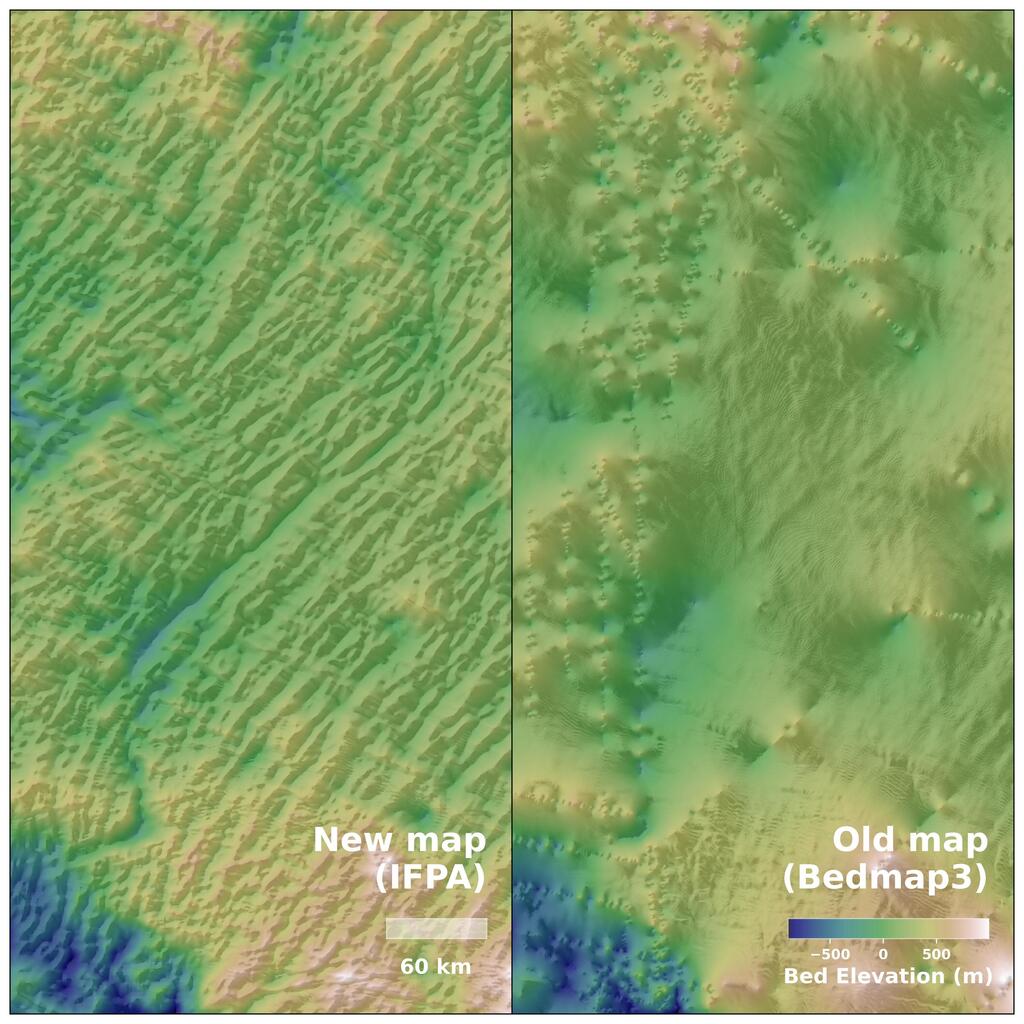
Differences between the new mapping (left) and earlier maps, revealing previously unknown features beneath Antarctica
(Illustartion: Helen Ockenden)

The new mapping of Antarctica’s subglacial landscape, compared with similar landscapes in other parts of the world
(Illustration: Robert Bingham, University of Edinburgh/Handout/Reuters)
About 90% of the Earth’s ice mass is found in Antarctica, along with roughly 70% of the planet’s freshwater ice. As a result, the findings, published in the journal Science, not only improve existing ice sheet models but may also guide future geophysical surveys and reduce uncertainty in projections of ice loss and sea-level rise driven by global warming.

Selected examples of Antarctica’s newly mapped subglacial topography
(Illustration: From the journal Science)
(Photo: Alexandre Meneghini/Reuters)
Antarctica’s ice sheet formed and accumulated its mass tens of millions of years ago. The new mapping marks another significant step in uncovering the continent’s ancient structures, from a time when the landscape was more exposed. Efforts to further refine the mapping will continue, but the latest discoveries could play an important role in shaping climate-related policy.