

Sloths are the slowest mammals on Earth, but their lives in dense forests have made them difficult to study. Now, researchers have sequenced and analyzed the genome of a two-toed sloth for the first time, shedding new light on the genetics behind its exceptionally slow metabolism.
The study, published in the journal BMC Biology, identified sloth-specific “jumping genes,” or transposons, that have been preserved for millions of years and are linked to the animal’s metabolism. Researchers said the findings could help explain the biology of sloths and may eventually contribute to studies of metabolism and aging in other mammals, including humans, and even long-duration space travel.
A sloth pup born at a Florida zoo
(Video: Reuters)


Sloths belong to Xenarthra, a group of placental mammals that also includes armadillos and anteaters and originated in South America. The group has existed for about 65.5 million years. Ancient sloth relatives included giant ground sloths that were about the size of elephants.
Modern sloths are tree-dwelling animals divided into two groups: two-toed sloths, including Linnaeus’s two-toed sloth and Hoffmann’s two-toed sloth, and three-toed sloths, including the brown-throated, pale-throated, maned and pygmy sloths.
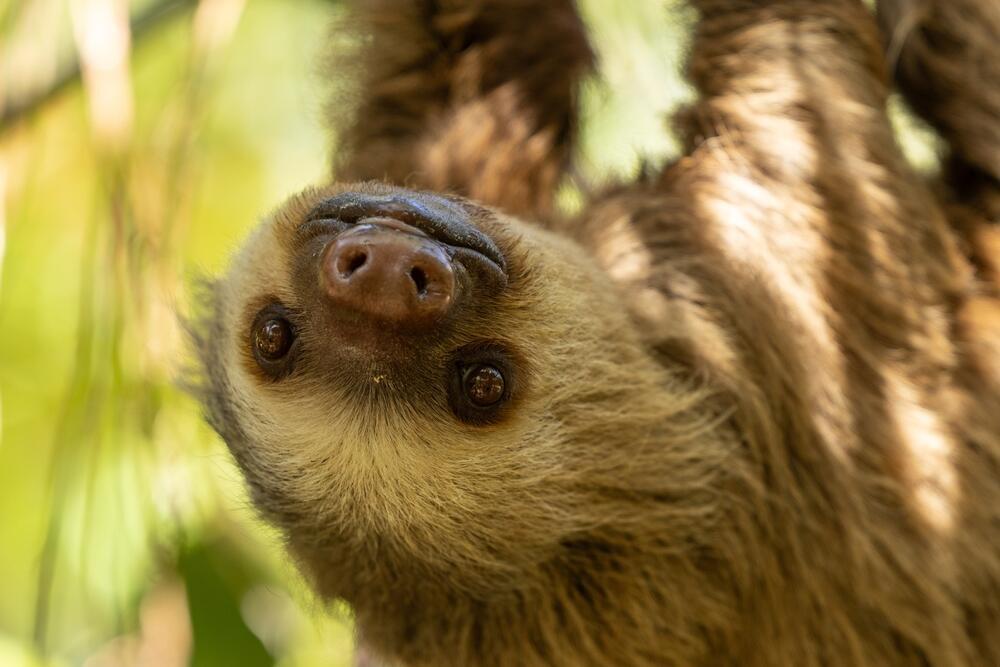
Sloths have the lowest metabolism of any mammal, often less than half what would be expected for their body size. To conserve energy, they can shift between regulating their body temperature internally and allowing it to fluctuate with their environment. Despite their slow movement, sloths are capable swimmers and can travel long distances in water in search of mates.
To better understand their biology, researchers extracted DNA from tissue samples taken from captive sloths. The DNA was sequenced at the Max Planck Institute of Molecular Cell Biology and Genetics in Germany. Researchers from the Wellcome Sanger Institute in Cambridge and the Leibniz Institute for Zoo and Wildlife Research in Berlin then analyzed the sloth genome and compared it with the genomes of other mammals, including anteaters and armadillos, using comparative genomics.
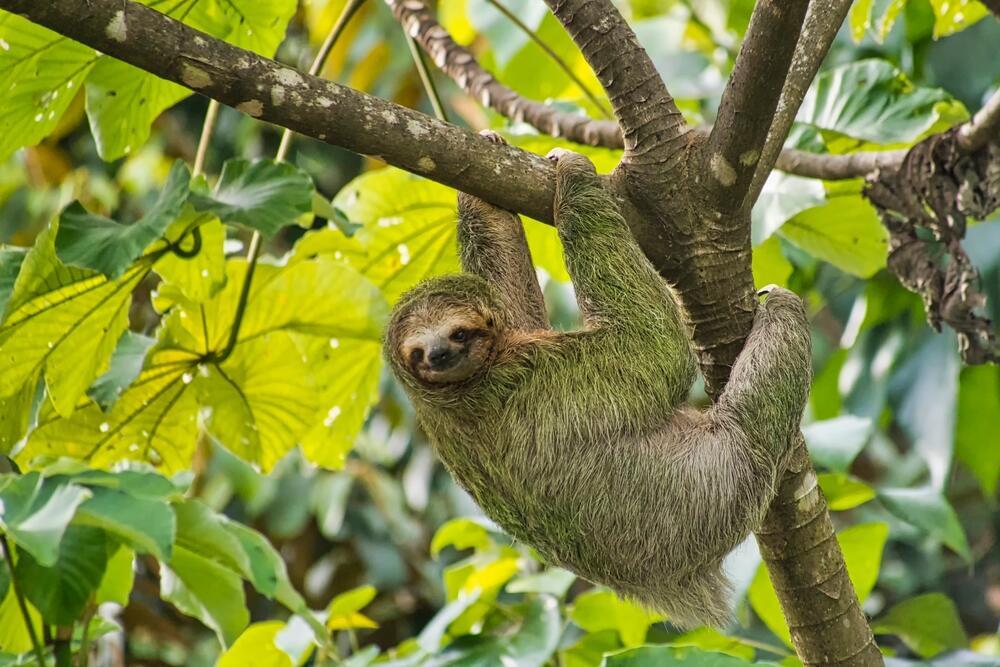
Pale-throated sloth in Costa Rica
(Photo: Al Carrera/Shutterstock)
The researchers found that the sloth genome contains segments of DNA able to copy themselves and move to different locations within the genome. When such a segment jumps into a functioning gene, it can disrupt the gene and cause a mutation. In other cases, it can introduce genetic information that gives cells new abilities and helps drive evolution.
By using genomics to look back in time and map the evolution of sloths, the researchers found that the jumping genes emerged in the most recent common ancestor of all living sloth species about 30 million years ago. They have been preserved since then, making them deeply rooted genetic sequences unique to sloths.
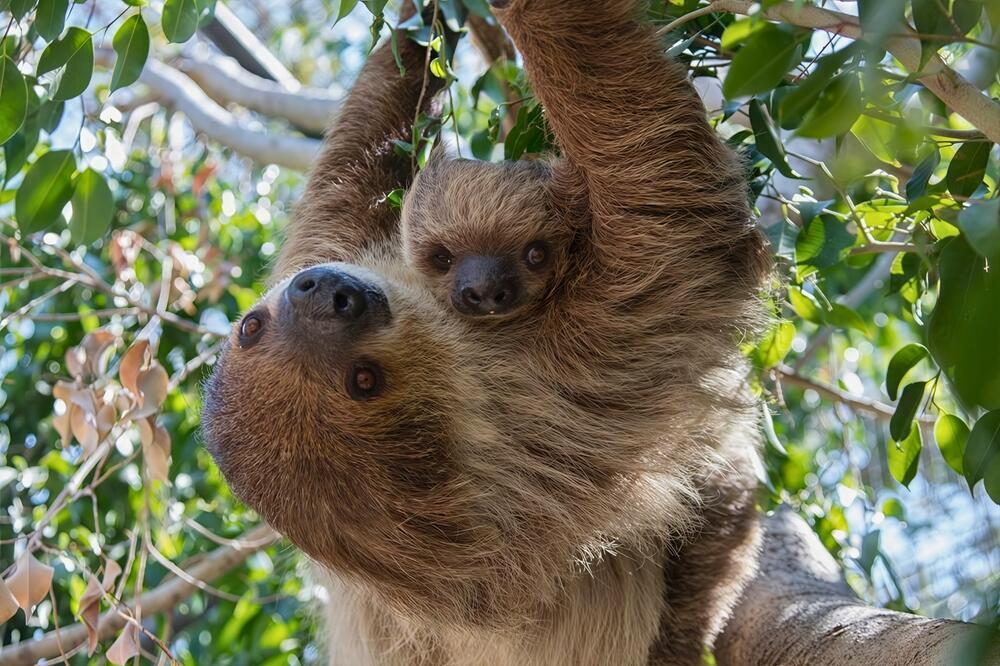
A female sloth with her offspring
(Photo: Martens Coyotes/Shutterstock)
The team was surprised to find that many of the genes were linked to mitochondria, the cell structures that produce energy, and to metabolic pathways. Because sloths have one of the most unusual metabolisms among mammals, the researchers said the sloth-specific genes may be tied to their environmental adaptations and the evolution of their slow metabolism.
“Many experiments in evolution have already been conducted, but by studying unusual animals like sloths, we sometimes discover biological solutions humans never evolved,” said Dr. Marcela Uliano-Silva, a senior bioinformatician at the Sanger Institute. “Using genomics to look back in time, we found ‘jumping genes’ that sloths have preserved for millions of years.”
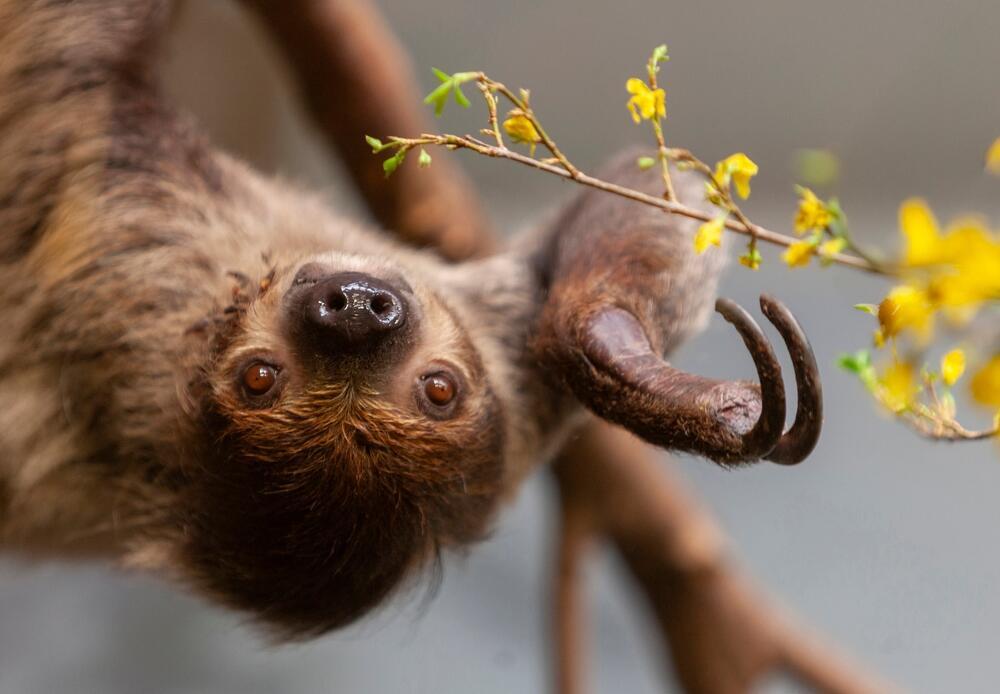
Linnaeus's two-toed sloth
(Photo: EllyGri/Shutterstock)
She said the genes are linked to mitochondria and metabolic pathways, suggesting they may be connected to the evolution of sloths’ slow metabolism.
Dr. Camila Mazzoni of the Leibniz Institute’s Department of Evolutionary Genetics said that although sloths have the slowest metabolism of any mammal, they remain healthy.
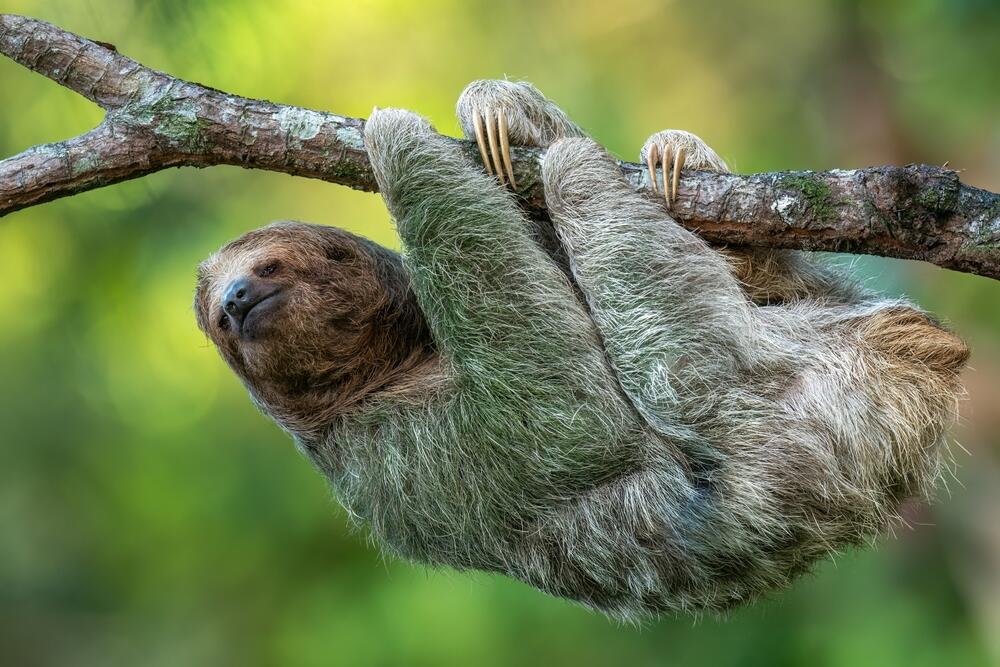
A brown-throated sloth clinging to a tree branch
(Photo: Lukas Gogh/Shutterstock)
Understanding how they do that, she said, may offer new insights into how cells manage energy efficiently.
The study’s findings suggest sloths may have evolved genetic “backup systems” that help compensate for their slower mitochondrial activity and support their unusual way of life.