

Human impact on marine life has devastating and far-reaching consequences, with various activities posing a fundamental threat to the health of ecosystems in the oceans and the Mediterranean Sea. Blood tests conducted on dusky sharks (Carcharhinus obscurus) and sandbar sharks (Carcharhinus plumbeus), which gather every winter off the coast of Hadera near the power plant, present a similar picture. High concentrations of sulfur were found in their blood, along with other substances linked to industrial and technological activity, including materials used in the production of advanced technologies.
The Mediterranean Sea is one of the world’s most sensitive marine regions, partly because of its relatively enclosed structure, slow water exchange rate and high concentration of human activity along its shores — conditions that intensify the effect of pollutants on the marine environment. Power plants, industrial activity and desalination facilities discharge various substances into the sea that may be absorbed into animal tissue, accumulate biologically over time and even move through different levels of the food chain.
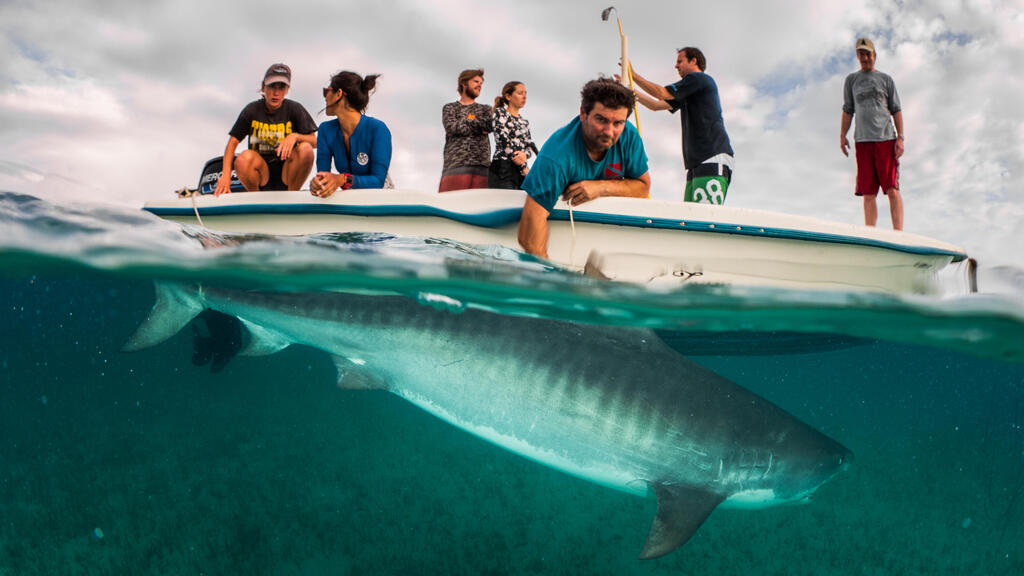
Sharks swimming off the Hadera coast
(Video: Dr. Aviad Scheinin)


Off the coast of Hadera, where warm water from the power plant is discharged into the sea, sharks have gathered seasonally for decades, a unique phenomenon that has become a focus of both scientific and public interest. In the current study, published in the journal Environmental Pollution, University of Haifa researchers Dr. Morick, Dr. Aviad Scheinin, Prof. Dan Tchernov and research student Eitan Newman of the Morris Kahn Marine Research Station, together with researchers from Brazil and the Bahamas, examined which substances accumulate in the blood of sharks that visit the Hadera coast and whether sharks can be used as indicators of environmental exposure and pollution sources.
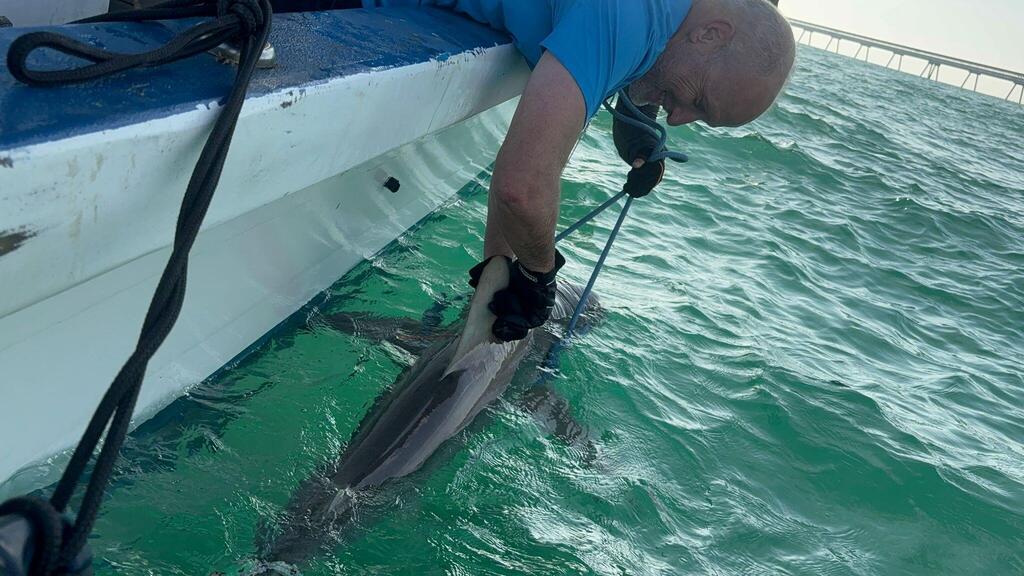
Blood test on a sandbar shark off the Hadera coast
(Photo: Eden Barzilai)
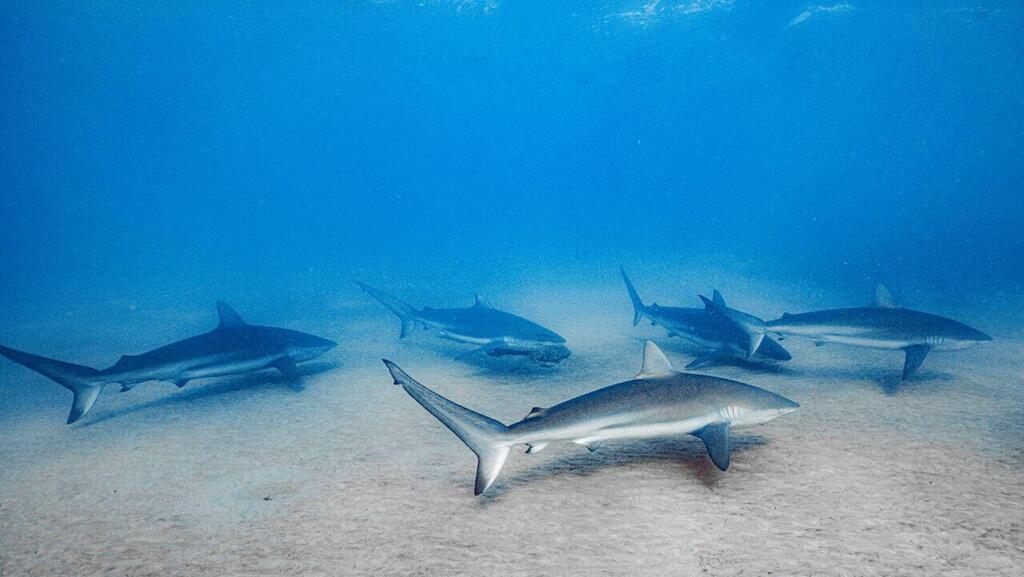
A school of dusky sharks spotted in Hadera
(Photo: Miron Segev, Sharks in Israel)
The study was based on blood samples collected from 27 adult dusky and sandbar sharks as part of a long-term monitoring program operating in the area since 2016. The blood samples were collected in a way that did not harm the animals. After collection, the samples were analyzed using advanced laboratory methods that make it possible to identify and quantify dozens of chemical elements at varying concentration levels with high precision.
The findings point to relatively high concentrations of sulfur and lithium in the sharks’ blood, alongside the presence of additional elements originating in industrial activity. Seven of the 47 elements tested in the blood samples showed significant differences between the species, indicating different patterns of exposure and accumulation. In addition, elements used in technological industries were found in the blood samples at concentrations reaching about 6 milligrams per kilogram in dusky sharks and about 2.8 milligrams per kilogram in sandbar sharks. These levels are considered relatively high compared with previous findings, especially given that the samples were blood samples, where concentrations are usually lower.
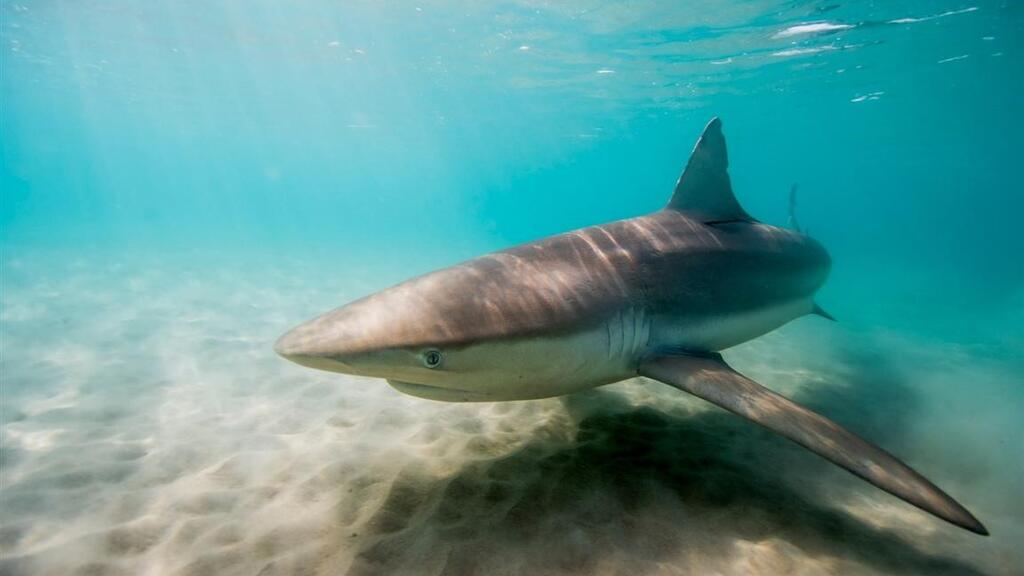
A shark at the mouth of the Hadera Stream
(Photo: Hagai Nativ, Morris Kahn Marine Research Station, Leon H. Charney School of Marine Sciences, University of Haifa)
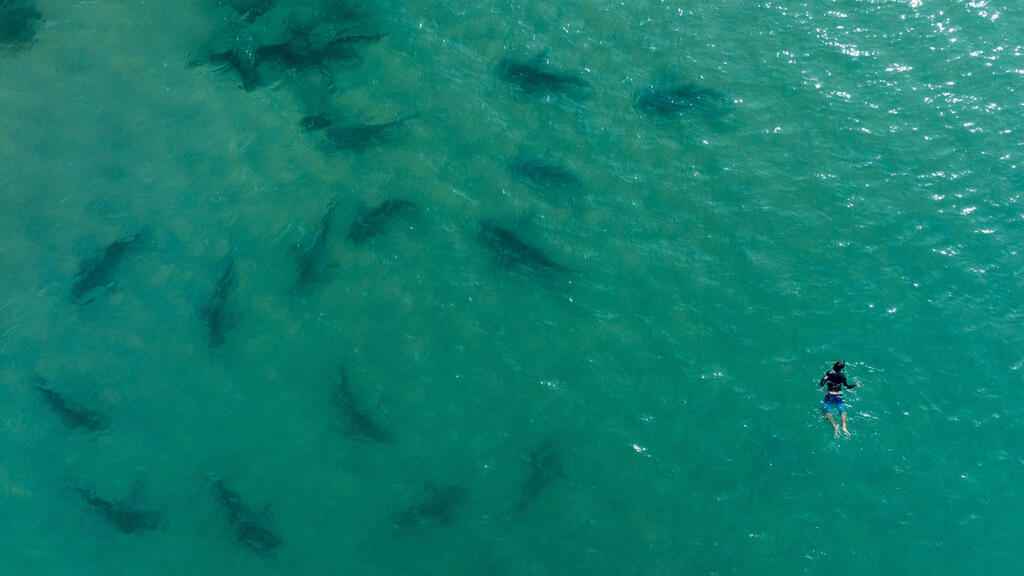
A school of sharks documented off the Hadera coast
(Photo: Oded Balilty, AP)
The researchers link the concentrations of elements measured in the sharks’ blood to the discharge of water and byproducts from desalination plants and industrial activity in the area, alongside natural changes in the composition of seawater. However, the researchers stress that these substances are not necessarily solely human-made and that many also occur naturally in the marine environment. They say the findings point to a combined effect in which human activity adds substances to the marine environment, while natural processes influence how they disperse and accumulate.
Dr. Danny Morick, head of marine pathology at the Morris Kahn Station and head of the Department of Blue Biotechnology and Sustainable Aquaculture at the University of Haifa’s Leon H. Charney School of Marine Sciences, said the blood tests make it possible to identify the substances to which sharks are exposed in real time, not only over time.
“Because these are apex predators, the changes we see in them reflect broader processes taking place throughout the marine system, and therefore they can serve as an indicator of the state of the marine environment as a whole,” said Morick, who led the research team.

The area of the Hadera power plant
(Photo: Lee Livne)

The research team in Hadera
(Photo: Eden Barzilai)
The study also produced the unexpected finding of elements from the rare earth elements group, which are used today in advanced technological industries, in the sharks’ blood. These materials are used, among other things, in the production of electronic components and renewable energy systems, and in recent years have become a focus of global interest because of their growing importance to the economy and future technologies.
The researchers emphasized that the concentrations measured are not high and that at this stage it is not possible to determine the biological or environmental significance of the findings. They said the very presence of these materials in shark blood raises new questions about their sources and how they reach the marine system, whether as a result of human activity or as part of natural processes that are not yet fully understood.
“The findings show that exposure to substances in the marine environment is not uniform and that there are differences between shark species in the way these substances accumulate in their bodies,” Morick said. “This means not all animals respond in the same way to the same environmental conditions, which highlights the complexity of monitoring environmental impacts. This is a preliminary study, so further research is needed to understand the significance of the findings and whether they can also be used as a tool for environmental monitoring.”
First published: 16:30, 05.07.26