


In the 2023–24 planting year, the first year of the ‘Swords of Iron’ war, Israel saw a sharp decline of 32.4 percent in total orchard plantings, dropping to 22,463 dunams from 33,229 dunams in 2022–23, according to data released Thursday by the Central Bureau of Statistics ahead of the Tu Bishvat holiday, which falls on Monday.
The Central Bureau of Statistics data show a particularly steep decrease of about 58.8 percent in vineyard plantings. Avocado plantings also fell significantly, down 38.2 percent. By contrast, almond plantings increased by 44.3 percent.
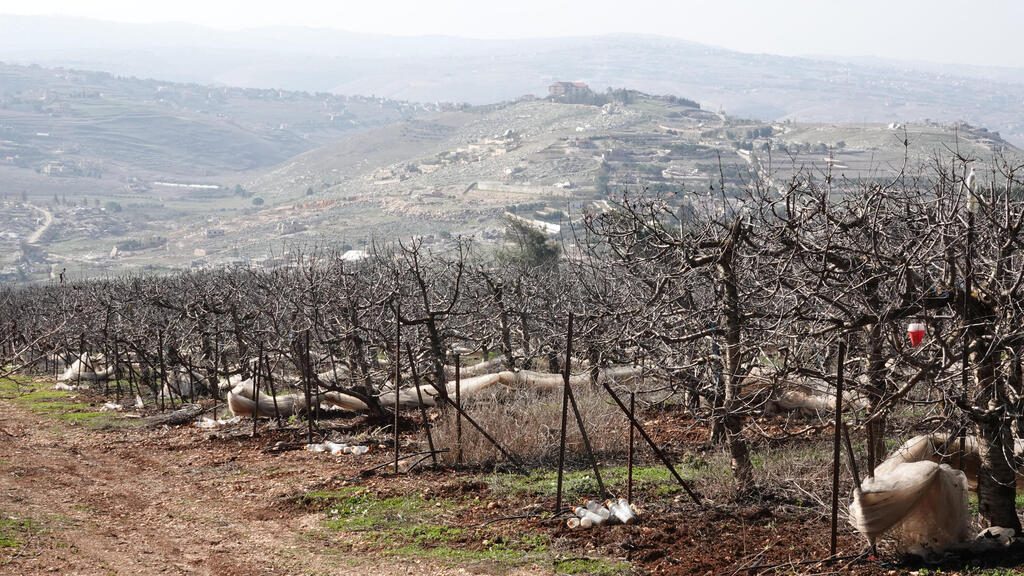
Total output of Israel’s orchard sector in 2025 was estimated at about 1.33 million tons, a decline of 3.4 percent compared with 2024. Non-citrus orchards accounted for 68.3 percent of total output, while citrus fruit made up 31.7 percent. An increase compared with the previous year was recorded only in avocado output, which rose by 9.3 percent. Output declined across nearly all other orchard crops, including a 25 percent drop in apples, a 6.8 percent decline in easy-peel citrus such as clementines and mandarins, and a 5.7 percent decrease in bananas.
During the 2024–25 planting season, the second year of the war, total planting by KKL-JNF amounted to about 4,858 dunams, up from 4,465 dunams in the previous year. Of the total area planted, 604 dunams were new forest areas, while 4,254 dunams were designated for forest renewal.
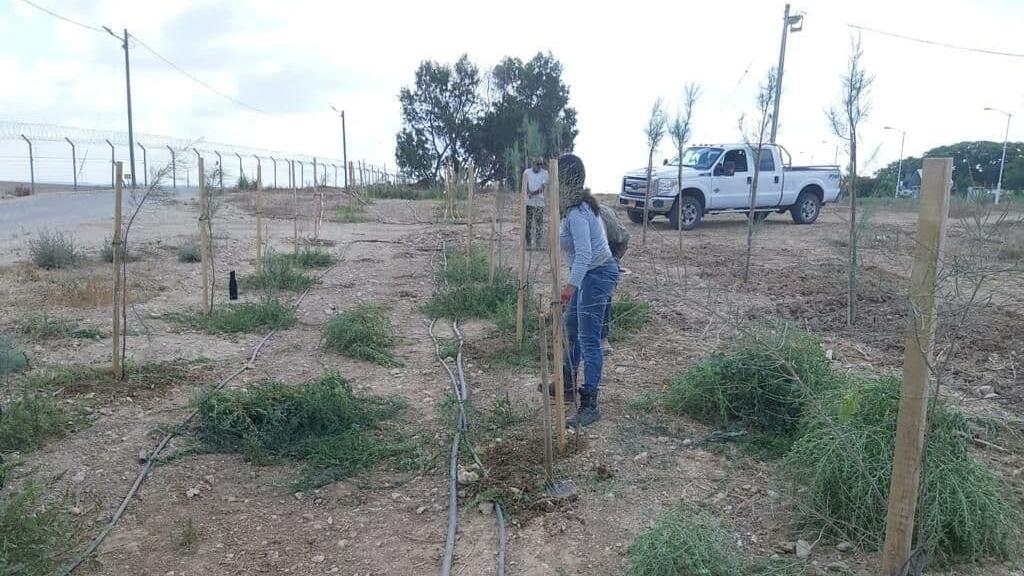
Tree plantings in the Kisufim Forest near the Gaza border. Archive photo
(Photo: KKL)
Broadleaf species accounted for 80 percent of the planted area, including native woodland and regional species such as various oaks, terebinths, tamarisks, acacias and jujubes, as well as orchard trees including carob, mulberry and almond. Additional broadleaf species included mainly eucalyptus, shrubs and herbs. Conifer species made up the remaining 20 percent, including Jerusalem pine, Aleppo pine, stone pine, Mediterranean cypress and cedar species.
The Central Bureau of Statistics also released figures on imports of fresh and dried fruit. In 2025, Israel imported nuts worth 177 million dollars, 72 percent of them from the United States. Imports of dates, figs, pineapple, avocado, guava and mango, fresh or dried, totaled 30 million dollars, with 57 percent sourced from Costa Rica, 26 percent from Kenya and 9 percent from Turkey.