

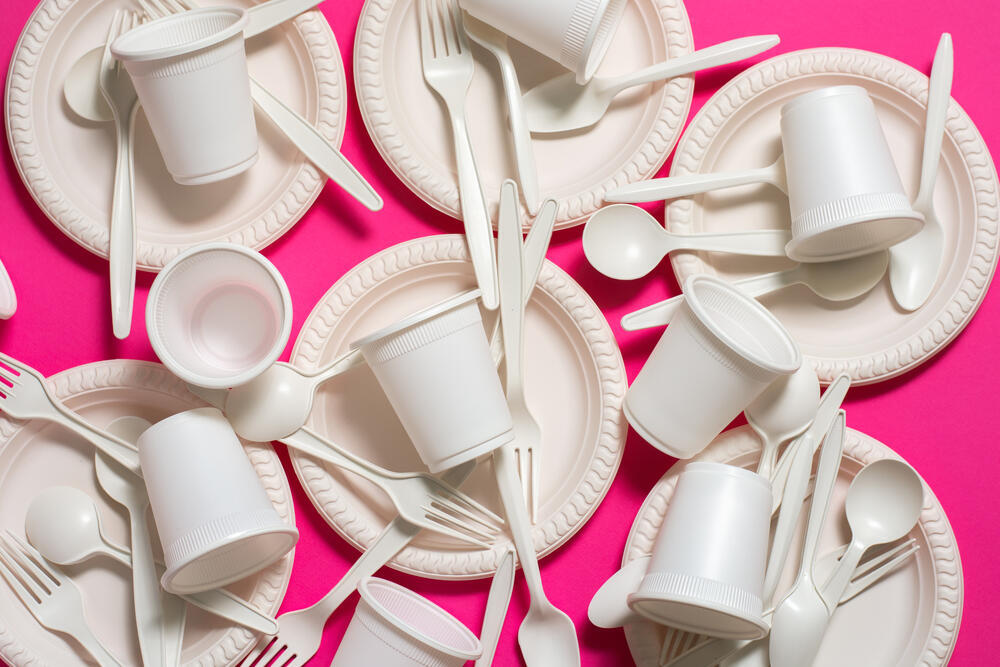
Sukkot brings us face to face with the temporary and the transient, but there are cases in which something temporary can lead to a long-term problem. Disposable products, for example, are intended for brief use, but they can release PFAS, substances also known as “forever chemicals.”
Whether it is a disposable coffee cup or a cup of juice in the sukkah, these everyday products can expose us to chemicals and plastic particles that may harm our health. Could awareness of the health consequences persuade us to stop using them? A new Israeli study found that when people were repeatedly exposed to such information, many reduced their use of these products or gave them up altogether. In the process, they also reduced environmental harm.
A chemical used for a moment that lasts forever
When plastic comes into contact with food or beverages, it can release chemical compounds from the PFAS family, or per- and polyfluoroalkyl substances. These chemicals are highly resistant to heat and repel oil and water. They are therefore used primarily in products such as firefighting foam and in oil- and water-resistant surfaces in the food and textile industries.
PFAS are a group of chemicals that are extremely persistent in the environment and do not break down naturally, earning them the nickname “forever chemicals.” Studies have linked exposure to them to reproductive harm, metabolic disorders and other health effects.
Yaeli Etstein, a marine biotechnologist, environmental health expert and lead researcher of the new study, explains that although Israel has standards governing plastic products, they do not prevent exposure to these substances. She says that while the public tends to assume that everything sold in stores meets regulatory standards, that is not necessarily the case.
“The standard does not take into account the fact that we ‘consume’ more than one plastic product a day,” she says. “Many people drink several cups a day and also use plates, cutlery and plastic packaging. Even assuming that every product meets the standard, our exposure ultimately accumulates,” Etstein explains.
Another product many people use is air freshener. In this case, the effects are different: Air fresheners emit volatile organic compounds, or VOCs, exposure to which has been linked in studies to a range of health effects, including asthma, allergies, migraines and respiratory problems.
“Unlike disposable cups, where we usually do not immediately see the health effects, with air fresheners about a third of the population experiences immediate reactions,” Etstein says. “Beyond the fact that many people are highly bothered by the smell itself, known reactions include dizziness, migraines, coughing and shortness of breath.”

Air freshener
(Photo: Pixel-Shot, shutterstock)
According to Etstein, our exposure to fragranced products is cumulative.
“Fragrance is everywhere today, not just in air fresheners. It is in cleaning products, bathing products and cosmetics.”
In addition, air fresheners are not only a source of chemical exposure but also contribute to plastic waste and environmental pollution because of their disposable packaging.
What influences us to change our habits?
About a decade ago, Etstein founded the Facebook group "Critical Mass for Healthy Consumption” (CMHC), which makes scientific information about chemicals in consumer products accessible to the public while offering practical alternatives. After many group members reported changing their habits following exposure to this information, she set out to determine whether the phenomenon could be measured.
As an environmentalist, she also wanted to examine whether health information could have an impact where environmental campaigns had achieved only limited success.
The study, conducted with Dr. Adi Levy, head of the master’s program in sustainability in urban and rural environments at Achva Academic College, and Dr. Zohar Barnett-Itzhaki, head of the Environmental and Social Sustainability Research Group at Ruppin Academic Center, was based on an online questionnaire completed by about 300 participants. Most were members of the Facebook group, while some were not.
Participants were asked to report their use of disposable cups for cold and hot beverages and of air fresheners, whether they had changed their habits and why. The research team examined whether sustained exposure to information about the health implications of these products had succeeded in changing consumption habits.
Disposable products
(Photo: shutterstock)
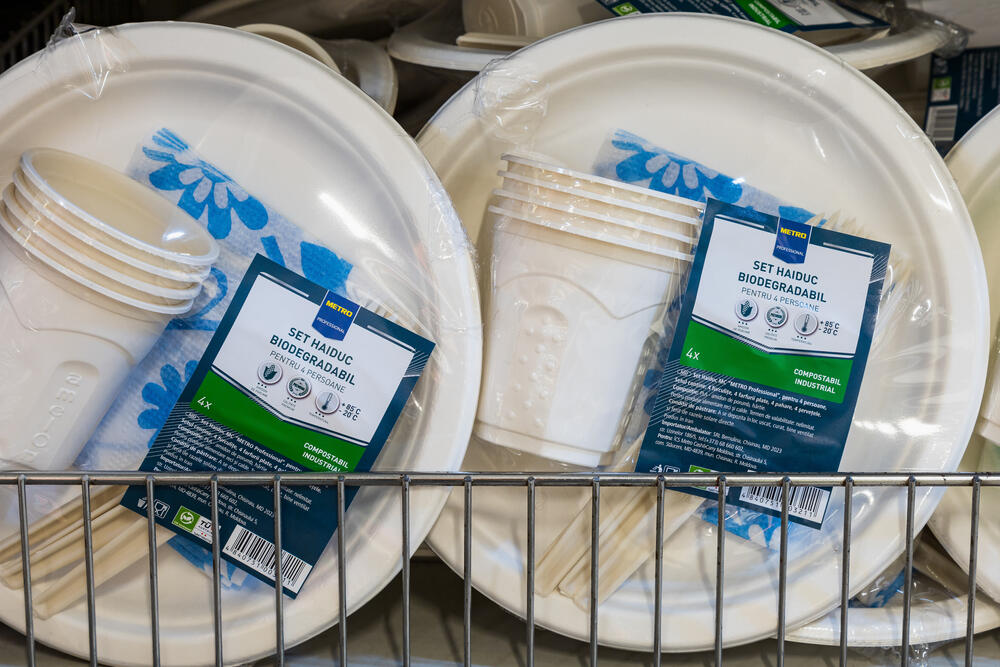
The results showed that many participants reported substantial reductions in use. The use of disposable cups for cold drinks fell by an average of 77%, while use of disposable cups for hot drinks declined by 74%. In addition, Facebook group members tended to report greater reductions in use.
As for air fresheners, the results showed that about 39% of Facebook group members reported that they had stopped using them altogether, compared with just 7% of participants who were not members of the group.
The most interesting finding, however, was not the decline in use itself, but what drove it. In the case of disposable cups, which have been the subject of numerous environmental campaigns over the years, group members placed significant importance on both environmental and health considerations.
By contrast, with air fresheners, which have received little attention in public campaigns, health information played a particularly prominent role. Concern about health effects received nearly the highest possible rating as a motivation for reducing their use.
“The findings indicate that the health message does not replace the environmental message, but reinforces it,” Etstein says. “Even for those who had already reduced their use because of environmental campaigns, it appears that the health component is added and ‘seals the deal.’ That is why they need to come together. It is not one or the other. We see that when the health aspect is added to the environmental aspect and connected to the effects on us personally, it has a long-term impact.”

Disposable cups at a picnic
(Photo: Sergey Kolesnikov, Shutterstock)
Etstein stresses that awareness is only the first step.
“Awareness can cause panic, but it can also cause apathy. People say, ‘Everything causes cancer these days, so there is nothing we can do.’ That is why, to avoid extreme reactions, it is important to provide solutions and alternatives alongside the information,” she explains.
Her practical conclusion is to begin with products that are relatively easy to give up.
“Disposable cups and home air fresheners are good examples of such products. You can use glass or stainless steel cups, and you can simply do without air fresheners,” she says.
She also recommends making changes gradually.
“I suggest starting with small steps: Choose one product to eliminate or replace and stick with it. After a month or two, when you feel you have gotten used to the change, only then move on to the next product. By the end of the year, you will already have a series of new habits and much less exposure to products that are harmful to your health and to the environment,” Etstein concludes.
The article was produced by Zavit, the news agency of the The Israeli Society of Ecology and Environmental Sciences.